

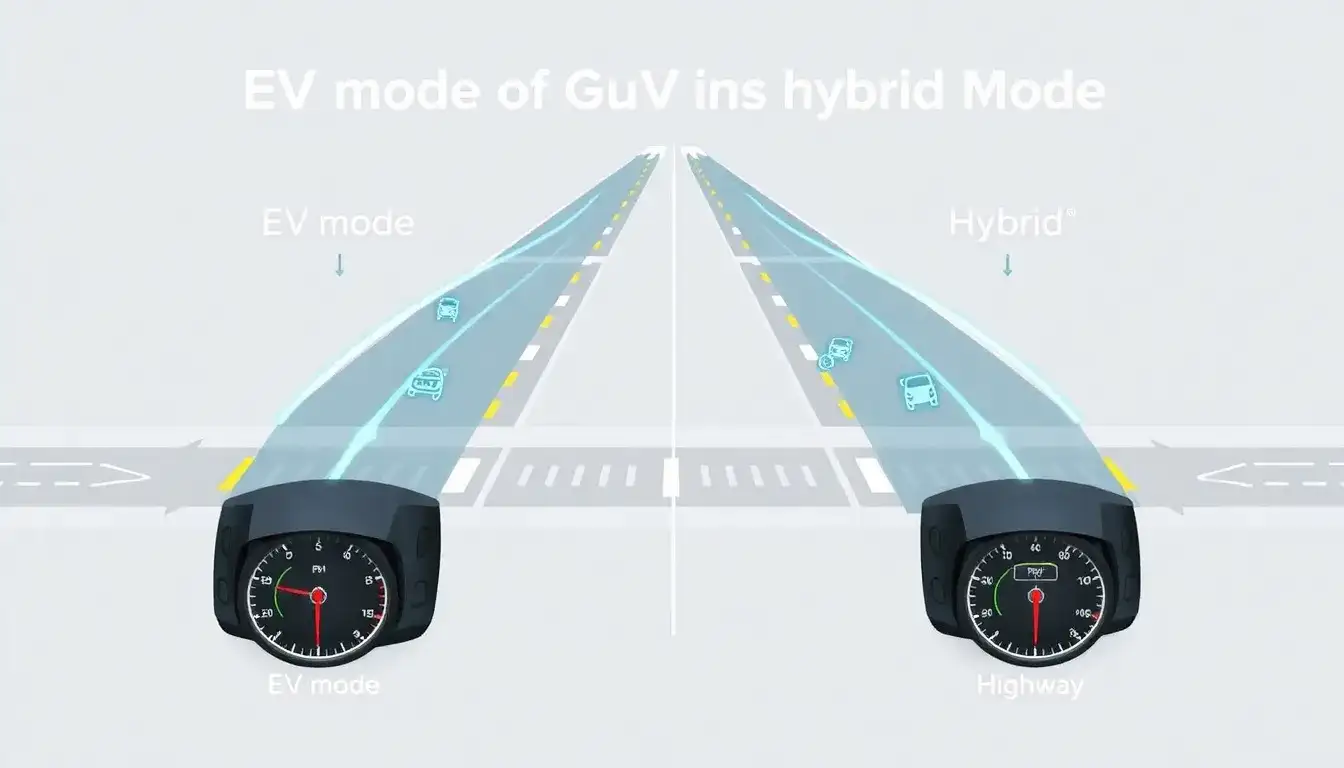
The main differences in acceleration between EV mode and hybrid mode in plug-in hybrid electric vehicles (PHEVs) stem from the combined power output and weight considerations:
- Acceleration in EV mode is generally slower than in hybrid mode. This is because the electric motors in PHEVs are usually less powerful alone compared to the total system output when the gasoline engine is also engaged. For example, the Toyota Prius Prime takes about twice as long to reach 60 mph in EV mode compared to hybrid mode—around 9.3 seconds versus 3.9 seconds.
- Hybrid mode combines power from both the electric motor and internal combustion engine (ICE), resulting in significantly better acceleration. The Mercedes-Benz GLE450e, a luxury PHEV, accelerates to 60 mph in 5.3 seconds using hybrid mode, but takes 14.4 seconds—almost three times as long—when running in pure EV mode.
- PHEVs tend to be heavier than regular hybrids due to larger batteries, which impacts their electric-only acceleration negatively. Their electric motors alone don’t match the output of full battery electric vehicles (BEVs), contributing to slower EV-mode acceleration times.
- Some PHEVs, especially sportier or more powerful models, can have impressive combined power outputs (e.g., Volvo PHEVs with up to 455 horsepower) and thus very strong acceleration in hybrid mode, sometimes rivaling or exceeding that of full EVs. But their EV-only range and power remain limited compared to BEVs.
In summary, PHEVs generally exhibit much quicker acceleration in hybrid mode because of the combined torque and horsepower from both the gasoline engine and electric motor, while EV mode acceleration is slower due to relying solely on a less powerful electric motor and the added weight of the battery system. This often results in EV mode 0–60 mph times being roughly two to three times longer than those in hybrid mode.
Original article by NenPower, If reposted, please credit the source: https://nenpower.com/blog/what-are-the-main-differences-in-acceleration-between-ev-mode-and-hybrid-mode-in-phevs/

