

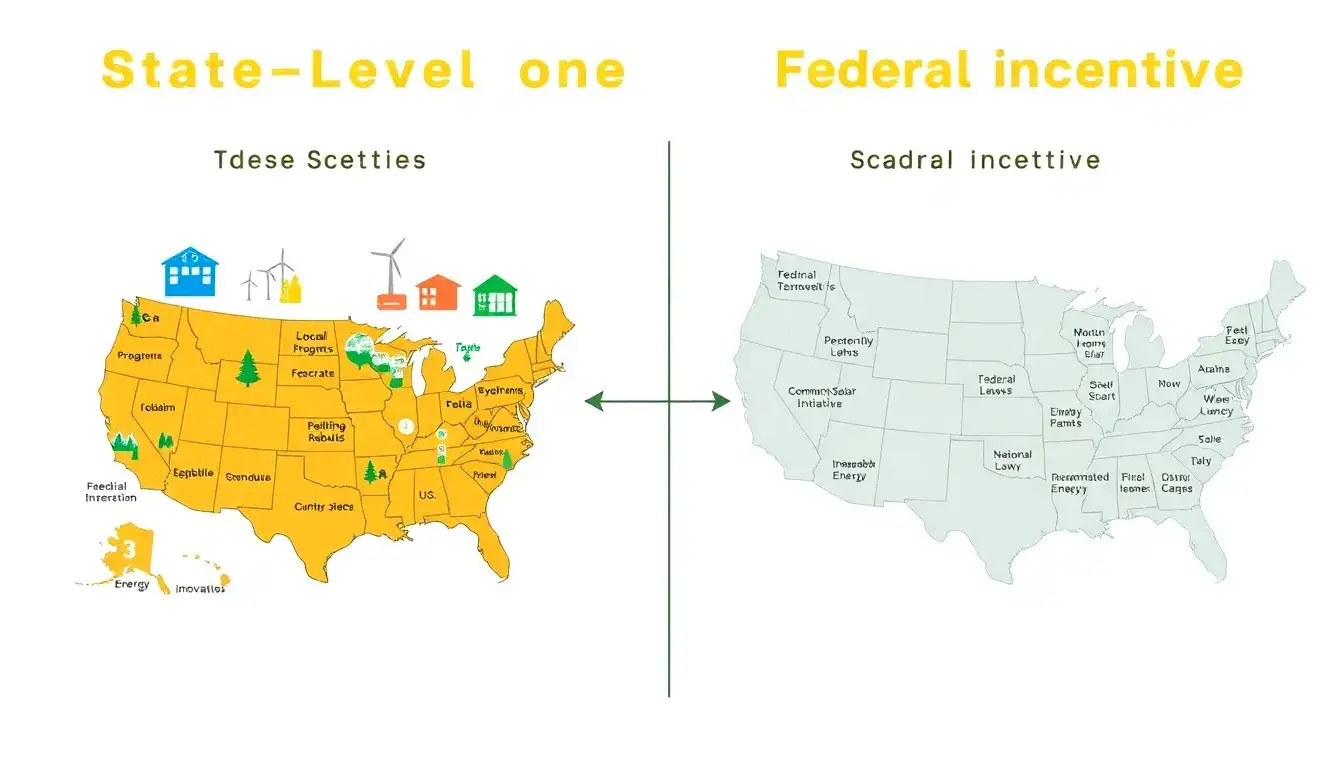
State-level and federal incentives for energy storage in the U.S. offer different structures and benefits, reflecting varying priorities and implementation methods. Here are the main differences:
State-Level Incentives
- Program Structure and Eligibility:
- State programs often provide rebates, performance incentives, or a combination of both. For example, California’s Self-Generation Incentive Program (SGIP) offers both upfront and performance-based incentives, while Connecticut’s Energy Storage Solutions includes upfront rebates and performance incentives[1][3][4].
- Eligibility varies by state, with some offering higher incentives for specific groups like low-income households or areas with high fire threats.
- Incentive Rates:
- Rates differ significantly between states. For instance, California offers between $150 and $1,000 per kWh depending on factors like equity and resilience needs[4], while Oregon provides $300 per kWh[4].
- These rates can decrease as participation increases, such as in California’s step-based SGIP program[5].
- Objectives and Outcomes:
- State incentives often focus on addressing local energy and environmental challenges, such as grid resilience and reducing peak demand[3].
- Programs are designed to align with state-specific policy goals, like California’s increased funding for high fire threat districts[1].
Federal Incentives
- Tax Credits:
- Federal incentives are primarily in the form of tax credits. Starting in 2023, homeowners can claim up to a 30% tax credit for installing a home energy storage system[2][5].
- These credits apply to the total cost of purchasing and installing the system.
- Eligibility:
- Eligibility is broader, applying to homeowners across all states who install eligible systems.
- There are specific requirements, such as a minimum capacity for standalone energy storage systems[5].
- Objectives and Outcomes:
- Federal incentives aim to promote the widespread adoption of clean energy technologies across the nation.
- Policies like the Inflation Reduction Act help ensure a consistent federal framework for supporting renewable energy, including energy storage[5].
Key Differences Summary
- Structure: State incentives vary in structure (rebates vs. performance incentives), while federal incentives rely on tax credits.
- Eligibility and Rates: State programs often target specific demographics or areas, with rates that can step down based on participation. Federal credits apply broadly but have set percentages.
- Objectives: State incentives focus on local energy issues and environmental goals, while federal incentives prioritize national clean energy objectives.
Overall, while state-level incentives provide targeted support tailored to local needs, federal incentives offer a broader, nation-wide framework to encourage the adoption of energy storage technologies.
Original article by NenPower, If reposted, please credit the source: https://nenpower.com/blog/what-are-the-main-differences-between-state-level-and-federal-incentives-for-energy-storage/

