

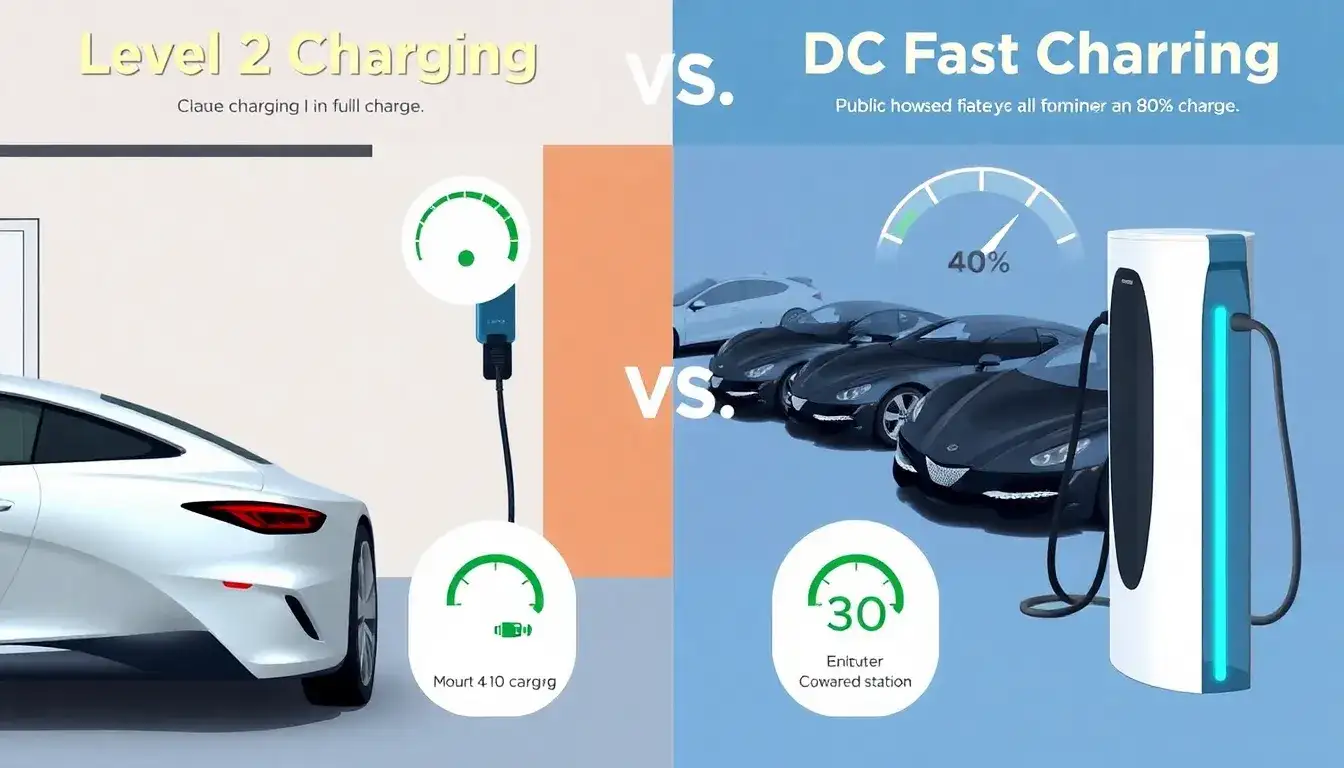
The main differences between Level 2 charging and DC Fast Charging (DCFC) revolve around power output, charging speed, cost, typical locations, and electrical characteristics.
Power Output and Charging Speed
- Level 2 Charging typically delivers between 7 kW and 21 kW of power. It operates at 240 volts and can add roughly 12 to 32 miles of range per hour of charging, depending on amperage (usually between 24 to 80 amps). This means a full charge may take several hours to overnight for most electric vehicles (EVs).
- DC Fast Charging (DCFC) offers significantly higher power output, ranging from 40 kW up to 350 kW, enabling much faster charging speeds. DCFC can provide an equivalent of up to 300 km (approximately 186 miles) in 30 minutes or charge a delivery van in roughly 30 minutes, compared to the many hours Level 2 chargers need.
Cost Differences
- Level 2 Chargers are relatively affordable, with unit costs from $500 to $5,000. Installation complexity and cost may vary with home electrical infrastructure.
- DC Fast Chargers are substantially more expensive, costing anywhere from $20,000 to $100,000 per unit, and involve higher operational costs due to the greater power demand.
Typical Usage and Locations
- Level 2 Chargers are common in private settings like homes and workplaces where longer charging times are acceptable. They require 240V power supply and are well-suited for overnight or extended parking periods.
- DC Fast Chargers are generally installed at public charging stations, motorway services, and urban fast-charging hubs where rapid top-ups are needed during travel or commercial operations.
Electrical and Technical Differences
- Level 2 chargers supply AC power, which is converted to DC inside the vehicle to charge the battery.
- DCFCs supply DC power directly, bypassing the on-board charger, which allows for faster energy transfer but requires more complex and costly infrastructure.
Summary Table
| Factor | Level 2 Charging | DC Fast Charging (DCFC) |
|---|---|---|
| Power Output | 7 – 21 kW | 40 – 350 kW |
| Charging Speed | Adds ~12–32 miles range per hour | Adds up to 186 miles range in 30 min |
| Cost (per unit) | $500 – $5,000 | $20,000 – $100,000 |
| Typical Locations | Homes, workplaces | Public fast-charging hubs, highways |
| Electrical Supply | AC (converted onboard) | DC (direct to battery) |
These differences mean Level 2 chargers are best suited for regular, longer-duration charging sessions, such as at home or work, while DC Fast Chargers are critical when rapid recharging is required for longer trips or commercial fleet operations.
Original article by NenPower, If reposted, please credit the source: https://nenpower.com/blog/what-are-the-main-differences-between-level-2-and-dc-fast-charging/

