

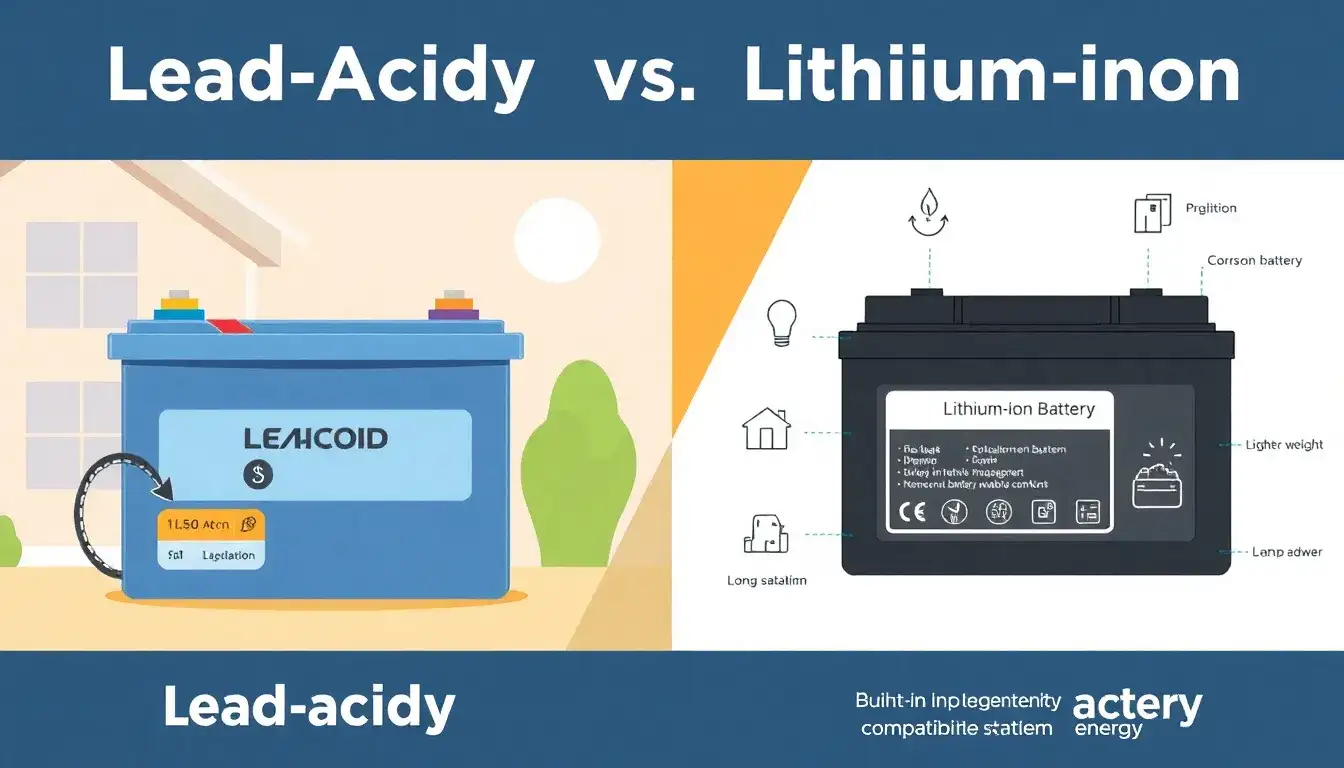
Key Differences
Cost and Affordability
- Lead-Acid Batteries: Generally more affordable with lower upfront costs, ranging from $100 to $200 per kWh. However, their shorter lifespan might increase overall cost due to more frequent replacements.
- Lithium-Ion Batteries: Initially more expensive, with costs around $300 to $500 per kWh, but they provide longer lifespans and fewer replacements over time, balancing out the cost.
Efficiency and Energy Density
- Lead-Acid Batteries: Have lower efficiency, typically around 80-85%, and lower energy density, meaning they store less energy per unit volume and weight, leading to bulkier installations.
- Lithium-Ion Batteries: Offer higher efficiency, often above 95%, and higher energy density, allowing for more compact and efficient storage solutions.
Lifespan and Cycle Life
- Lead-Acid Batteries: Generally have shorter cycle lives, between 500 to 1,200 cycles, and require regular maintenance to extend their lifespan of about 3 to 7 years.
- Lithium-Ion Batteries: Provide longer cycle lives, often exceeding 2,500 cycles, and can last 5 to 15 years with minimal maintenance.
Depth of Discharge (DoD)
- Lead-Acid Batteries: Limited to about 50% DoD to avoid damage, requiring careful management to prevent deep discharges.
- Lithium-Ion Batteries: Can safely reach higher DoD levels, typically up to 85%, allowing for more efficient energy use without damaging the battery.
Charging Speed and Power Delivery
- Lead-Acid Batteries: Charge slower and provide less consistent power delivery, which can be inadequate for high-starting-load appliances.
- Lithium-Ion Batteries: Charge faster and deliver more consistent power, making them suitable for a wider range of applications, including high-demand devices.
Installation and Maintenance
- Lead-Acid Batteries: Require specific installation orientations, need ventilation due to gas emission, and demand regular maintenance, such as electrolyte level checks.
- Lithium-Ion Batteries: Are more flexible in installation, have no ventilation requirements, and are virtually maintenance-free.
Environmental Impact and Safety
- Lead-Acid Batteries: Contain toxic materials like lead and sulfuric acid, posing environmental hazards if not disposed of properly. They can also emit gases during use.
- Lithium-Ion Batteries: Generally considered safer but can pose fire risks if mishandled or damaged. They have a lower environmental impact compared to lead-acid batteries.
In summary, while lead-acid batteries are more affordable upfront, lithium-ion batteries offer superior efficiency, longevity, and convenience, making them a better long-term investment for residential energy storage despite higher initial costs.
Original article by NenPower, If reposted, please credit the source: https://nenpower.com/blog/what-are-the-main-differences-between-lead-acid-and-lithium-ion-batteries-for-residential-use/

