

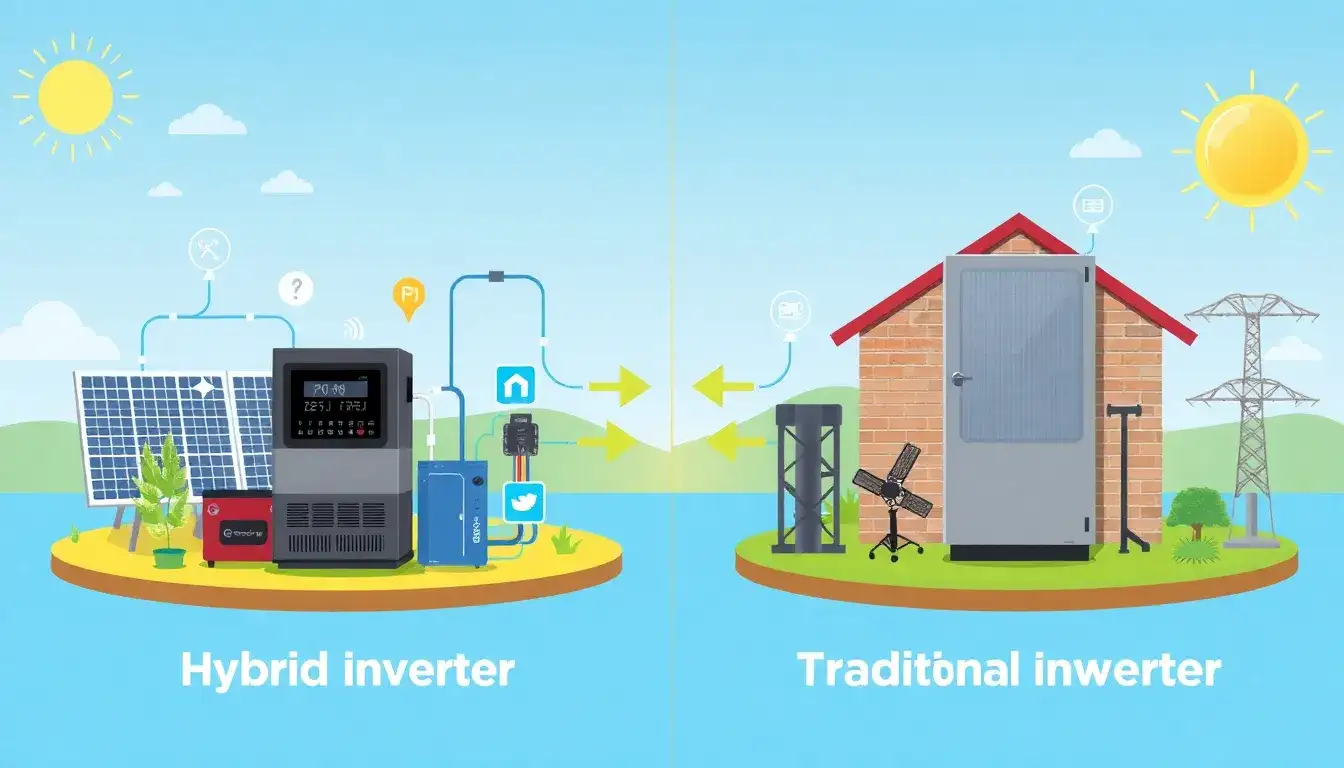
Main Differences Between Hybrid Inverters and Traditional Solar Inverters
1. Energy Storage and Backup Power
- Hybrid Inverters: These inverters are capable of integrating with battery storage systems, allowing users to store excess solar energy for later use, such as during power outages. They can automatically switch to battery power when the grid fails.
- Traditional Solar Inverters: Unable to store energy, they only convert DC power to AC and feed excess energy back into the grid. They shut down during grid outages.
2. Grid Interaction
- Hybrid Inverters: Can operate both on-grid and off-grid, providing a seamless transition between energy sources. They manage the flow of power efficiently between the grid, home, and battery storage.
- Traditional Solar Inverters: Fully dependent on the grid to function; they do not work during grid failures and lack flexibility in energy management.
3. Cost and Efficiency
- Hybrid Inverters: More expensive upfront due to integrated battery management capabilities but offer long-term savings through energy optimization. They are more efficient due to DC coupling, which reduces energy loss during storage and retrieval.
- Traditional Solar Inverters: Less expensive initially, lacking advanced features like battery integration and off-grid support. They may have lower efficiency due to AC coupling if batteries are added separately.
4. Operational Flexibility
- Hybrid Inverters: Highly adaptable, capable of operating with or without solar panels and grid connections. They provide smart monitoring and control options.
- Traditional Solar Inverters: Primarily designed for grid-tied systems, they do not offer the same level of operational flexibility as hybrid inverters.
5. Environmental Impact
- Hybrid Inverters: By optimizing energy use and storing excess energy for later, they help reduce reliance on grid power, which can lead to a lower carbon footprint.
- Traditional Solar Inverters: While environmentally friendly by converting solar power, they do not store energy and may not maximize solar usage efficiency.
Conclusion
Hybrid inverters provide more advanced features and flexibility compared to traditional solar inverters, making them ideal for those who plan to integrate energy storage into their solar systems. However, traditional inverters remain a cost-effective option for basic grid-tied solar setups.
Original article by NenPower, If reposted, please credit the source: https://nenpower.com/blog/what-are-the-main-differences-between-hybrid-inverters-and-traditional-solar-inverters/

