

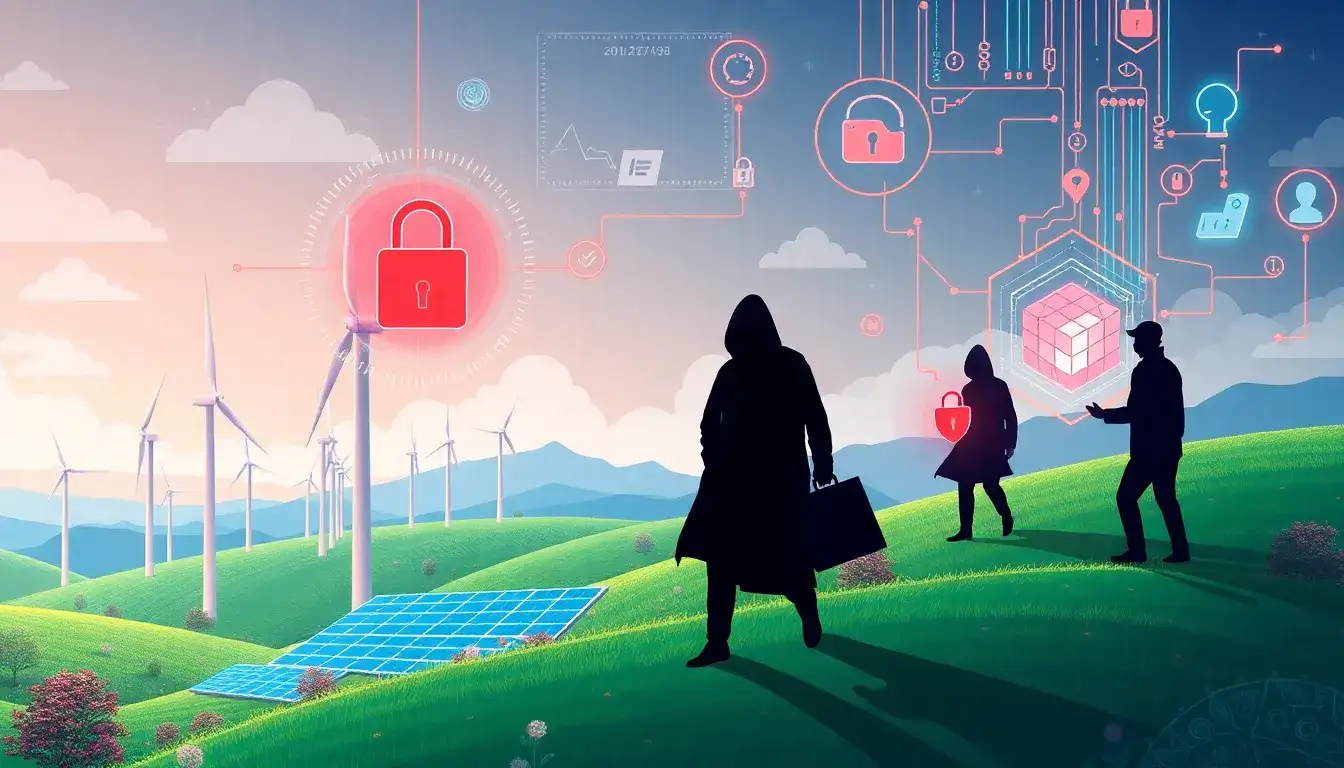
When using AI in renewable energy, several data privacy and security concerns arise:
- Vulnerability to Cyber Threats:
- Risk of Cyberattacks: Increased digitization in renewable energy infrastructure makes it more susceptible to cyber threats. Recent incidents, such as the cyberattack on the Texas power grid, highlight these vulnerabilities.
- Data Breach Implications: Access to sensitive operational data can lead to significant disruptions in energy supply, impacting consumer privacy and safety.
- Handling Sensitive Data:
- Data Volume and Sensitivity: AI systems handle large amounts of data, including sensitive operational information and personal consumer data. This raises concerns about how this data is stored, processed, and protected.
- Data Privacy Regulations: Compliance with data privacy regulations, such as GDPR or CCPA, becomes challenging in the context of AI-driven renewable energy systems.
- Decentralized Data Processing:
- Privacy-Preserving AI Solutions: Implementing decentralized and privacy-preserving AI models can mitigate some of these concerns by ensuring that data is processed securely without exposing sensitive information to centralized servers.
- Secure Data Sharing: These solutions allow for secure data sharing while maintaining privacy, which is crucial for collaborative projects within the renewable energy sector.
- Dependence on Critical Infrastructure:
- Reliance on Secure Systems: AI systems in renewable energy rely heavily on secure and stable critical infrastructure. Any compromise in this infrastructure can have cascading effects on privacy and security.
Addressing these challenges requires robust security measures, adherence to privacy regulations, and the adoption of privacy-preserving AI technologies to ensure the sustainable and secure integration of AI in the renewable energy sector.
Original article by NenPower, If reposted, please credit the source: https://nenpower.com/blog/what-are-the-main-data-privacy-and-security-concerns-when-using-ai-in-renewable-energy/

