

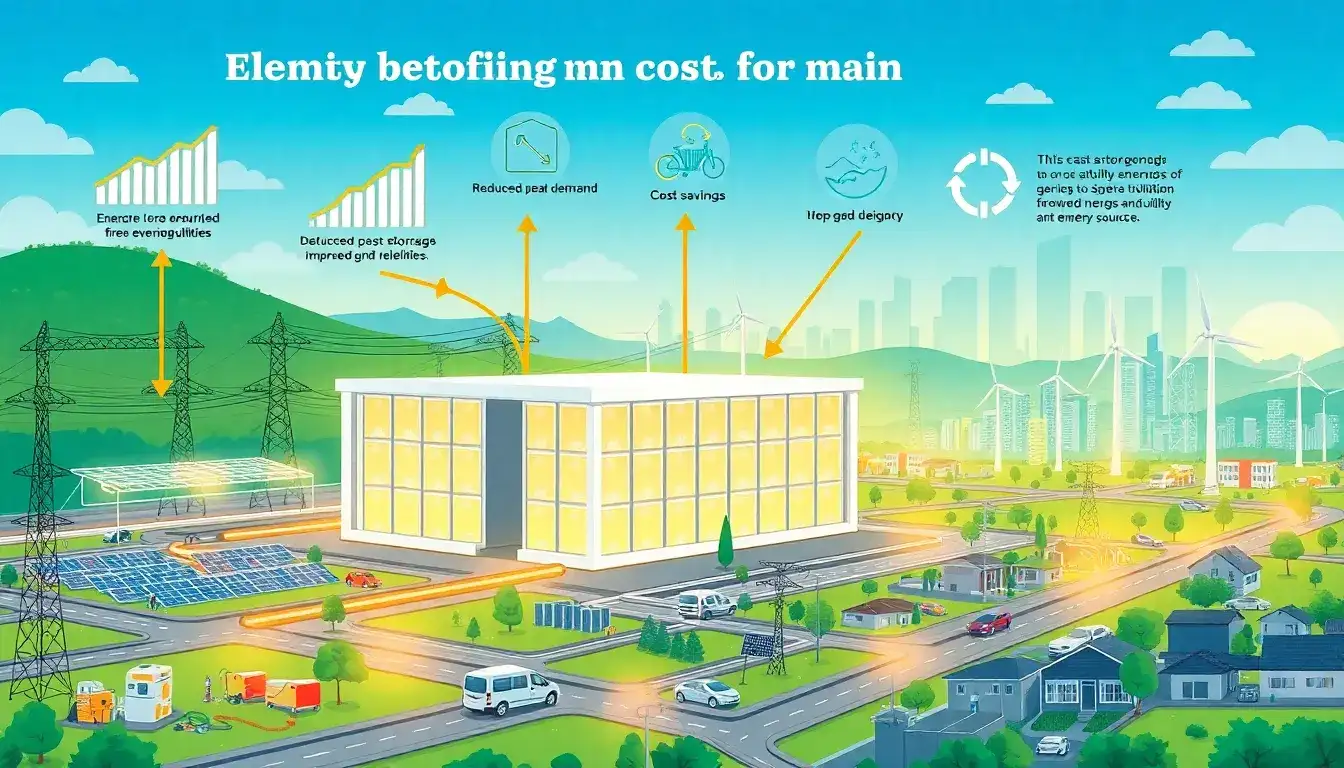
The main cost benefits of energy storage for utilities include the following:
1. Reduced Electricity Costs and Price Arbitrage
Energy storage systems, especially battery storage, enable utilities to store electricity when prices are low (usually during off-peak hours) and discharge it during periods of high demand and high prices. This price arbitrage lowers overall electricity procurement costs for utilities and consumers. For example, Texas energy storage deployments helped save consumers $750 million in energy costs during the summer of 2024 alone.
2. Peak Demand Reduction and Capacity Support
By discharging stored energy during peak demand periods, energy storage helps utilities shave peak loads, which reduces the need to run expensive peaker plants or invest immediately in new generation capacity. This reduces capital expenditures on generation and transmission infrastructure and lowers peak electricity prices.
3. Deferral of Transmission and Distribution Upgrades
Energy storage can act as a “Non-Wires Alternative,” meaning utilities can defer costly transmission and distribution system upgrades by using energy storage to relieve congestion and manage load locally. This postpones large capital investments and associated financing costs.
4. Integration and Optimization of Renewable Energy
Energy storage enables greater utilization of variable renewable energy sources like solar and wind by storing excess generation during periods of surplus and discharging when renewable output is low. This reduces reliance on fossil fuels and volatile fuel costs, further lowering operating costs for utilities.
5. Increased Grid Reliability and Resilience
While not a direct cost saving, improved grid reliability through energy storage reduces the frequency and duration of power outages. This avoids economic losses related to outages and reduces costly emergency procurement of power or backup generation.
6. Economic and Community Benefits
Energy storage projects create local jobs and generate tax revenue, indirectly benefiting utility economics and communities, supporting a positive business environment for utilities.
Summary Table of Cost Benefits
| Benefit | Description | Impact |
|---|---|---|
| Reduced Electricity Costs | Store cheap energy, dispatch at high prices | Lower procurement and wholesale costs |
| Peak Demand Reduction | Discharge at peak, avoiding peak generation costs | Defers new generation investments |
| Deferral of Grid Upgrades | Localized energy supply reduces immediate need for T&D infrastructure | Saves on capital expenditure and financing |
| Renewable Energy Integration | Store excess renewables, reduce fossil fuel use | Decreases fuel cost volatility and emissions |
| Improved Reliability and Resilience | Prevent costly outages and emergency power purchases | Avoided outage costs |
| Local Economic Growth | Job creation and tax revenue from storage projects | Economic stimulation beneficial to utilities |
These multifaceted cost advantages make energy storage a financially compelling solution for utilities looking to manage costs while integrating more renewables and improving grid operations.
Original article by NenPower, If reposted, please credit the source: https://nenpower.com/blog/what-are-the-main-cost-benefits-of-energy-storage-for-utilities/

