

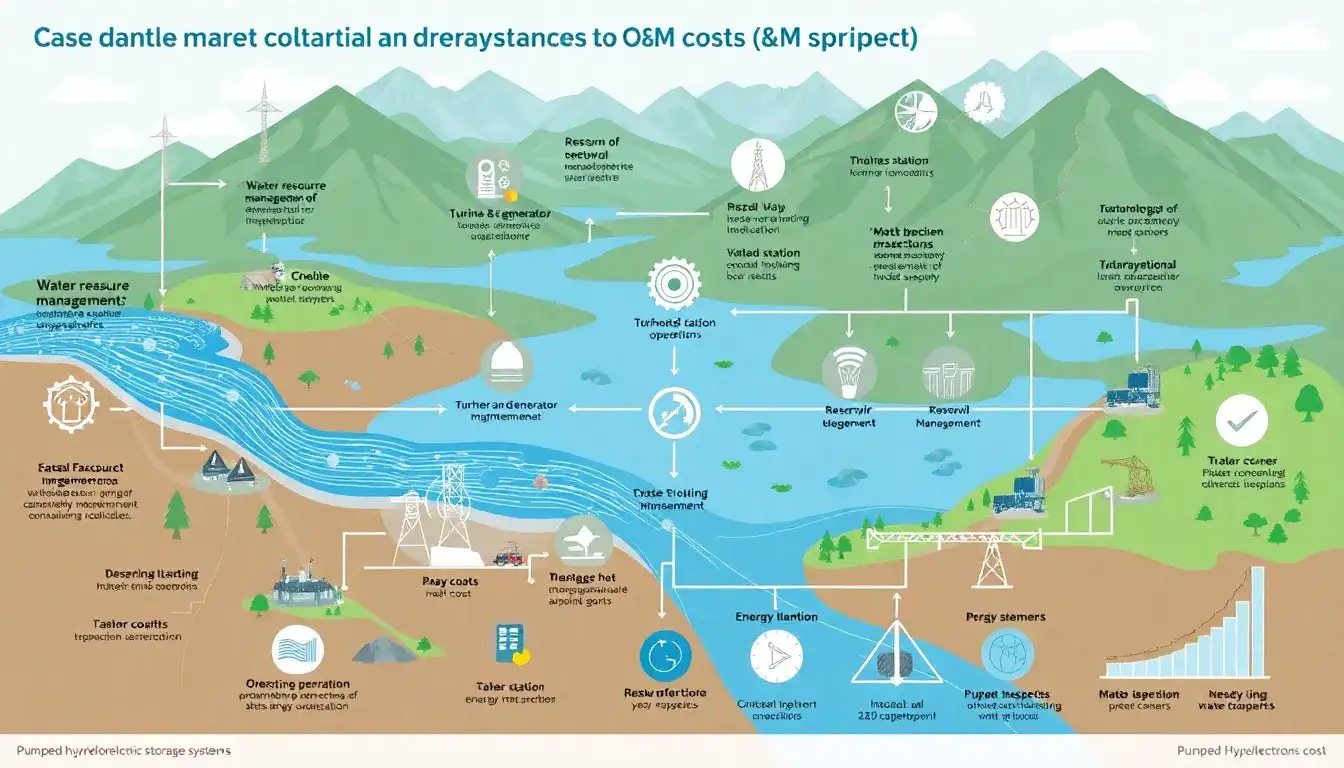
The main components of variable operation and maintenance (O&M) costs for pumped hydroelectric storage (PHS) systems include the following:
- Parts and repairs: Variable O&M includes costs for parts replacement and repairs of pumps, turbines, and electromechanical equipment. Parts costs are estimated at about 40% of labor costs and considered on a per kW basis. Repairs can include electronics-related fixes, rotary equipment repair, HVAC systems, and outdoor maintenance like dams and roads.
- Overhauls: Major overhauls are typically required every 10 years, with costs estimated around $16/kW-year. These overhauls are a significant component of the variable O&M but are not dependent on plant size. Repair costs are also projected to occur every five years, roughly 1% of the electromechanical costs.
- Labor for repairs and maintenance: While fixed O&M labor typically covers operational staff like operators working 24/7, variable O&M labor focuses more on maintenance and repair activities that occur as equipment wears out over time.
- Consumables and wear and tear: Consumables directly tied to energy throughput, such as lubricants and minor parts, contribute to variable O&M costs. Wear and tear on equipment from regular cycling is also a factor influencing these costs.
- Energy throughput dependence: Because variable O&M costs vary with the amount of energy cycled through the system, costs fluctuate with usage levels and operational patterns.
- Additional operational costs: Other variable costs can include HVAC and smoke/heat rejection system maintenance, supervisory management related to operational variability, and outdoor upkeep of infrastructure like roads and dams.
In relative terms, variable costs for PHS are typically low compared to total generation costs but include the consumables, labor, parts, periodic overhauls, and other maintenance directly tied to plant operation and energy cycle throughput. These costs are usually expressed per kW or per kWh cycled through the system and do not tend to decrease significantly over time since the technology is mature. For example, variable operating costs can be a small fraction of a cent per kWh, covering wear and tear, personnel involved in variable maintenance tasks, and related consumables.
Summary Table of Main Variable O&M Components for Pumped Hydro Storage
| Component | Description | Frequency/Notes |
|---|---|---|
| Parts replacement | Pumps, turbines, electronics parts | Continuous with operating hours |
| Repairs | Electromechanical, rotary equipment, HVAC | Every 5 years major repairs, ongoing minor fixes |
| Overhauls | Major refurbishments | Every 10 years, ~$16/kW-year |
| Consumables and wear & tear | Lubricants, minor parts, equipment degradation | Varies with energy throughput |
| Labor for variable maintenance | Repair and maintenance personnel | Based on repair needs, part of variable cost |
| Infrastructure maintenance | Dams, roads, outdoor facilities | Periodic, linked to operational variability |
| Supervisory costs | Management related to variable operations | Included in variable O&M estimates |
These components collectively determine the variable O&M costs for pumped hydroelectric storage systems, which are closely linked to how much energy the system cycles and the intensity of operational use.
Original article by NenPower, If reposted, please credit the source: https://nenpower.com/blog/what-are-the-main-components-of-variable-om-costs-for-pumped-hydroelectric-storage-systems/

