

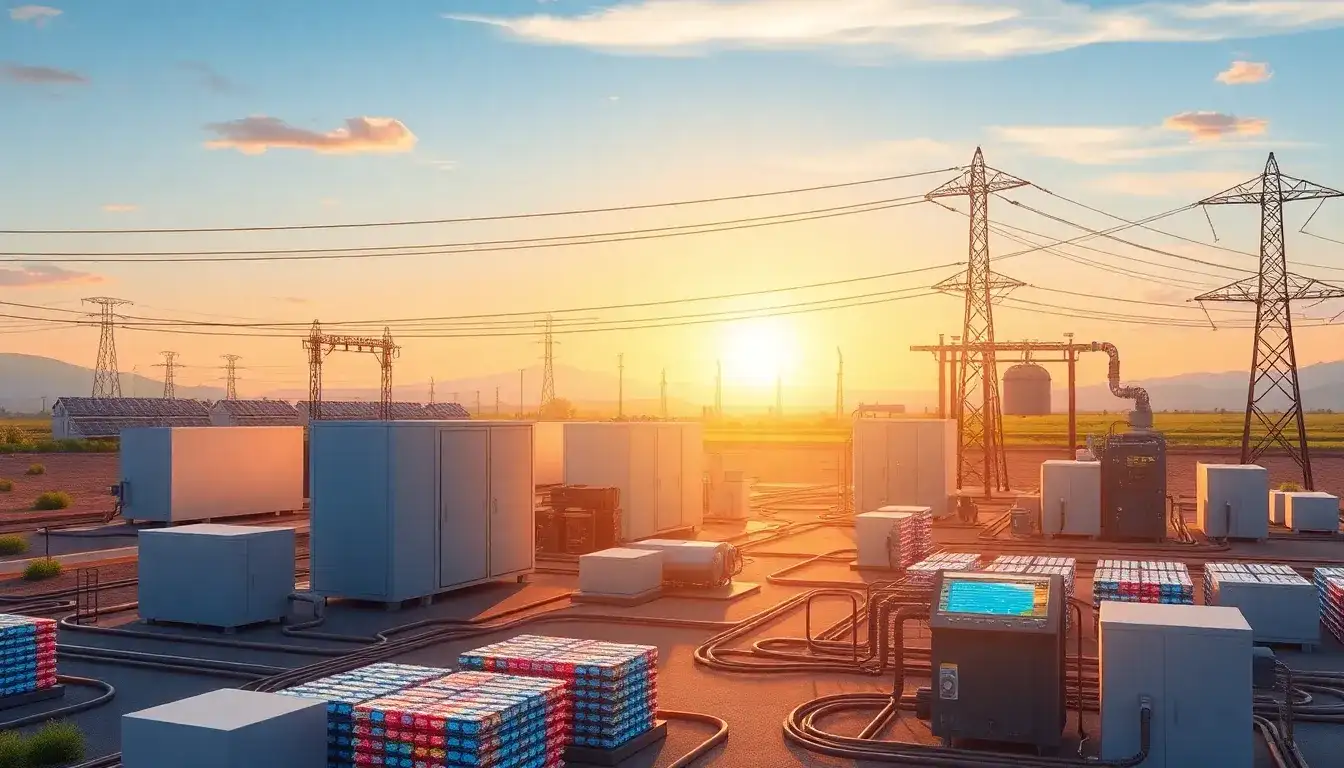
A utility-scale battery energy storage system (BESS) mainly includes the following components:
1. Battery Modules (Battery Cells)
- These are the core units that store chemical energy and convert it to electrical energy when needed.
- Battery modules are comprised of lithium cells wired in series and parallel to create modules, which stack into battery racks.
- Lithium chemistry commonly includes Lithium Iron Phosphate (LFP) or other lithium-ion types, with cells built and tested for safety and quality standards.
- Battery racks can be connected in series or parallel to meet the system’s voltage and capacity requirements.
2. Battery Management System (BMS)
- The “brain” of the battery racks, the BMS continuously monitors battery health, state of charge, temperature, and functionality.
- It manages safe charging and discharging cycles, ensuring the longevity and safety of the batteries.
- The BMS often has multiple tiers of control including main controllers, string management modules, and individual battery monitoring units.
3. Power Conversion System (PCS) or Bi-directional Inverter
- Converts the direct current (DC) stored in batteries into alternating current (AC) for grid use.
- It also converts AC from the grid into DC to charge the batteries.
- This system is essential for synchronizing battery output with the AC electric grid and enables charging and discharging functions.
4. Battery Enclosure
- The battery racks are housed within UL-rated, noncombustible enclosures designed to withstand environmental stress such as seismic activity, weather, and high winds.
- Enclosures are equipped with thermal management systems, like HVAC or liquid cooling, to maintain batteries within optimal temperature ranges and prevent overheating.
- Safety shutdowns occur if unsafe temperature levels are detected.
5. Energy Management System (EMS)
- The EMS optimizes overall system performance by controlling and directing the flow of energy.
- It communicates with the PCS and integrates with grid operations to manage charging and discharging based on demand or grid requirements.
6. Supervisory Control and Data Acquisition (SCADA) System
- SCADA provides real-time monitoring, control, and data acquisition for the entire BESS.
- Works alongside the EMS to ensure reliable, safe, and efficient operation 24/7.
Summary Table of Main Components
| Component | Function |
|---|---|
| Battery Modules (Cells) | Store chemical energy and convert to electrical energy |
| Battery Management System | Monitor and maintain battery health and safety |
| Power Conversion System | Convert DC to AC and AC to DC for charging and discharging |
| Battery Enclosure | Protect batteries and manage thermal conditions |
| Energy Management System | Optimize energy flow and system performance |
| SCADA System | Provide real-time monitoring, control, and data acquisition |
These components collectively enable utility-scale battery storage systems to effectively store and dispatch electricity on-demand, supporting grid stability and renewable integration.
Original article by NenPower, If reposted, please credit the source: https://nenpower.com/blog/what-are-the-main-components-of-a-utility-scale-battery-energy-storage-system/

