

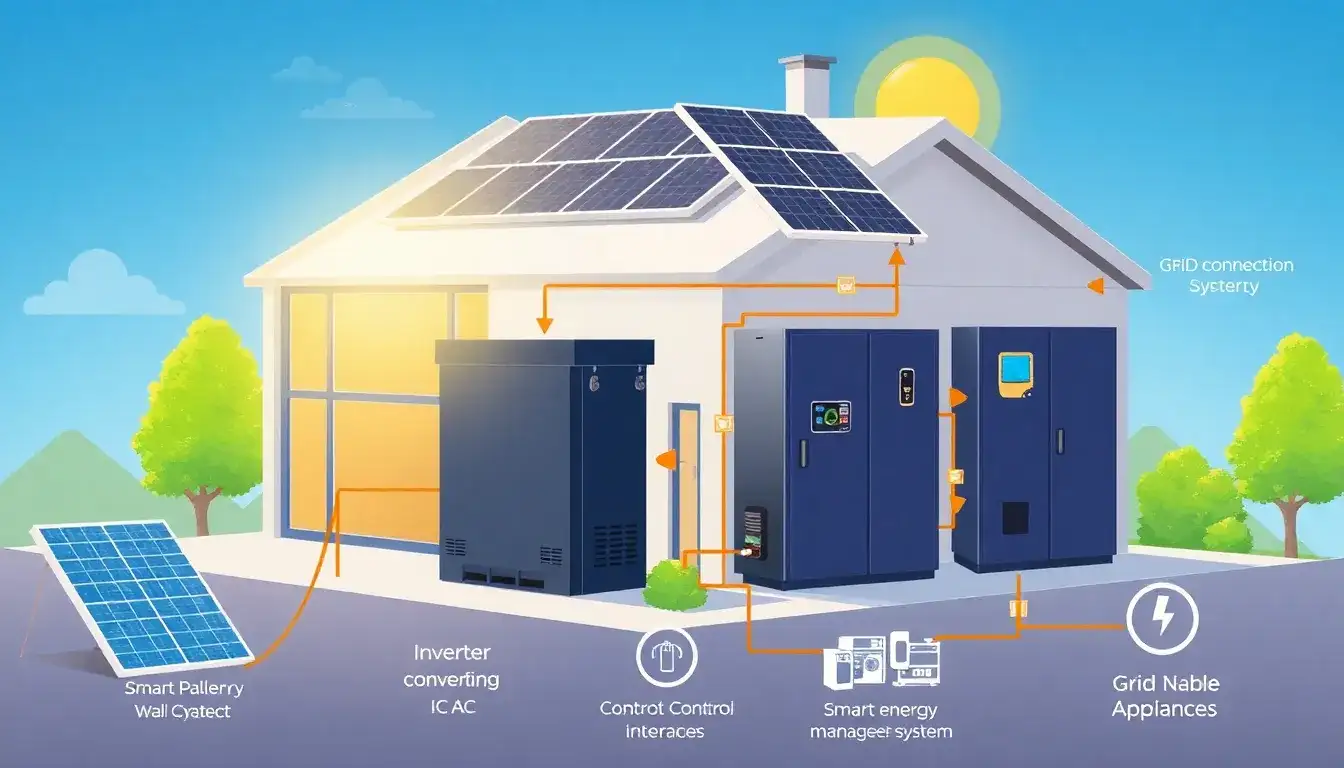
The main components of a residential energy storage system include:
- Solar Photovoltaic (PV) Panels:
- These panels convert sunlight into direct current (DC) electricity. They are typically installed on rooftops and serve as the energy source for the storage system.
- Solar Inverter:
- This device converts the DC electricity generated by PV panels into alternating current (AC) electricity, which is used by household appliances or fed into the grid.
- Battery Storage System:
- Often lithium-ion batteries, these store excess energy from solar generation for later use during nighttime or cloudy conditions.
- Battery Management System (BMS):
- Manages battery health, safety, and performance by controlling charging and discharging, ensuring optimal operation and longevity.
- Power Conversion System (PCS) or Hybrid Inverter:
- Converts DC power from batteries to AC for household use and can operate bi-directionally to charge batteries with AC power.
- Control and Protection Devices:
- Include circuit breakers, fuses, and lightning protectors that ensure safe operation by managing and isolating power flow.
- Grid Connection (if grid-tied):
- Allows the system to export excess energy to the grid and draw power when needed.
- Energy Management System (EMS):
- Monitors and manages energy production, storage, and consumption to optimize usage and efficiency.
Original article by NenPower, If reposted, please credit the source: https://nenpower.com/blog/what-are-the-main-components-of-a-residential-energy-storage-system/

