

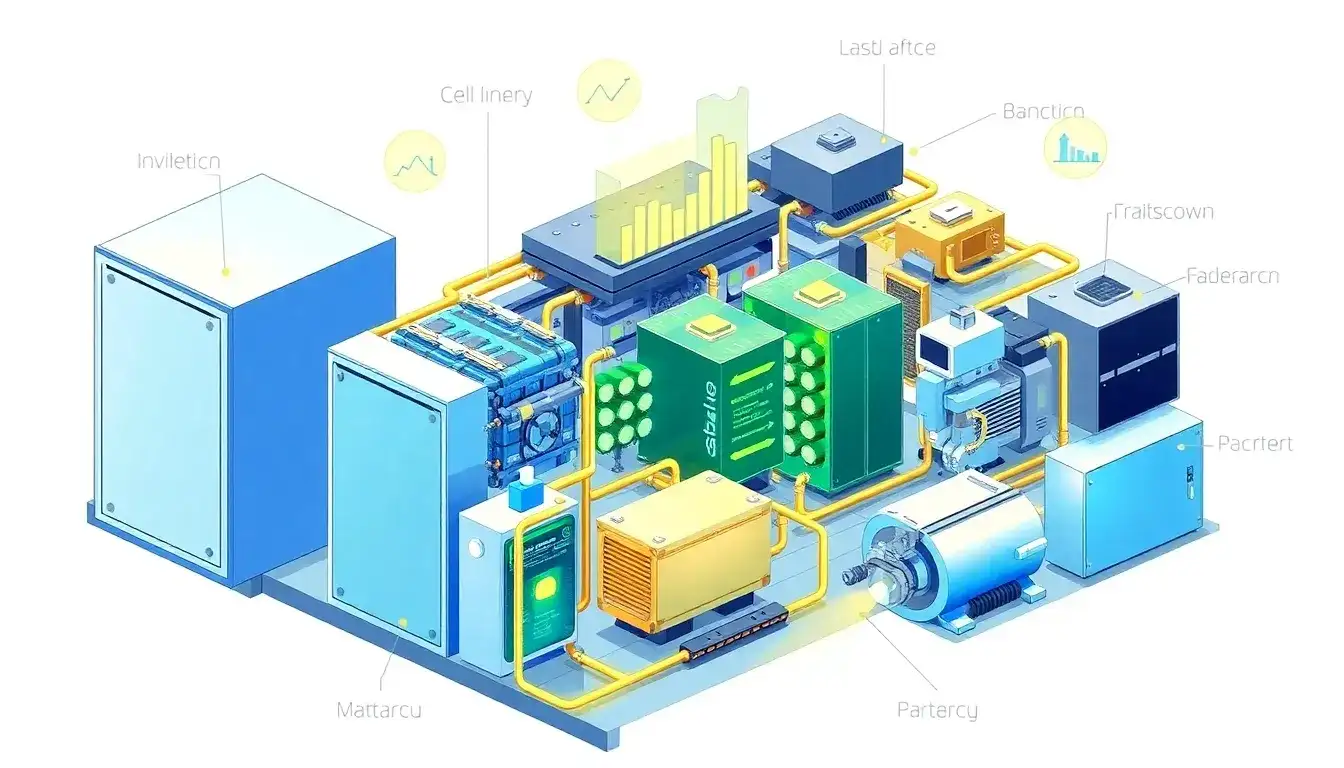
Main Components of a Battery Energy Storage System (BESS) and Their Contribution to Overall Cost
A Battery Energy Storage System (BESS) is a complex setup designed to store electrical energy from various sources, including renewable energy sources like solar and wind power. The main components of a BESS include:
1. Battery System
- Description: The battery system is the core component of a BESS, consisting of lithium cells, modules, and racks that store electrical energy. Batteries are typically made of lithium-ion or lithium-iron phosphate cells.
- Cost Contribution: The battery itself is one of the most expensive components, with costs typically in the range of $200/kWh and above, depending on the type and capacity.
- Functionality: The battery stores energy for later use, allowing electricity to be supplied when it is most needed.
2. Battery Management System (BMS)
- Description: The BMS acts as the “brain” of the battery system, ensuring safe operation by monitoring parameters like state of charge, state of health, voltage, temperature, and current.
- Cost Contribution: While not as costly as the battery itself, a BMS is crucial for preventing damage and prolonging battery life, adding to the overall system cost.
- Functionality: It safeguards and optimizes battery performance.
3. Power Conversion System (PCS)
- Description: Also known as a bi-directional inverter, the PCS converts DC power from the batteries to AC power for use in the grid and vice versa for charging.
- Cost Contribution: PCSs are costly due to their sophisticated technology and necessity in AC/DC conversion, contributing significantly to the overall system cost.
- Functionality: Enables the system to charge and discharge effectively with the electrical grid.
4. Energy Management System (EMS)
- Description: The EMS controls and optimizes the operation of the BESS, scheduling charges and discharges based on energy demand and availability.
- Cost Contribution: While not a hardware cost like others, EMS development and integration are critical, influencing the overall system cost through efficiency and optimization.
- Functionality: Ensures the system operates efficiently, aligning with grid needs.
5. Balance of System (BOS) Components
- Description: These include enclosures, HVAC systems, fire suppression systems, and other infrastructure necessary for safe and effective operation.
- Cost Contribution: BOS components, such as containers, climate control systems, and fire suppression systems, add to the total cost but have seen significant reductions due to technological advancements and standardization.
- Functionality: They provide an operational environment that protects the system and ensures longevity.
Overall Cost Considerations
- Engineering, Procurement, and Construction (EPC) Costs: These are significant and include design, construction, and deployment costs.
- Levelized Cost of Storage (LCOS): This comprehensive measure accounts for all costs over the system’s life, including maintenance and degradation, providing a true cost comparison with other energy resources.
In summary, the cost of a BESS is influenced by the battery cost, PCS, BMS, EMS, and BOS components. As technology advances, costs such as those for BOS and EPC have decreased, making BESSs more economically viable for energy storage solutions.
Original article by NenPower, If reposted, please credit the source: https://nenpower.com/blog/what-are-the-main-components-of-a-battery-energy-storage-system-and-how-do-they-contribute-to-the-overall-cost/

