

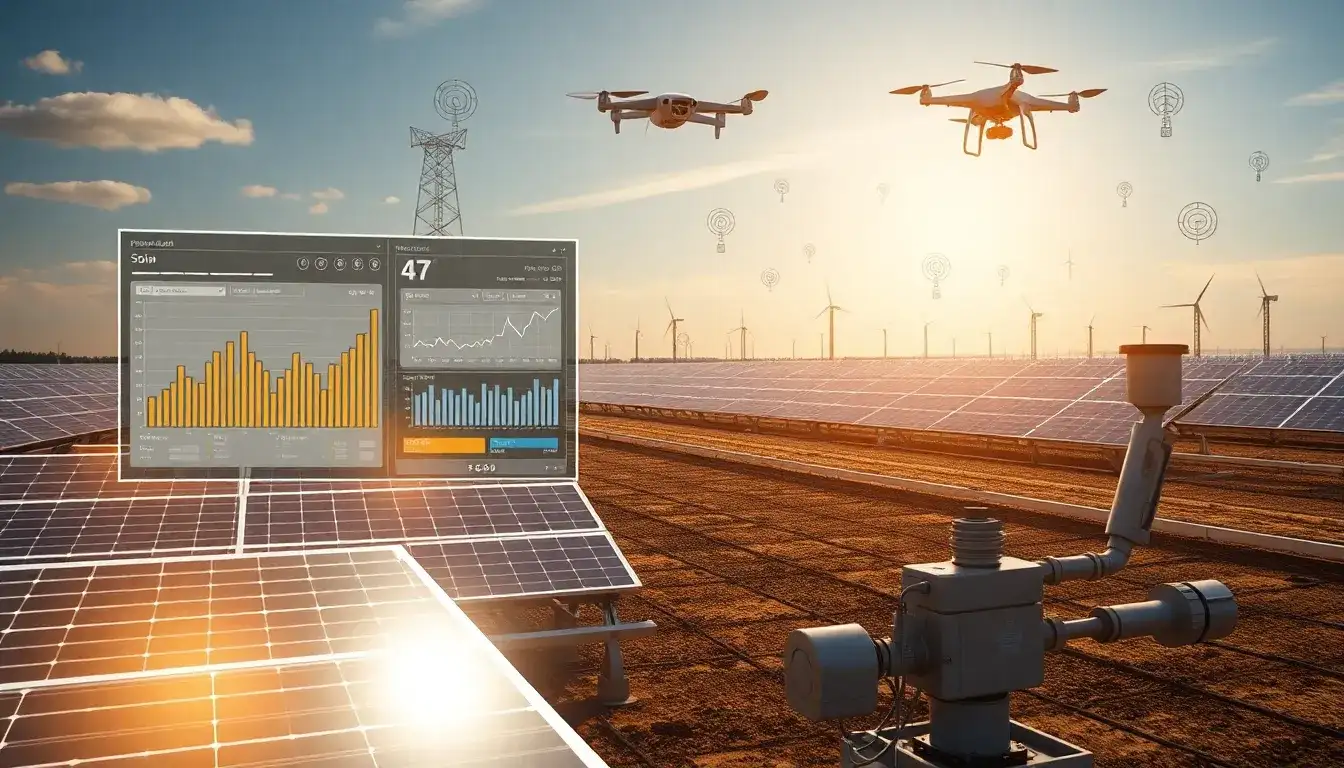
The main challenges faced by solar businesses without real-time data revolve around inefficiencies, delays, and inaccuracies that hinder effective operation, maintenance, forecasting, and decision-making. These challenges include:
1. Inefficient Performance Monitoring
Without real-time data, solar companies struggle to effectively monitor the performance of solar panels and related equipment like inverters. Problems such as soiling, shading, or equipment failures go undetected longer, causing extended downtime, increased operating costs, and reduced energy output.
2. Reactive Maintenance Instead of Proactive
Lack of real-time insights forces solar businesses to adopt reactive maintenance strategies, where problems are addressed only after they occur. This results in unexpected breakdowns and higher repair expenses, as early warnings that real-time data could provide are unavailable.
3. Management and Project Coordination Issues
Project managers miss critical milestones, potential bottlenecks, and budget overruns due to the absence of real-time data. This leads to difficulties in managing installation schedules, resource allocation, and quality control, potentially causing delays, increased costs, and customer dissatisfaction.
4. Inaccurate Energy Forecasting
Accurately predicting solar energy production is challenging without continuous data. This can cause supply-demand imbalances, threatening grid stability, leading to energy waste or shortages during peak usage times.
5. Data Loss and Disconnected Systems
Solar projects involve multiple stakeholders and stages; without real-time data collection systems, data loss due to human error, disconnected platforms, or manual processes is common. This incomplete or outdated information impairs decision-making, system optimization, and overall project performance.
6. Reduced Operational Efficiency and Scalability
Without real-time monitoring, it is difficult to quickly identify inefficiencies and optimize energy output. This negatively impacts the scalability of solar operations, as businesses cannot promptly respond to issues or implement improvements.
In summary, the absence of real-time data in solar businesses causes inefficiencies in monitoring, delayed and more costly maintenance, project management difficulties, forecasting inaccuracies, data loss risks, and restricted operational efficiency. Incorporating real-time data integration is crucial to enable proactive management, improve reliability, maximize energy production, and enhance customer satisfaction.
Original article by NenPower, If reposted, please credit the source: https://nenpower.com/blog/what-are-the-main-challenges-without-real-time-data-in-solar-businesses/

