

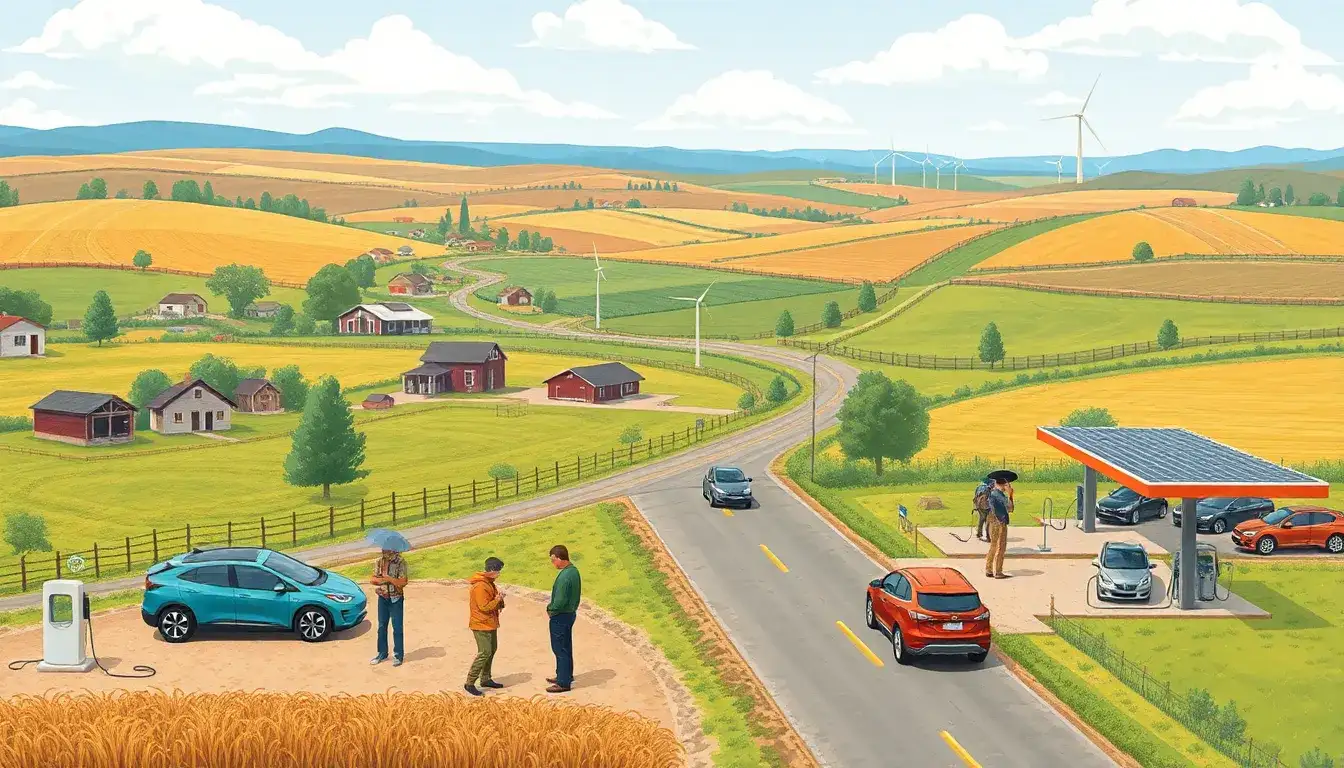
The main challenges to electric vehicle (EV) adoption in rural areas revolve primarily around infrastructure, economic factors, and environmental conditions:
1. Lack of Charging Infrastructure
Rural areas face a significant shortage of EV charging stations compared to urban regions. This scarcity creates “charging deserts,” where potential EV owners have limited or no access to public Level 2 or DC Fast Chargers. The lower population density in rural areas makes installing and maintaining charging infrastructure less economically viable, which in turn discourages the growth of EV ownership. This creates a feedback loop: fewer chargers lead to less EV adoption, and lower adoption further reduces incentives to build infrastructure.
2. Range Anxiety
Range anxiety—the fear of running out of battery before reaching a charging station—is particularly acute in rural areas. Residents often travel longer distances for work, errands, or services, and with sparse charging availability, the risk of being stranded without power is a major deterrent. This concern is amplified by the longer distances between rural towns and amenities.
3. Higher Initial Cost and Economic Barriers
The higher upfront cost of EVs remains a significant hurdle for many rural residents, who may have lower average incomes and less exposure to the total cost benefits of EV ownership (such as lower maintenance and fuel expenses). The perceived or real economic constraints thus slow rural adoption despite potential long-term savings.
4. Environmental and Seasonal Challenges
Reduced battery performance and driving range during winter months affect EV usability in colder rural regions. Additionally, waiting times outside to charge in harsh weather conditions can be a deterrent.
5. Additional Barriers for Indigenous and Remote Communities
In remote and Indigenous rural areas, challenges are compounded by poor road conditions, unreliable electricity supply, and inadequate infrastructure investment. These limitations affect not just EV adoption but also broader economic and social connectivity. Advocates stress that without reliable charging infrastructure, essential activities such as business operations, family connections, and food access are impacted.
Overall, the main challenges to rural EV adoption are the lack of accessible and reliable charging infrastructure, range anxiety from longer rural travel distances, higher upfront vehicle costs, and environmental factors like winter impacts. Addressing these requires coordinated efforts including government incentives, private investment, community-driven solutions, and technology improvements to expand infrastructure and reduce costs in rural and remote areas.
Original article by NenPower, If reposted, please credit the source: https://nenpower.com/blog/what-are-the-main-challenges-to-ev-adoption-in-rural-areas/

