

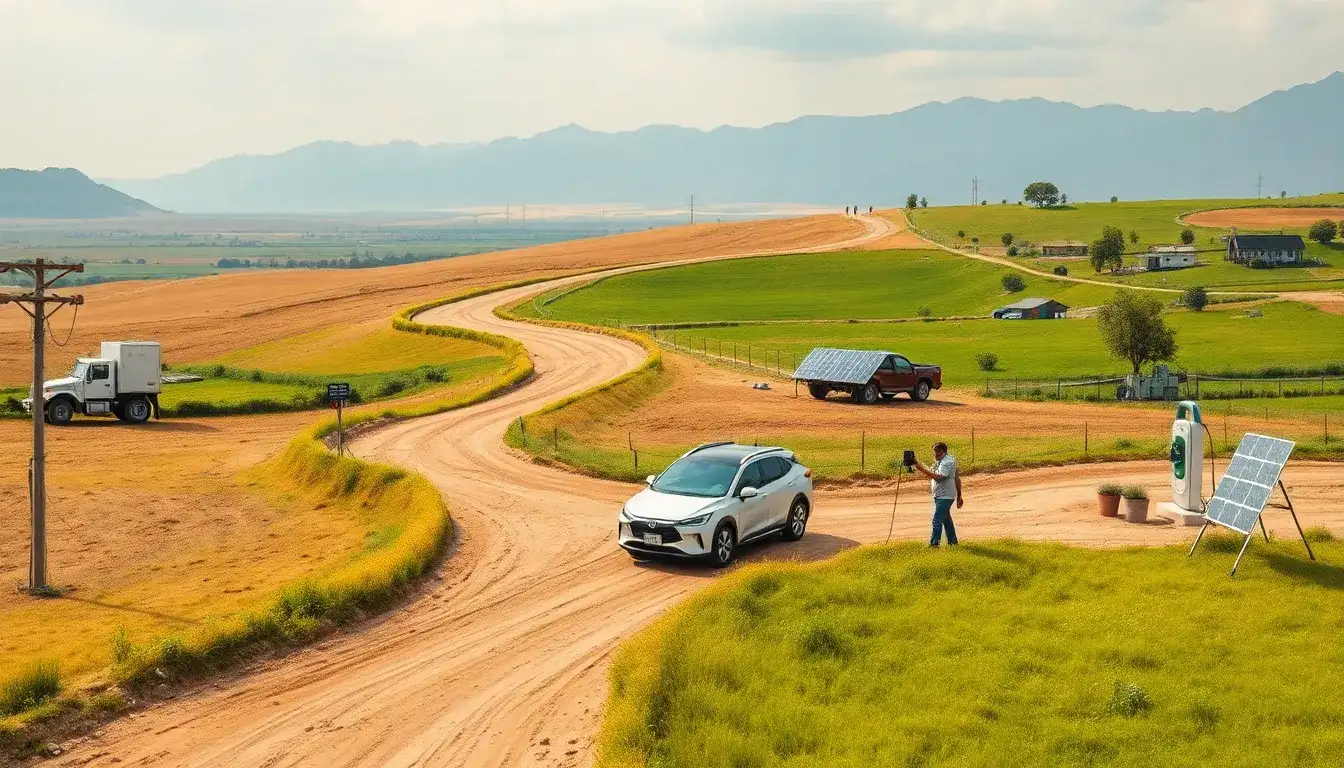
Rural residents face several key challenges when using electric vehicles (EVs), mainly centered on charging infrastructure, range anxiety, costs, and environmental factors:
Main Challenges for Rural EV Users
- Lack of Charging Infrastructure
Rural areas suffer from a scarcity of accessible EV charging stations, often described as “charging deserts” due to the low density of chargers available. Unlike urban areas with a dense network of chargers, rural regions have fewer public charging options, which restricts long-distance travel and convenience. The limited availability of fast-charging stations in these areas also means charging can take a long time, adding to inconvenience. - Range Anxiety
Because rural residents typically travel longer distances between destinations, they experience heightened range anxiety—the fear that their EV will run out of battery before reaching a charger. This worry is intensified by the infrequent and unreliable chargers in rural areas, as well as concerns over chargers being out-of-service or malfunctioning. - High Installation and Maintenance Costs
Building and maintaining EV charging stations in rural communities is expensive due to lower population densities and less frequent use, which makes it difficult to justify the investment cost and recover expenses. Home electrification projects for EV charging can also involve high upfront costs, posing a barrier for many rural homeowners and businesses despite available government rebates and incentives. - Reduced Battery Performance and Weather Concerns
Battery performance and EV range decrease in colder winter months, which is a particular problem in rural areas with cold climates. Additionally, rural EV users often lack protection from the elements while waiting for their vehicles to charge, and some may not have access to reliable electric service to power chargers. - User Convenience and Safety Issues
Rural users also face challenges related to the convenience and safety of charging locations. Planning charging stops on long trips can be complicated, chargers may not always be user-friendly, and the relative safety of rural charging sites can be a concern.
Summary
The core issues for rural EV residents boil down to insufficient and expensive charging infrastructure, concerns about running out of battery power on long drives, the high initial costs of setting up home charging stations, performance limitations in harsh weather, and practical difficulties in accessing reliable, convenient charging. Solutions include expanding fast-charging networks in rural travel corridors, offering financial incentives to reduce installation costs, and enhancing grid reliability and microgrid options to support sustainable EV use in rural communities.
Original article by NenPower, If reposted, please credit the source: https://nenpower.com/blog/what-are-the-main-challenges-rural-residents-face-when-using-evs/

