

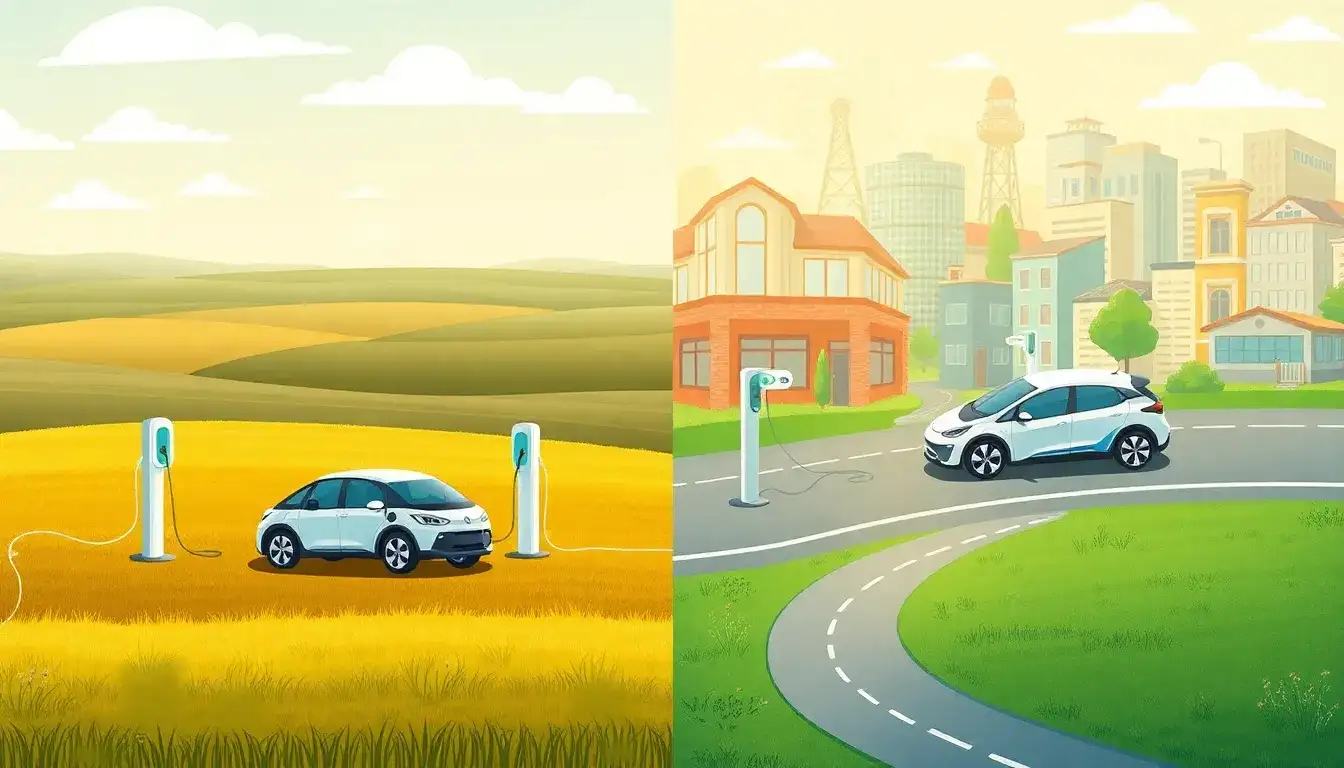
Rural electric vehicle (EV) owners face several unique challenges compared to their urban counterparts:
Main Challenges Facing Rural EV Owners
-
Infrastructure Availability
- Charging Stations: Rural areas often lack dense networks of charging stations, commonly referred to as “charging deserts,” making it difficult for EV owners to find places to recharge, especially on long trips.
- Limited Fast Charging: The scarcity of fast-charging options extends charging times, exacerbating range anxiety.
-
Economic Barriers
- High Upfront Costs: The initial purchase cost of EVs and the installation of charging infrastructure are significant financial hurdles for rural communities.
- Maintenance and Operation Costs: Although EVs offer long-term savings, the high installation and maintenance costs of rural charging stations are hard to justify due to low usage.
-
Range Anxiety and Planning
- Rural drivers frequently travel long distances and may worry about running out of charge without access to a charging station, requiring meticulous planning for trips.
- The lack of charging points along rural routes can make even short trips feel risky.
-
Technical and Environmental Factors
- Out-of-Order Chargers: Rural residents may encounter stations that are out of order, adding to frustration and travel uncertainty.
- Winter Performance: Reduced battery performance in cold weather and lack of protection while charging are additional concerns in rural areas.
-
Grid Capacity and Utility Upgrades
- Rural areas often require significant upgrades to electrical infrastructure to support EV charging, which can be costly and logistically challenging.
Original article by NenPower, If reposted, please credit the source: https://nenpower.com/blog/what-are-the-main-challenges-rural-ev-owners-face-compared-to-their-urban-counterparts/

