

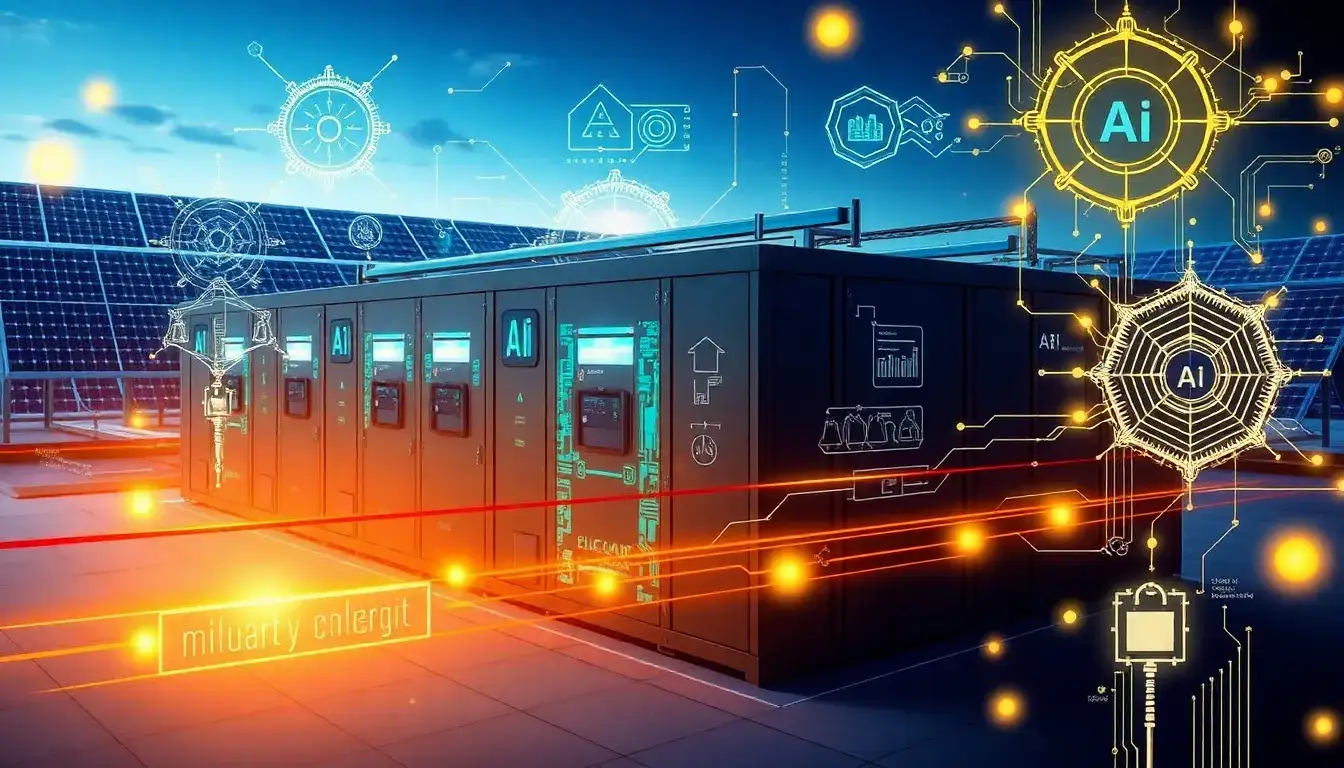
The main challenges of integrating AI into energy storage systems are multifaceted, involving technical, financial, and security aspects:
1. High Initial Costs
- The adoption of AI technologies in energy storage requires significant upfront investment in specialized software and personnel with expertise in AI and energy systems. These costs can be prohibitive, especially for large-scale deployment.
2. Data Security and Privacy Risks
- AI integration involves automating and processing large volumes of sensitive data, including customer information, plant operations, and grid data. This creates significant cybersecurity risks requiring robust safeguards to comply with regulations like GDPR and protect against cyber threats.
3. Complexity of Managing Renewable Intermittency
- Renewable energy sources such as solar and wind are inherently variable. AI must continuously analyze complex and fluctuating data (weather, grid stability, energy demand) to optimize when to store or release energy, which demands high accuracy and advanced predictive models.
4. Scalability and Infrastructure Challenges
- Scaling AI-enhanced energy storage solutions requires substantial investments in infrastructure to handle fluctuating energy supplies reliably. Developing AI-driven smart grids and managing distributed storage at scale involve technical and logistical complexities.
5. Integration with Diverse Storage Technologies
- AI must be adaptable to different energy storage technologies (batteries, pumped hydro, carbon capture storage), each with unique operational characteristics. Tailoring AI algorithms to optimize performance across these diverse systems is challenging.
6. Ensuring Reliability and Safety
- Continuous AI monitoring is crucial for battery safety and system reliability. Predictive maintenance and safety monitoring driven by AI need to be highly dependable to prevent failures and prolong system lifespan.
In summary, while AI offers transformative potential to optimize energy storage by improving efficiency, predicting demand, and stabilizing grids, its integration faces significant challenges from high costs, data security, scalability, the complexity of renewable intermittency, diverse technology requirements, and ensuring system safety and reliability. Addressing these will be critical to fully realizing AI’s benefits in energy storage systems.
Original article by NenPower, If reposted, please credit the source: https://nenpower.com/blog/what-are-the-main-challenges-of-integrating-ai-into-energy-storage-systems/

