

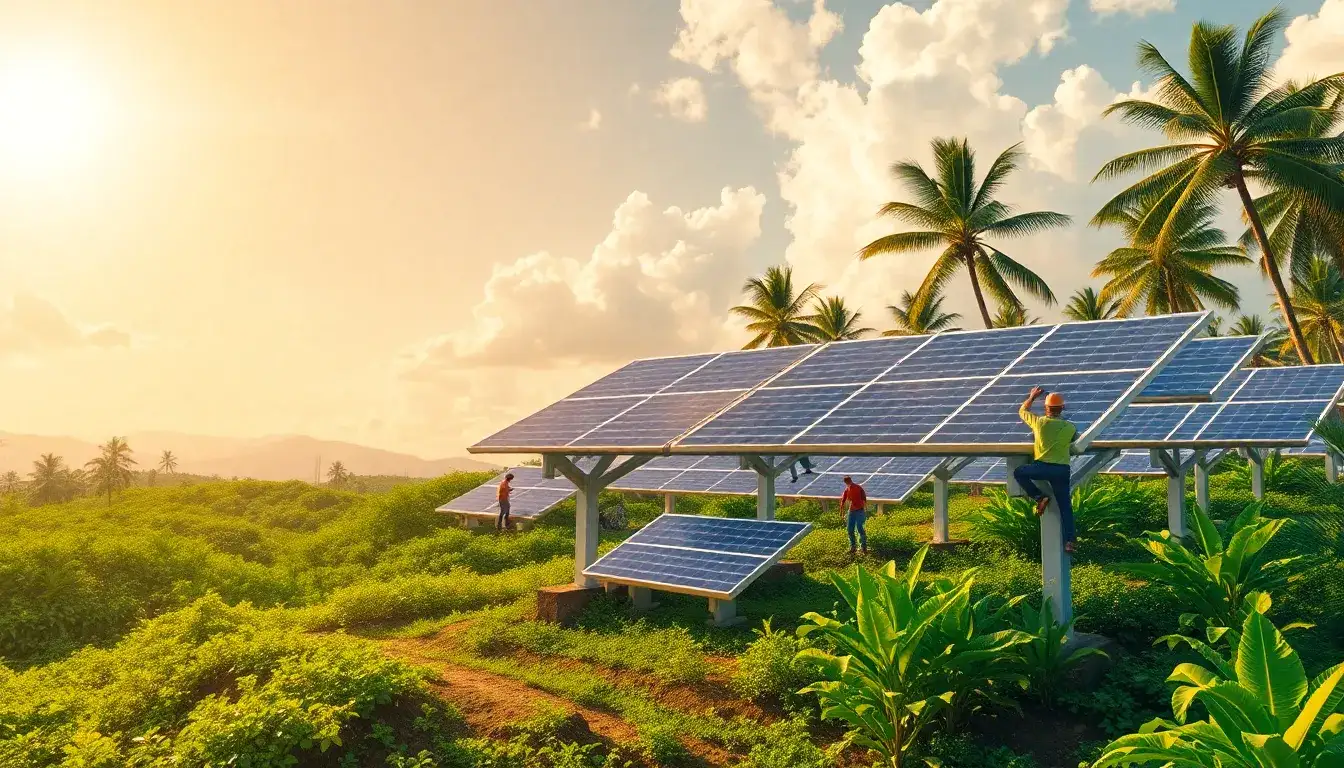
The main challenges of installing bifacial solar panels in tropical regions stem from the unique environmental and climatic conditions characteristic of these areas. These challenges include:
1. High Temperature and Humidity Effects
- Elevated temperatures typical of tropical climates reduce the efficiency of all solar panels, including bifacial ones, because their performance decreases as temperature rises. Bifacial panels, despite their higher theoretical efficiency, still suffer energy yield losses under intense heat.
- High humidity (often exceeding 80%) accelerates wear and tear on panels and associated components like batteries, compromising longevity and reliability of solar systems.
- Tropical regions also have heavy rainfall and prolonged wet seasons (monsoons), which increase risks of water ingress. Panels must have robust waterproofing (IP67 or higher) and proper edge sealing to prevent moisture-related damage.
2. Optimal Installation Considerations
- Bifacial panels rely on capturing sunlight from both sides; thus, installation angle and orientation must be carefully optimized to maximize reflected light from the ground surface (albedo effect). In tropical areas, selecting an appropriate tilt (often 10-15 degrees) is crucial to balance sun exposure and natural cleaning by rain.
- The ground surface beneath the panels should have high reflectivity (e.g., light-colored or reflective surfaces) to maximize rear-side energy capture. In tropical environments, this may require additional ground treatment or specific mounting structures to enhance reflectivity.
- Elevated mounting systems that allow airflow beneath the panels help reduce operating temperatures and improve efficiency, but such systems must be designed to withstand tropical weather conditions, including high winds and heavy rains.
3. Environmental Challenges: Shading, Dirt, and Organic Growth
- Tropical regions often have dense vegetation and frequent cloud cover; shading from trees or buildings can significantly reduce bifacial panel performance since shading limits rear side light capture.
- The humid and organic-rich environment promotes faster accumulation of dirt, dust, and organic materials like algae or mold on panel surfaces, necessitating more frequent cleaning to maintain efficiency.
- Steeper panel angles help natural cleaning by rainwater, but maintenance schedules must be more rigorous in tropical climates to prevent performance degradation.
4. Corrosion and Durability
- Coastal tropical regions add the challenge of salt corrosion, which can damage mounting hardware and electrical connections. Marine-grade, corrosion-resistant materials and protective coatings are essential to ensure system longevity.
- Regular inspections and maintenance to address corrosion and ensure secure electrical connections are necessary in humid and salty tropical environments.
In summary, the main challenges of installing bifacial solar panels in tropical regions involve managing high heat and humidity impacts on efficiency and durability, optimizing installation angles and surfaces to capture both direct and reflected light effectively, preventing shading and organic fouling, and protecting the system against water ingress and corrosion. Successful bifacial installations in tropical climates require specialized materials, design adjustments, vigilant maintenance, and professional expertise tailored to the local environment.
Original article by NenPower, If reposted, please credit the source: https://nenpower.com/blog/what-are-the-main-challenges-of-installing-bifacial-solar-panels-in-tropical-regions/

