

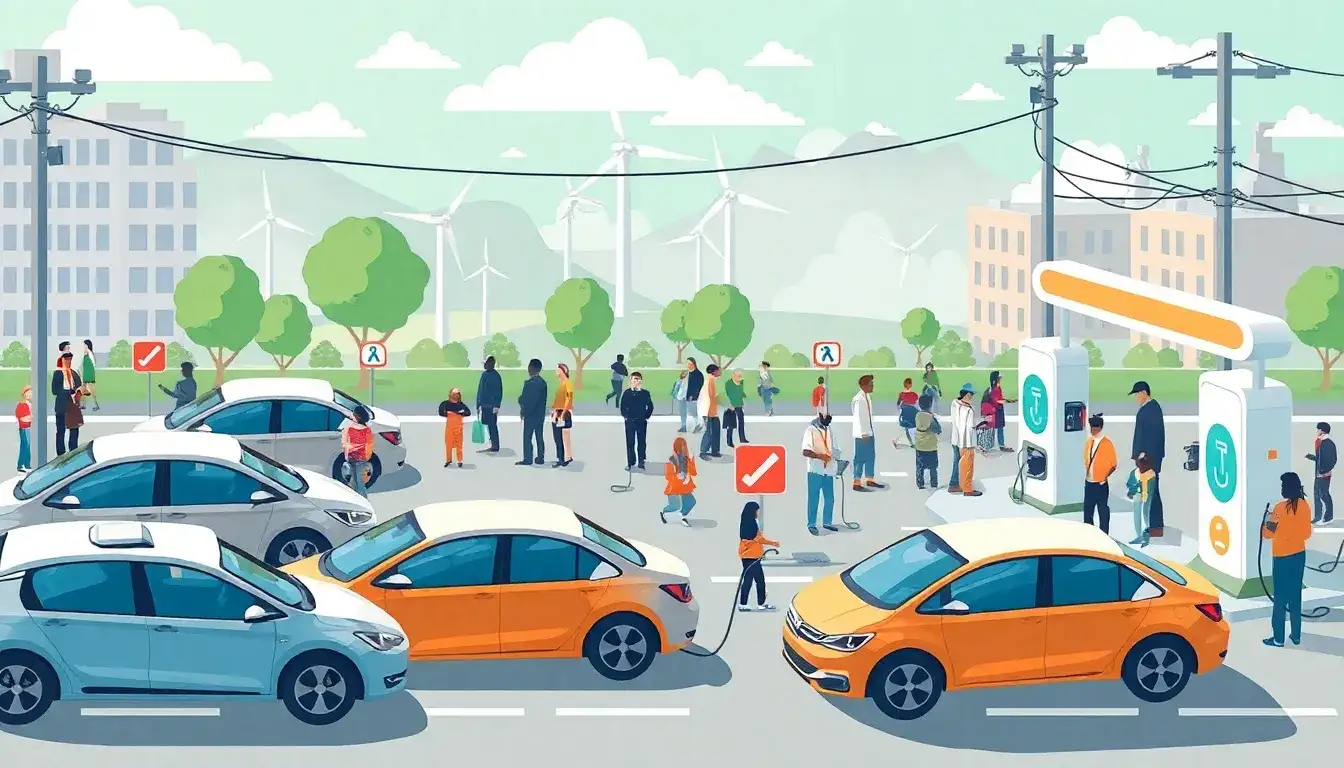
The transition to electric vehicles (EVs) faces several key challenges across technical, economic, and infrastructural domains:
1. Charging infrastructure gaps
Limited public charging availability, particularly in rural areas, creates “charging deserts” and range anxiety. Urban-rural disparities are significant globally, with rural regions often lacking both charging stations and grid capacity to support widespread EV adoption.
2. Battery technology limitations
Current batteries face constraints in energy density, driving range, and charging speeds. Production requires rare earth elements and critical minerals like lithium and cobalt, raising concerns about supply chain sustainability and geopolitical dependencies.
3. Raw material supply chain pressures
Scaling EV production demands massive increases in critical mineral extraction, with potential bottlenecks in lithium, nickel, and cobalt supplies. Sustainable mining practices and recycling infrastructure remain underdeveloped.
4. Regional adoption disparities
EV purchase intent varies dramatically by geography:
- CARB vs non-CARB U.S. states show 38% vs 25% EV purchase intent
- Urban vs rural intent differs globally (e.g., 51% urban vs 18% rural in U.S.)
- Germany’s western states show higher adoption than eastern regions.
5. Grid integration challenges
Mass EV adoption requires grid upgrades for power demand management, including smart charging systems and two-way vehicle-to-grid (V2G) technologies. Regional grids may struggle with peak loads without coordinated planning.
6. Market fragmentation
Consumer preferences increasingly favor hybrid EVs over full battery-electrics in many markets, complicating automakers’ transition strategies. Affordable EV models remain limited outside China.
7. Manufacturing scalability
Transitioning automotive supply chains from internal combustion engines to electric drivetrains requires massive capital investment and workforce retraining, particularly in battery production facilities.
8. Policy coordination gaps
Inconsistent regulations across regions and slow permitting for mining/processing facilities hinder material supply chain development. Environmental and labor standards require international harmonization.
Original article by NenPower, If reposted, please credit the source: https://nenpower.com/blog/what-are-the-main-challenges-in-transitioning-to-electric-vehicles/

