

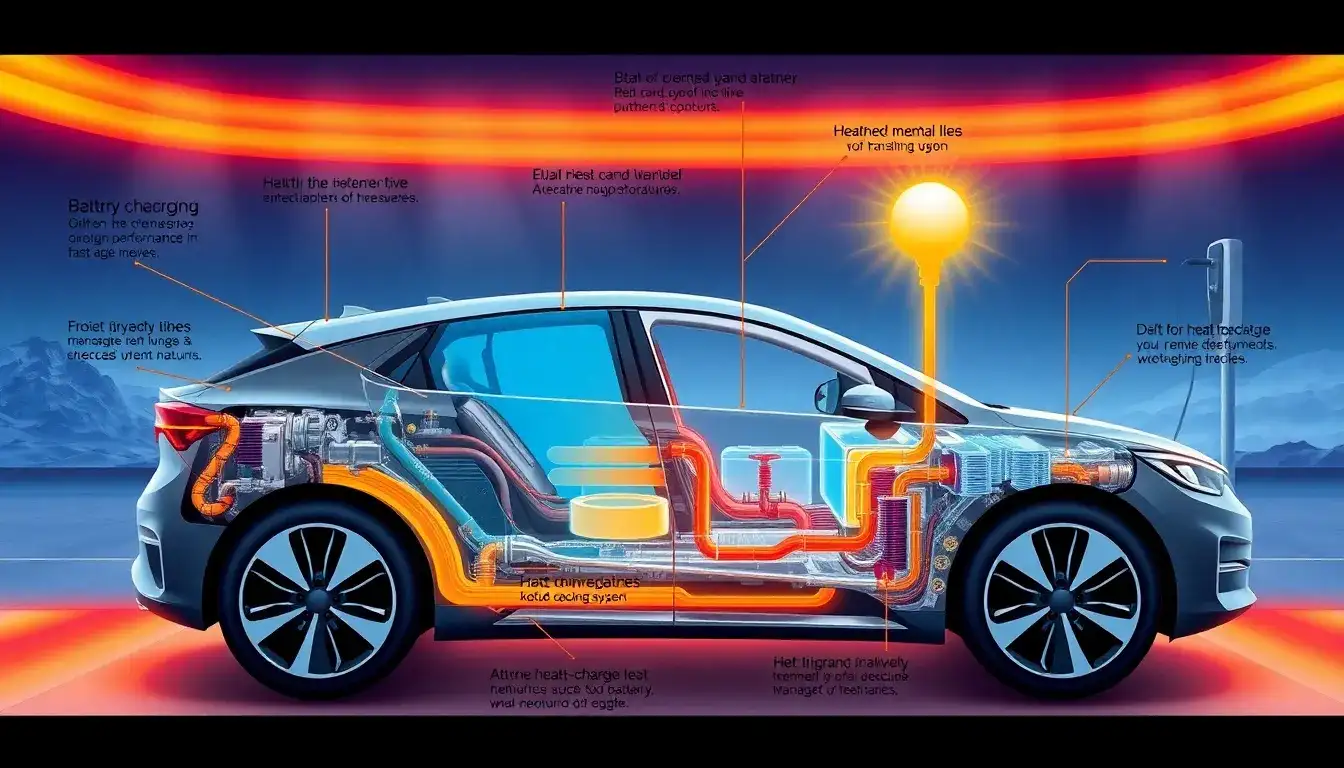
Key Challenges
- Battery Heating: Fast charging significantly increases the temperature of the battery pack, which can lead to damage and reduce the lifespan of the battery cells if not properly managed.
- Charger Heating: The power electronics within charging stations also generate substantial waste heat, requiring robust cooling systems to prevent overheating and ensure efficient operation.
- Temperature Extremes: EVs need to operate efficiently in both extremely hot and cold environments, which complicates thermal management compared to moderate temperatures. This can impact charging speed and battery performance.
- Cooling System Complexity and Cost: Effective thermal management often demands sophisticated and expensive cooling systems, adding to the infrastructure costs of charging stations.
- Need for Efficient Cooling Methods: To maintain optimal battery temperatures, efficient cooling methods like liquid or refrigerant cooling are necessary, especially during high-power fast charging.
- Thermal Mass Saturation: During fast charging, the thermal mass of the battery can become saturated, requiring strategies like reducing charge current to manage heat effectively.
These challenges highlight the importance of advanced thermal management systems in ensuring the performance, safety, and longevity of EV batteries during fast charging.
Original article by NenPower, If reposted, please credit the source: https://nenpower.com/blog/what-are-the-main-challenges-in-thermal-management-for-fast-charging-evs/

