

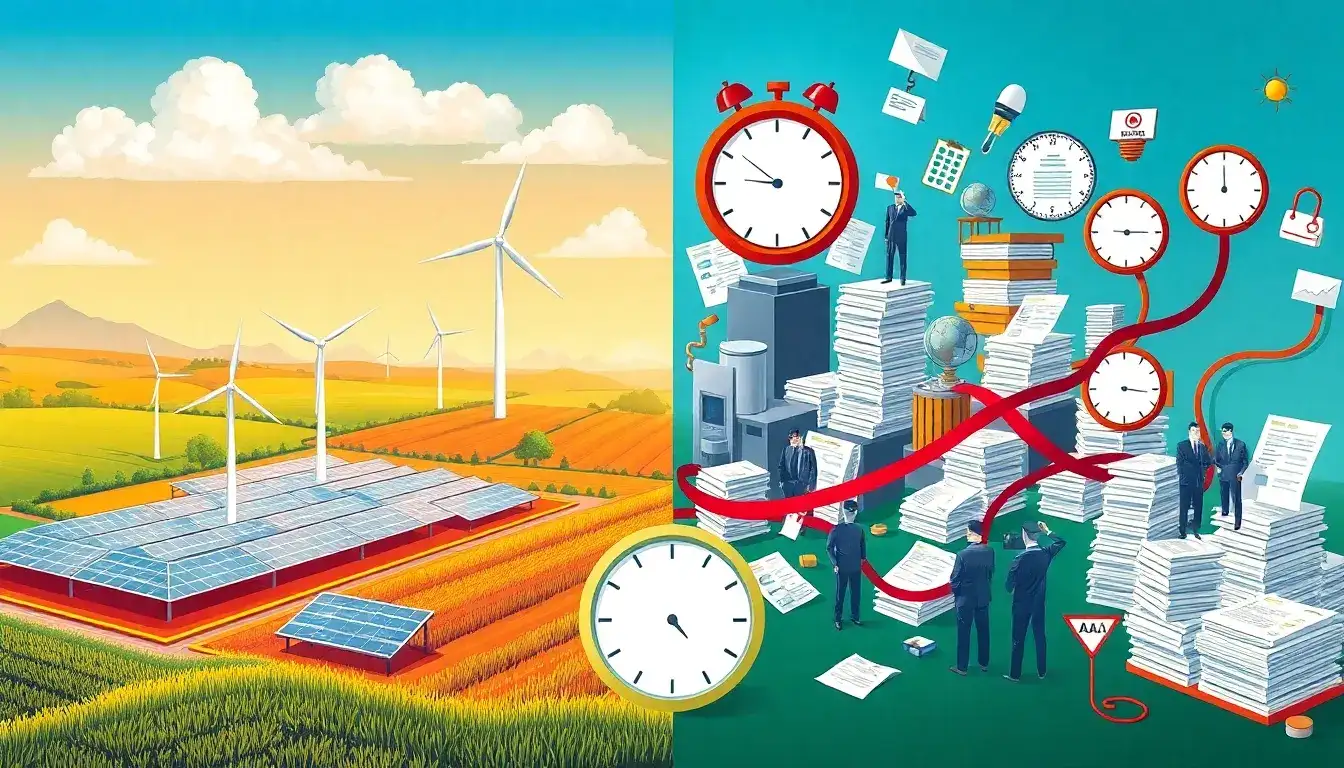
1. Prolonged Timelines
Clean energy projects face average wait times of 4.5 years for National Environmental Policy Act (NEPA) reviews, with transmission projects often requiring 6.5 years. Some projects face decade-long permitting processes, equivalent to the construction time of the Panama Canal or two Hoover Dams. These delays jeopardize climate goals and economic growth, risking 550 million metric tons of additional emissions and $100+ billion in lost investment this decade.
2. Multi-Level Coordination Issues
Projects frequently require permits from federal, state, and local authorities, leading to bureaucratic bottlenecks. In California, overlapping requirements exacerbate delays, while 15% of U.S. counties/cities impose bans or restrictions on clean energy infrastructure. The lack of standardized processes across jurisdictions creates uncertainty for developers.
3. Transparency and Engagement Gaps
Stakeholders often encounter opaque decision-making frameworks, particularly in early project planning stages. While robust environmental reviews and community input remain essential, inefficient administrative practices slow the process without necessarily improving outcomes.
4. Land-Use Conflicts
Renewable energy projects compete with agriculture, conservation, and community needs. Local opposition (NIMBYism) and complex land-use negotiations further delay approvals, despite polls showing broad public support for clean energy infrastructure.
5. Regulatory Balance Challenges
Reform efforts must navigate tensions between expediting reviews and maintaining environmental safeguards. Overly rigid processes delay projects like carbon capture facilities, while rushed approvals risk community and ecological harm. Solutions require streamlining administrative hurdles without compromising thorough assessments.
Original article by NenPower, If reposted, please credit the source: https://nenpower.com/blog/what-are-the-main-challenges-in-the-current-permitting-process-for-clean-energy-projects/

