

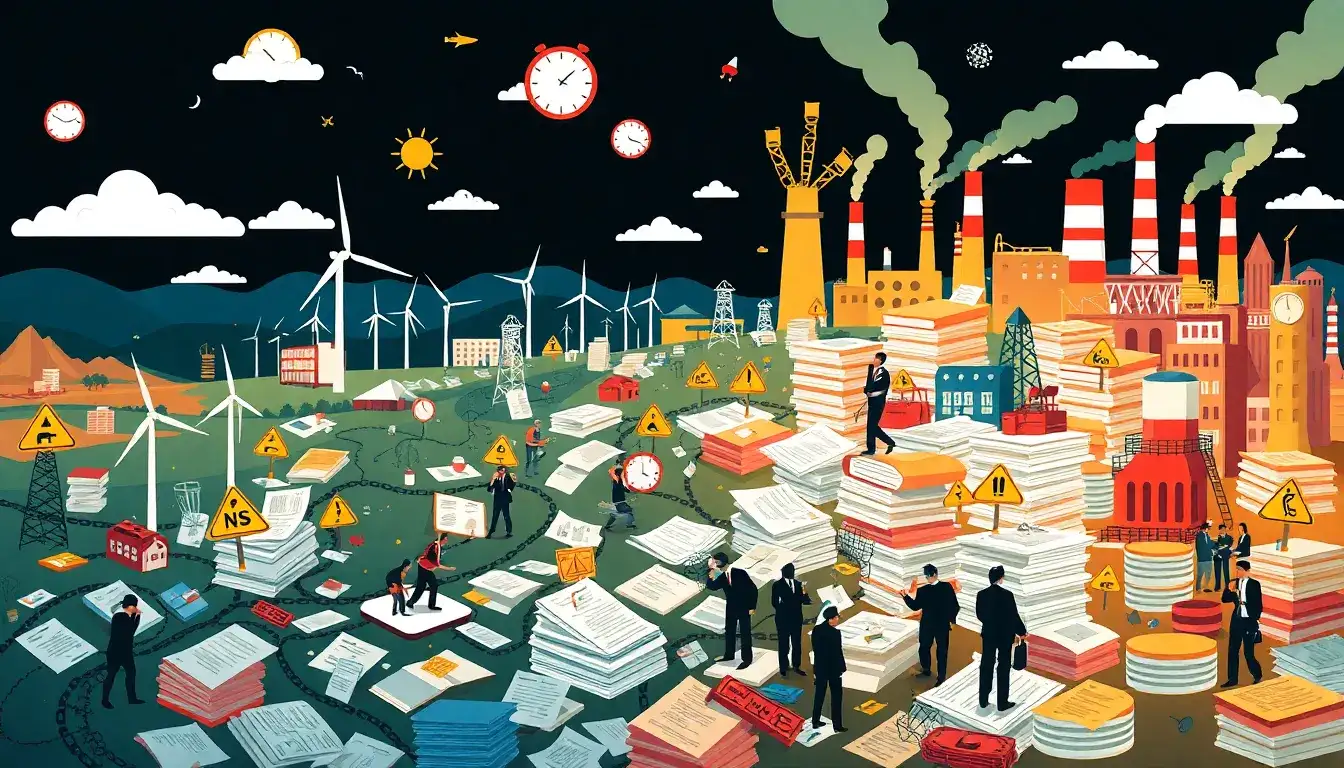
1. Complexity and Length of the Process
- Obtaining the necessary permits for energy projects involves navigating a complex web of legal, regulatory, and procedural requirements.
- Multiple permits are typically required, including environmental permits (to protect wildlife and natural areas), land use permits (to align with zoning laws and property rights), and construction permits (to ensure safety and structural integrity).
- This multi-agency involvement and extensive documentation make the process time-consuming and costly, often requiring significant man-hours and expertise to compile necessary information, such as detailed land acquisition maps.
2. Cost and Resource Burden
- Energy developers face high costs due to the need to comply with federal and state regulations, which involve extensive legal, consulting, and administrative fees.
- These costs increase project financial risks and are ultimately passed on to consumers, which can discourage smaller developers from entering the market.
3. Regulatory Uncertainty and Changing Rules
- Frequent changes or unclear regulations create uncertainty and risk for developers, complicating planning and execution of projects.
- This unpredictability can lead to delays and increased financial exposure, making it difficult to secure financing and sustain investment in energy infrastructure.
4. Community Opposition and Legal Challenges
- Local communities can oppose projects through lawsuits and public challenges to government-issued permits, especially at the state or local levels.
- Such opposition can delay or halt projects even if federal permitting processes are otherwise efficient.
5. Restrictive Local Zoning and Ordinances
- Local ordinances and zoning laws often limit where clean energy projects can be built, and some communities have outright bans or stringent restrictions on renewable energy installations.
- These constraints hinder project siting flexibility and slow down development efforts.
6. Slow Grid Interconnection Processes
- Integrating new generation and storage projects into the electric grid faces significant delays, often exacerbated by the permitting process at federal, state, and local levels.
- With a rising number of projects entering the interconnection queue, many remain stuck waiting to go online, slowing the transition to clean energy.
Summary Table
| Challenge | Description |
|---|---|
| Complexity & Duration | Multi-agency, multi-permit process with extensive documentation requirements |
| High Costs & Resource Burden | Legal, consulting, and administrative fees increase financial risks and affect consumers |
| Regulatory Uncertainty | Unclear or changing regulations lead to unpredictability and delays |
| Community Opposition & Lawsuits | Local legal challenges can stall projects despite federal permit approval |
| Restrictive Zoning Laws | Local ordinances limit project siting and restrict renewable energy development |
| Slow Grid Interconnection | Delays in connecting to the electric grid add to project backlog and slow energy deployment |
These challenges collectively slow down energy infrastructure development, increase costs, and introduce significant risks, thereby impeding the acceleration of renewable energy deployment and broader clean energy transition efforts.
Original article by NenPower, If reposted, please credit the source: https://nenpower.com/blog/what-are-the-main-challenges-in-the-current-energy-permitting-process/

