

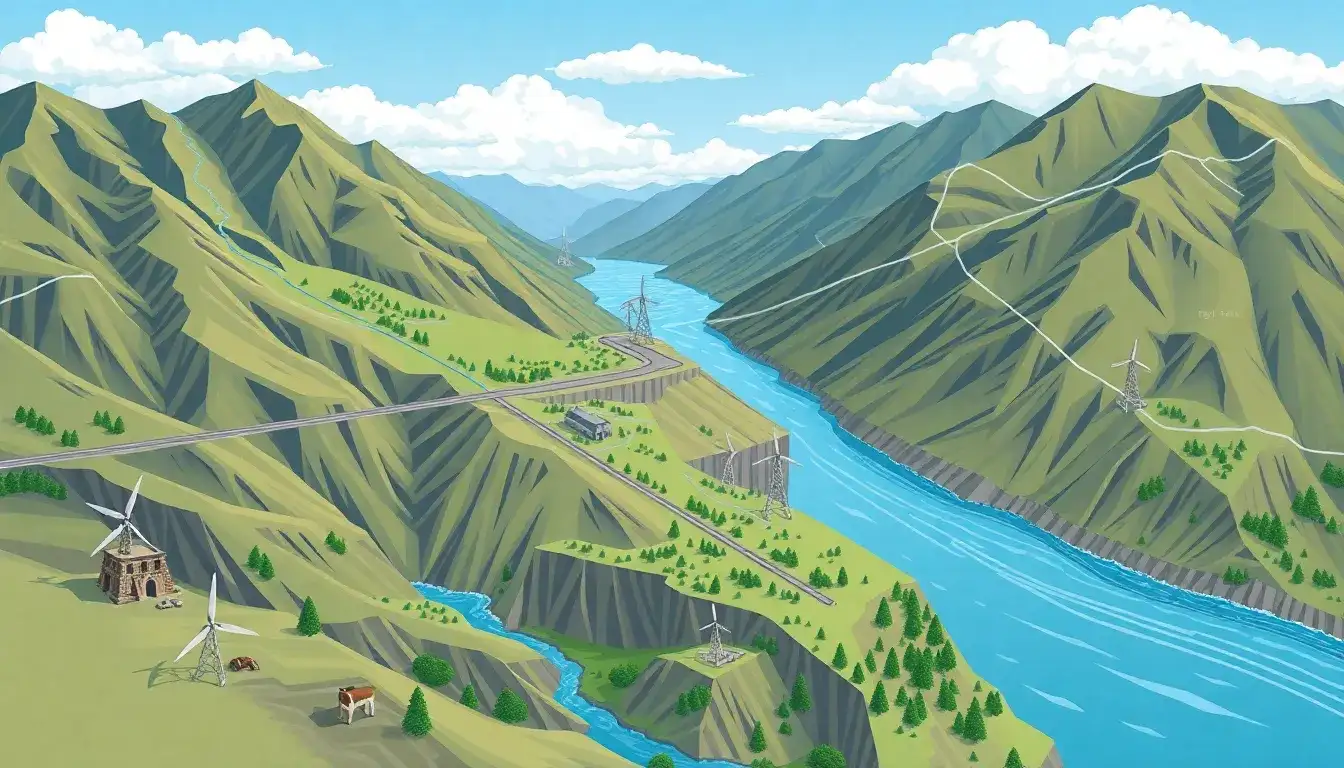
The main challenges in selecting sites for pumped hydro storage (PHS) projects involve a combination of technical, environmental, social, and economic factors:
Technical and Geological Challenges
- The site must provide a sufficiently high hydraulic head (the height difference between upper and lower reservoirs), as higher head reduces water storage needs and infrastructure size, improving efficiency and cost-effectiveness.
- Minimizing the length and complexity of the water conductor system (the tunnels or penstocks) is crucial since longer or non-straight conduits reduce efficiency and increase costs. Geological conditions often complicate the layout, especially for underground facilities or in old mine sites, where the geology and hydrogeology must be carefully assessed.
- Locating the power house ideally near the lower reservoir or between reservoirs is preferred for operational efficiency.
Environmental Challenges
- Many of the most suitable sites are located in environmentally sensitive or protected areas, posing significant risks to ecosystems and biodiversity. Extensive environmental assessments and mitigation plans are often required.
- Potential impacts on water availability and quality must be evaluated, which can be complicated in regions with scarce or contested water resources, adding regulatory complexity.
Social and Regulatory Challenges
- Obtaining a social license is challenging because local communities may have concerns over environmental impacts, cultural heritage (e.g., sacred lands), and economic shifts such as job losses resulting from energy transitions.
- Regulatory hurdles related to water rights, land acquisition, and environmental approvals can delay or prevent project development.
Economic and Grid Integration Challenges
- PHS projects are capital-intensive with high upfront investment and long development timelines, requiring supportive financial and contracting models.
- Integration of pumped storage into modern, renewable-heavy energy grids involves technical complexities to ensure stable, reliable power supply and coordination with other energy sources.
In summary, selecting a site for pumped hydro storage requires balancing ideal hydraulic and geological conditions with environmental protection, community acceptance, regulatory compliance, and grid compatibility, often making the process complex and time-consuming.
Original article by NenPower, If reposted, please credit the source: https://nenpower.com/blog/what-are-the-main-challenges-in-selecting-sites-for-pumped-hydro-storage/

