

Scaling up the production of flow batteries, particularly vanadium redox flow batteries (VRFBs), faces several key challenges:
Main Challenges
- Material Supply Chain Risks:
- Vanadium Availability: A significant portion of the world’s vanadium is produced in China and Russia, creating potential geopolitical risks and supply chain instability. As demand for vanadium increases, securing enough supply is a major challenge.
- Cost Volatility: Vanadium prices are volatile, impacting the cost of VRFBs since the metal constitutes about half of the battery’s cost.
- Cost Reduction and Energy Density:
- High Capital Costs: While flow batteries offer long lifespans and reduced degradation, their initial investment costs are relatively high compared to some alternative technologies like lithium-ion batteries. Reducing costs through cheaper materials, design simplification, and scaled manufacturing is essential.
- Energy Density: VRFBs have lower energy density compared to lithium-ion batteries, necessitating larger space requirements which can increase costs. Developing materials and designs that enhance energy density is critical.
- Standardization and Interoperability:
The industry lacks standardization, making it difficult for components from different manufacturers to work together seamlessly. Establishing common standards can simplify integration into the grid. - Performance Optimization:
Operating efficiently across varying conditions (temperature, charge/discharge rates) is crucial for widespread adoption. Developing robust electrolytes and advanced control systems will help ensure consistent performance. - Electrolyte Degradation:
An issue specific to flow batteries is electrolyte crossover, which can reduce battery capacity. Managing this degradation through effective maintenance strategies is important for long-term viability. - Logistical and Manufacturing Challenges:
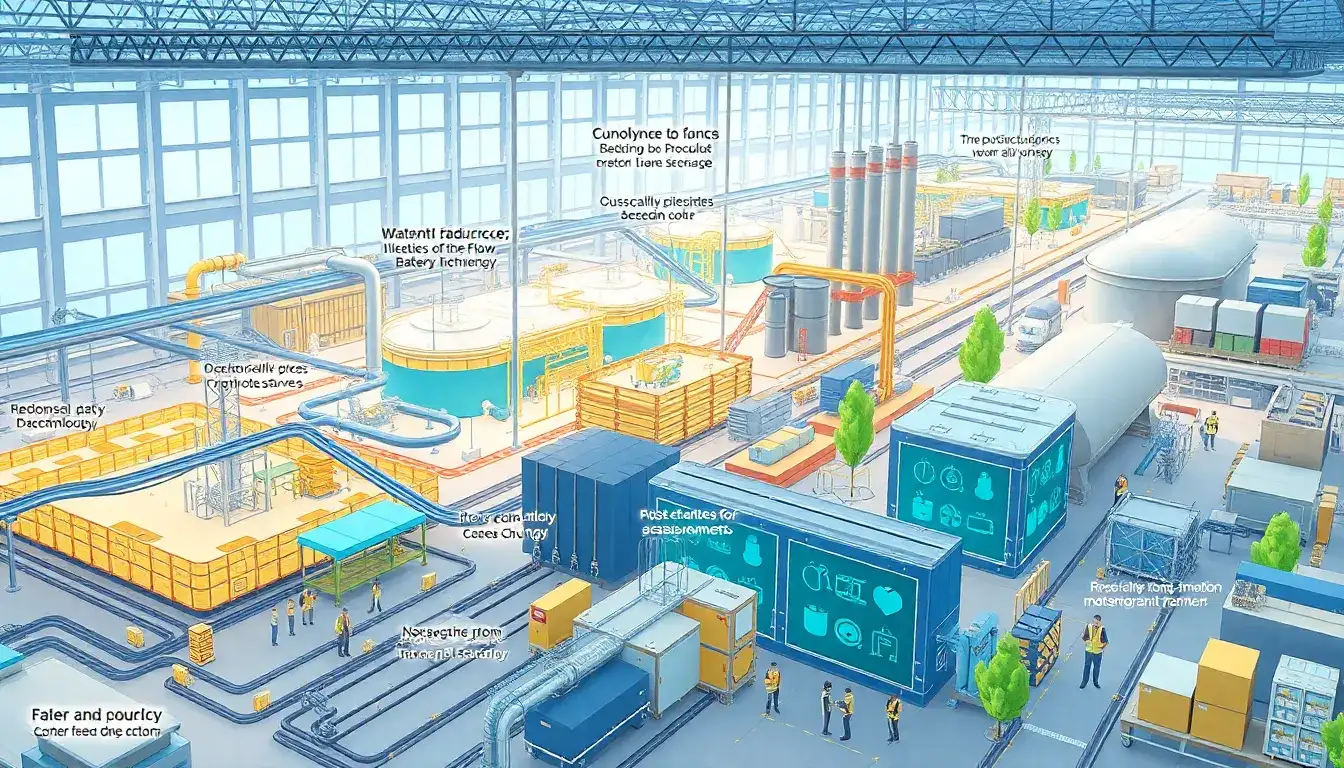
Building large-scale manufacturing facilities and ensuring consistent quality control across increased production volumes are significant logistical hurdles.
By addressing these challenges, the flow battery industry can better position itself for large-scale energy storage applications needed for the integration of renewable energy sources into power grids.
Original article by NenPower, If reposted, please credit the source: https://nenpower.com/blog/what-are-the-main-challenges-in-scaling-up-the-production-of-flow-batteries/

