

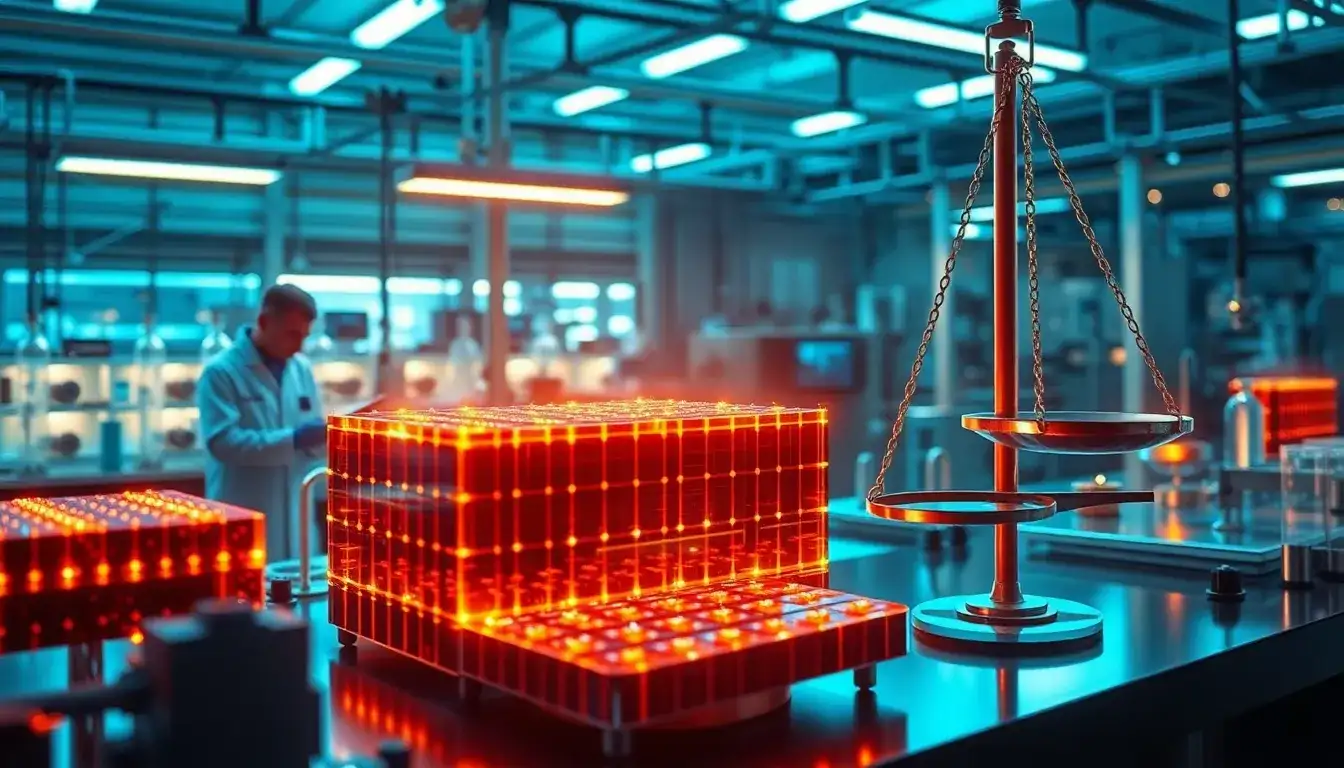
The main challenges in scaling up perovskite solar cell (PSC) production are multifaceted, involving material, manufacturing, stability, cost, and sustainability issues.
Key Challenges in Scaling Up Perovskite Solar Cells
- Material Stability and Degradation
- Moisture Sensitivity: Perovskite materials are highly vulnerable to moisture, which causes chemical degradation and reduces device performance.
- Thermal Instability: Elevated temperatures accelerate degradation, especially when oxygen is present.
- UV Light Sensitivity: Exposure to UV light can initiate photochemical reactions that degrade the material.
These instabilities impact long-term durability, a crucial factor for commercial viability, given solar panels ideally need to operate for 25+ years.
- Maintaining High-Quality Large-Area Films
- Producing uniform, defect-free perovskite films on large substrates is challenging. Variations in film thickness, composition, and morphology can drastically affect efficiency and reproducibility.
- Techniques widely used in labs like spin-coating cannot be directly scaled due to material waste and poor scalability. Alternative scalable approaches such as slot-die coating, inkjet printing, spray coating, and roll-to-roll processing are being developed but each has trade-offs in cost, speed, and film quality.
- Efficiency Loss in Scaling Up
When moving from small laboratory cells to large-area modules, efficiency typically decreases due to challenges in maintaining the optimized microstructure and interfaces. Reducing this performance gap is an active area of research. - Cost-Effectiveness and Manufacturing Complexity
- Although perovskite materials themselves are relatively cheap, the overall production cost must be competitive with silicon solar cells. This requires minimizing material waste, energy consumption, and labor costs while improving process throughput.
- Encapsulation and protective layers add further complexity and cost but are essential for protecting PSCs from environmental degradation.
- Environmental and Sustainability Concerns
- Toxicity issues, particularly related to lead in many perovskite compositions, pose environmental challenges and potential regulatory hurdles.
- Sustainable manufacturing practices — such as using green solvents, effective recycling, and environmentally friendly encapsulation materials — need to be integrated into scaling efforts.
Summary Table of Main Challenges
| Challenge Area | Details | Impact on Scaling |
|---|---|---|
| Material Instability | Moisture, thermal, UV sensitivity causing degradation | Limits lifetime and reliability |
| Large-area Film Quality | Uniformity, reproducibility issues in large-scale coating | Efficiency loss, inconsistent performance |
| Efficiency Drop | Performance gap from lab cells to modules | Reduced commercial competitiveness |
| Cost & Manufacturing | Waste, energy use, complexity of encapsulation | Higher production costs |
| Environmental Concerns | Lead toxicity, need for green solvents, recycling | Regulatory and sustainability challenges |
Overcoming these challenges requires coordinated advances in materials engineering, scalable deposition technologies (like roll-to-roll slot-die coating), encapsulation methods, and lifecycle environmental assessments. With ongoing research, PSCs show strong promise for future industrialization and widespread renewable energy deployment.
Original article by NenPower, If reposted, please credit the source: https://nenpower.com/blog/what-are-the-main-challenges-in-scaling-up-perovskite-solar-cell-production/

