

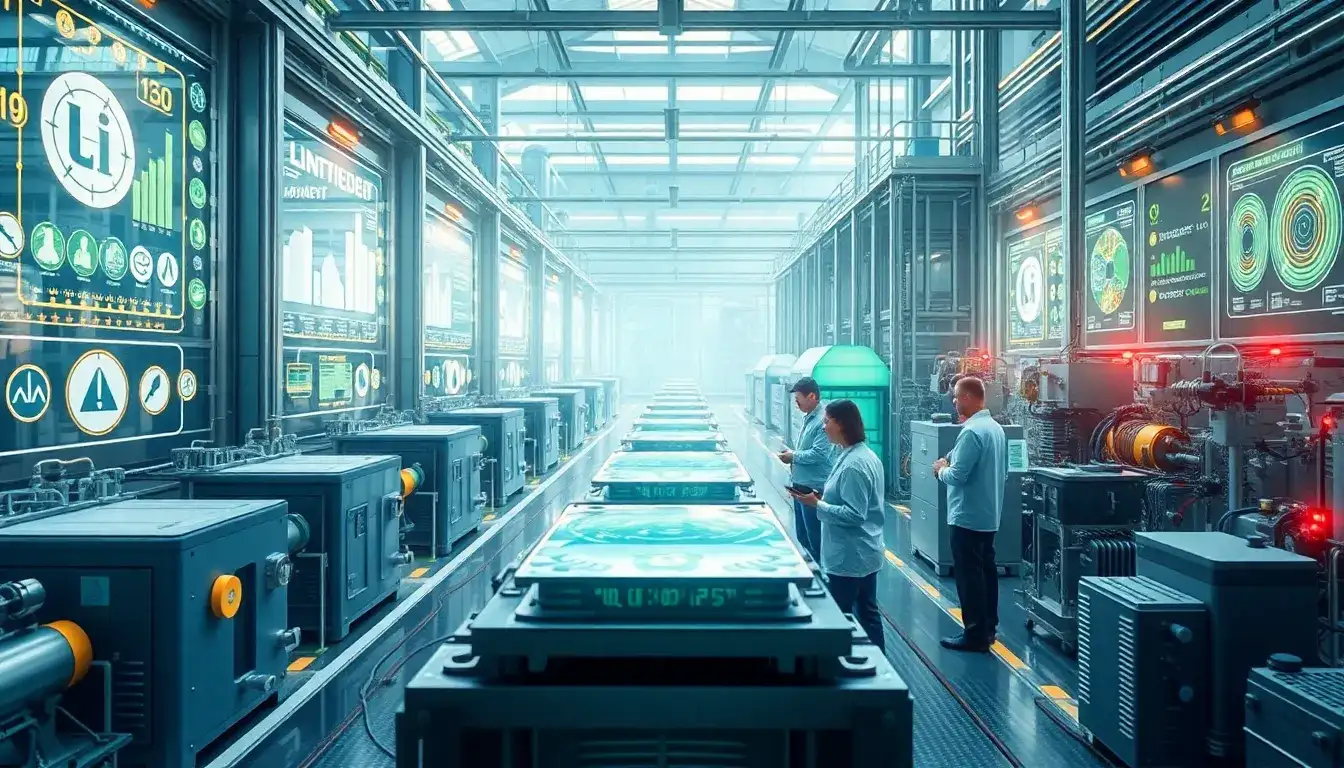
The main challenges in scaling up lithium-sulfur (Li-S) battery production can be summarized as follows:
1. Manufacturing Process Immaturity and Scalability Concerns
- Lithium-sulfur battery manufacturing processes are not yet as mature or optimized as those for established lithium-ion batteries, leading to concerns about their scalability for mass production. The transition from pilot-scale to gigafactory-level production involves complexities that are not trivial to solve.
2. Quality Control and Production Speed
- Scaling up production means faster, automated assembly lines where detecting and fixing defects in real-time becomes more difficult. Small issues that are easily managed during slow pilot production can result in large batches of faulty cells on high-speed lines. Implementing advanced data management and digital monitoring tools is essential to maintain consistent quality during scale-up.
3. Low Cycle Life Due to Technical Limitations
- The key technological hurdle preventing Li-S batteries from mass adoption is their relatively low cycle life compared to lithium-ion alternatives. This is caused by several interrelated factors:
- Dendrite Formation on the Lithium Anode: Irregular growth of the solid electrolyte interface leads to dendrites that cause short circuits and premature battery failure.
- Polysulfide Shuttle Effect: Lithium polysulfides dissolve into the electrolyte, leading to loss of active material, corrosion of the anode, and reduced cycle life.
- Cathode Swelling: Sulfur cathodes experience significant volumetric expansion (up to 80%), which affects mechanical stability and performance over cycles.
4. Electrolyte Optimization Challenges
- Reducing electrolyte amounts to increase energy density (‘lean electrolyte’) tends to deteriorate the electrochemical reaction, impacting battery performance and lifespan. Finding a balance in electrolyte dosage that supports efficient reactions and durability remains a challenge.
5. Raw Material Sourcing and Supply Chain Stability
- Scaling any battery technology also involves securing raw materials reliably and sustainably. While this is not unique to Li-S batteries, the overall industry-wide pressure on battery supply chains poses a hurdle in meeting growing demand efficiently and cost-effectively.
Summary Table of Main Challenges in Scaling Lithium-Sulfur Battery Production
| Challenge | Description |
|---|---|
| Manufacturing immaturity | Lack of optimized, mature production processes for large scale |
| Quality control at high speed | Difficulties in detecting defects quickly on automated lines |
| Low cycle life | Technical issues like dendrite formation, shuttle effect, and cathode swelling |
| Electrolyte dosage balance | Lean electrolytes reduce performance; optimization is hard |
| Supply chain issues | Raw materials sourcing and supply stability |
Addressing these challenges requires continued R&D to improve battery chemistry and materials, investments in automated and data-driven manufacturing systems, and robust supply chain strategies to support scaling from pilot to mass production.
Original article by NenPower, If reposted, please credit the source: https://nenpower.com/blog/what-are-the-main-challenges-in-scaling-up-lithium-sulfur-battery-production/

