

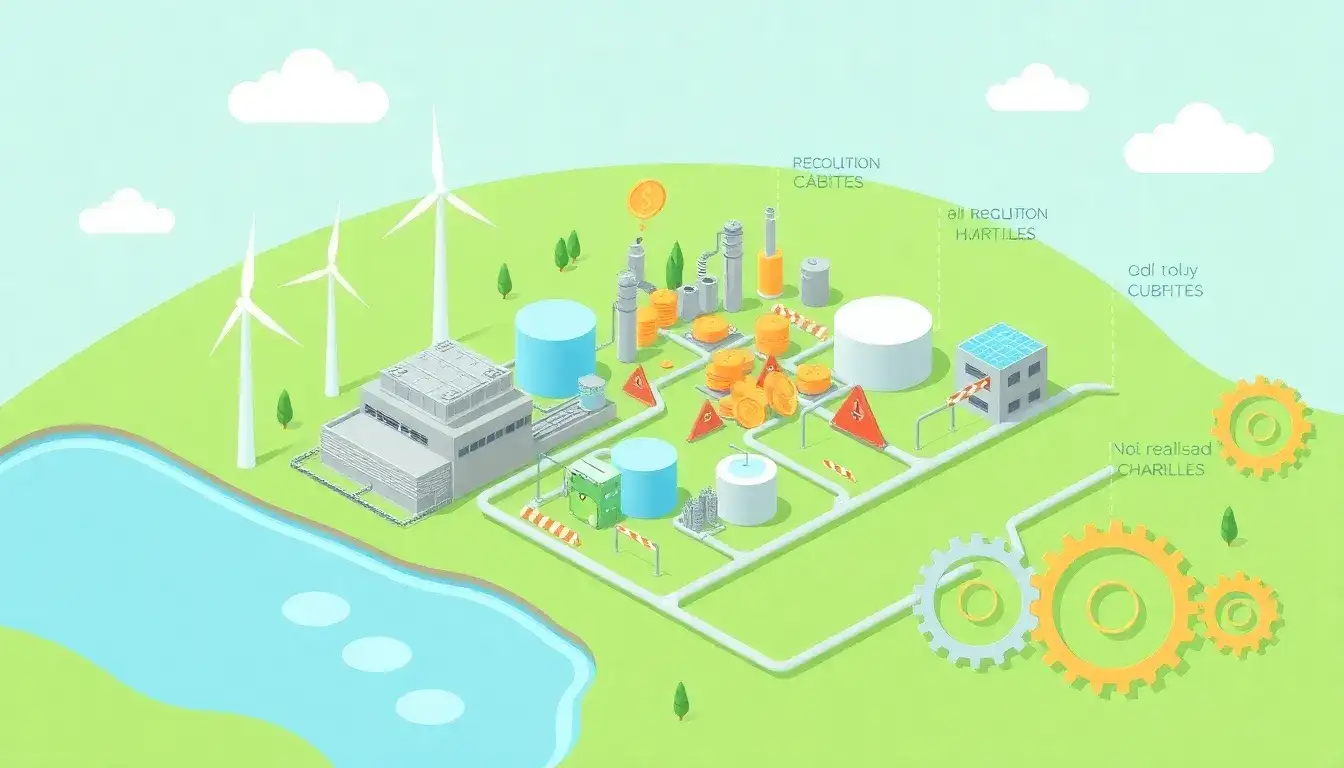
The main challenges in scaling up green hydrogen production are multifaceted, involving technological, economic, infrastructural, and regulatory aspects:
Technological Challenges
- Electrolysis Efficiency and Durability: The core technology for green hydrogen production is water electrolysis, which currently suffers from suboptimal energy efficiency and requires significant improvements in the lifespan of electrolyzers. Electrolyzers also demand additional components such as onsite compressors, complicating large-scale deployment. These issues hinder rapid scaling and cost reduction.
- Scaling Electrolyzer Manufacturing: Expanding electrolyzer production to meet future demand requires manufacturing at unprecedented scales (“Gigafactories”). This introduces risks related to high-throughput equipment, automation, and complex assembly processes. Durability and design of critical sub-components like membrane electrode assemblies pose additional challenges.
- Energy Consumption: Electrolysis is electricity-intensive, so increasing efficiency is crucial to make large-scale green hydrogen production viable without excessive energy costs.
- Water Usage: Green hydrogen production demands significant volumes of high-quality water, raising concerns about sustainable water resource management in large-scale operations.
Economic Challenges
- High Production Costs: Green hydrogen is currently more expensive than fossil fuel-based hydrogen due to the costs of renewable power and electrolyzer equipment. This cost gap makes green hydrogen less competitive in many markets.
- Upfront Investment and Financing: Large capital expenditures are needed to build renewable energy facilities and electrolyzer plants. Uncertainties around policy support and market demand slow investor confidence and delay projects.
- Competition with Fossil Fuel Hydrogen: The majority of global hydrogen today comes from natural gas and coal, which remain cheaper due to entrenched infrastructure and subsidies for fossil fuels. Overcoming this economic inertia poses a significant barrier.
Infrastructure and Logistical Challenges
- Lack of Delivery and Storage Infrastructure: Transporting, storing, and distributing hydrogen at scale requires new infrastructure, as current systems are insufficient for green hydrogen volumes. Infrastructure gaps limit market access and use cases.
- Matching Supply and Demand: Logistical challenges arise in aligning intermittent renewable energy supply with hydrogen production and consumption needs, affecting operational stability and economics.
Policy and Regulatory Challenges
- Policy Uncertainty: Ambiguity around subsidy frameworks, regulations, and long-term offtake agreements makes project planning risky. Clear, supportive policies are essential to stimulate investment and innovation in the green hydrogen sector.
- Safety and Compliance: Hydrogen’s flammability necessitates rigorous safety standards and regulations, which must be developed and uniformly enforced to support scaling efforts.
In summary, scaling up green hydrogen production demands advancements in electrolyzer technology and manufacturing, substantial cost reductions, new infrastructure development, and stable policy support to overcome the current technological, economic, logistical, and regulatory barriers.
Original article by NenPower, If reposted, please credit the source: https://nenpower.com/blog/what-are-the-main-challenges-in-scaling-up-green-hydrogen-production-2/

