

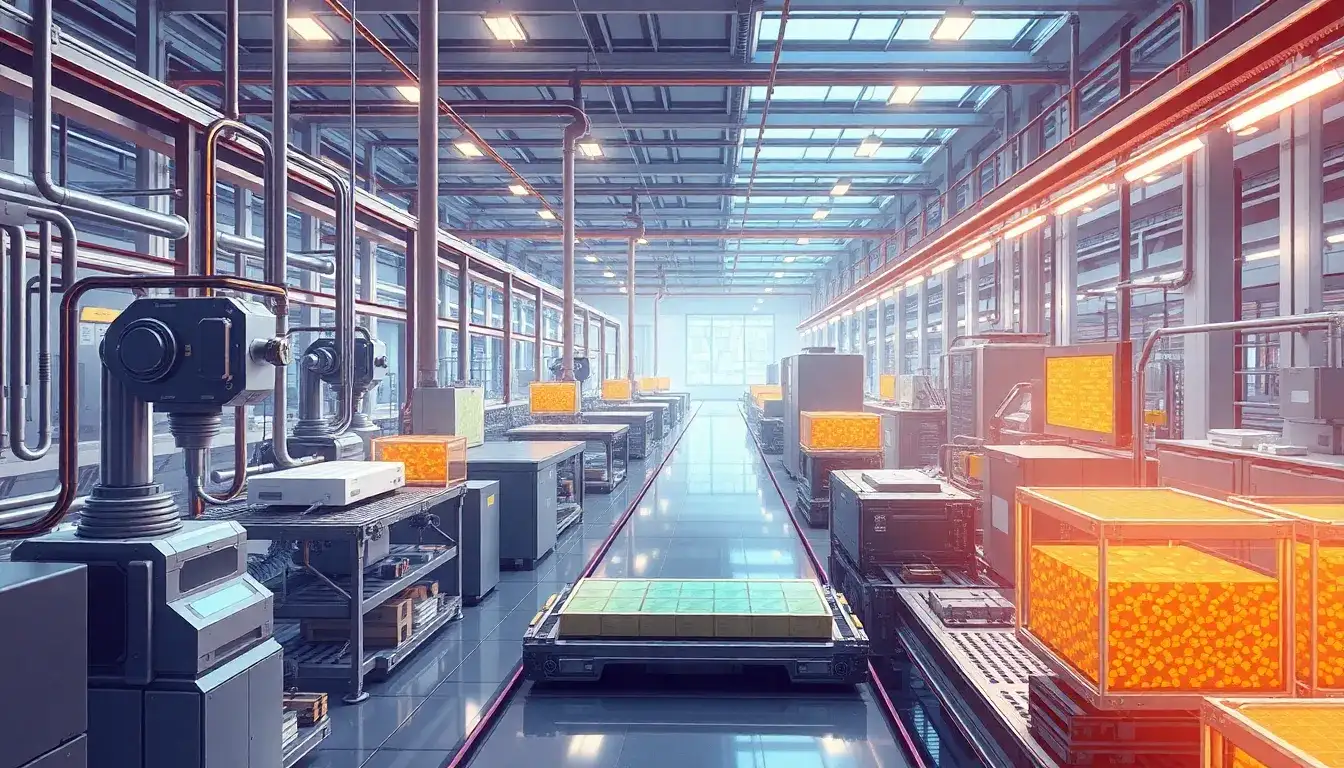
Key Challenges in Scaling Solid-State Battery Production
1. Manufacturing Complexity and Scalability
- Producing solid-state batteries involves complex and difficult-to-scale fabrication processes due to the advanced materials and precise engineering required. The need to create defect-free, thin solid electrolyte layers that maintain perfect contact with electrodes demands sophisticated facilities and skilled labor.
- Unlike liquid electrolytes, solid electrolytes—often ceramic or glass—must combine high ionic conductivity, chemical stability, and mechanical strength, which is challenging to achieve consistently in mass production.
- Scaling up from lab-scale to gigawatt-hour scale production requires significant investment in infrastructure, real-time quality control, and process modification to maintain high uniformity, reliability, and safety.
2. Material-Related Challenges
- Selection and stability of materials such as solid electrolytes and electrodes remain problematic. For instance, solid electrolytes often show brittleness, making them prone to cracking under mechanical stress during manufacturing and in real-world use.
- Achieving stable and low-resistance interfaces between solid electrolytes and electrodes is difficult, often causing increased interfacial resistance and performance degradation over time.
- Lithium metal anodes promise higher energy density but face issues like dendrite formation, which can cause short circuits and safety risks. Silicon anodes, while promising, suffer from volume expansion and degradation.
- Balancing the electrolyte membrane thickness against mechanical strength is also crucial: thicker membranes improve strength but can reduce ionic conductivity, complicating the design trade-offs.
3. Performance and Safety Challenges
- Dendrite growth during charging remains a major hurdle, resulting in potential short circuits and battery failure if not properly mitigated.
- Temperature fluctuations and mechanical stresses in real-world use environments require advanced battery management and thermal management systems, but feedback and optimization of these systems are still limited.
- Slow charging and discharging speeds and rapid capacity decay currently limit the practical deployment of solid-state batteries in applications like electric vehicles.
Summary Table of Main Challenges
| Challenge Area | Description |
|---|---|
| Manufacturing Complexity | Complex fabrication requiring advanced equipment, skilled labor, and precise control; costly to scale from lab to mass production. |
| Material Issues | Brittleness of solid electrolytes, unstable electrode interfaces, and balancing ionic conductivity with mechanical strength. |
| Dendrite Formation | Needle-like lithium dendrites cause short circuits and failure; mitigation strategies still evolving. |
| System Integration | Need for improved battery and thermal management systems to handle real-world conditions. |
| Performance Limitations | Slow charge/discharge rates and capacity decay hamper widespread adoption. |
In conclusion, scaling solid-state battery production faces multifaceted challenges including difficult manufacturing processes, fragile and complex materials, safety risks from dendrites, and performance constraints. Overcoming these requires substantial investments in research, advanced manufacturing infrastructure, and materials innovation, alongside development of robust system-level management for real-world applications.
Original article by NenPower, If reposted, please credit the source: https://nenpower.com/blog/what-are-the-main-challenges-in-scaling-the-production-of-solid-state-batteries/

