

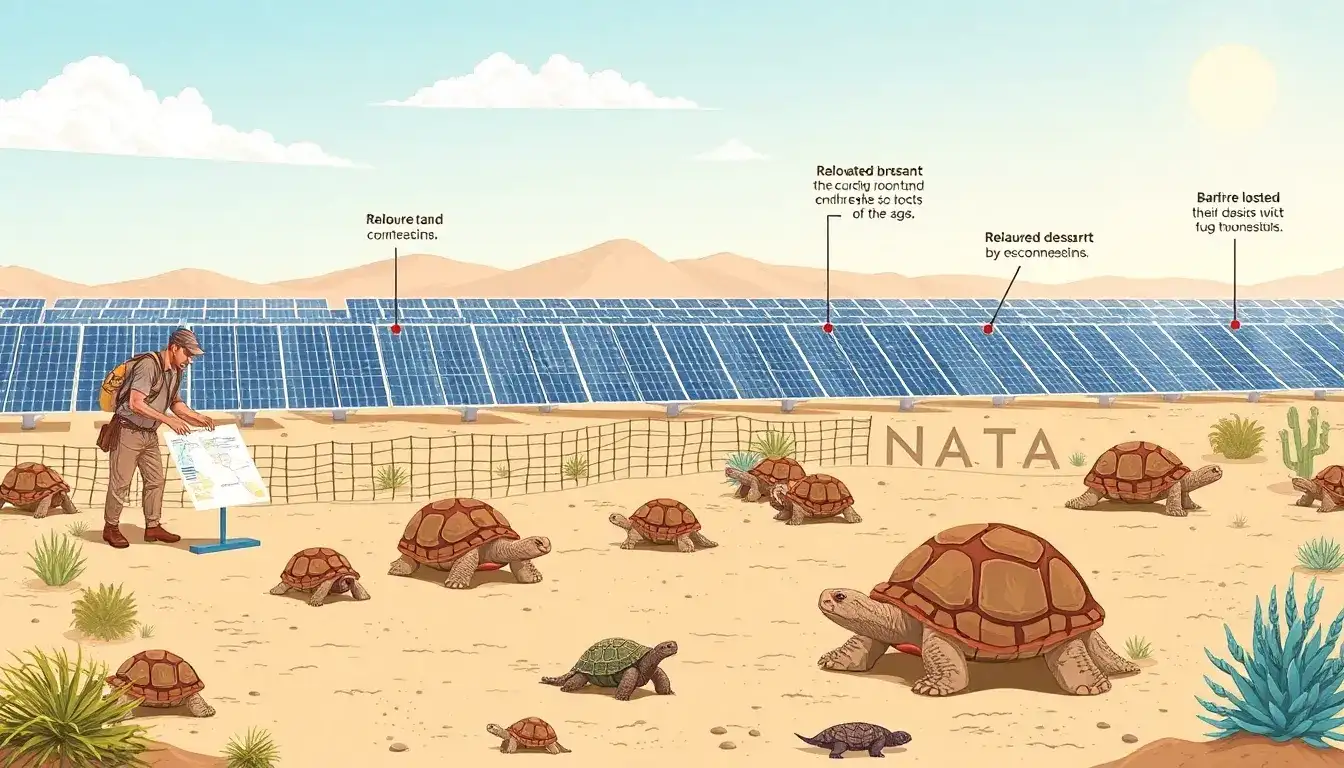
Relocating desert tortoises for solar energy projects involves complex ecological, logistical, and regulatory challenges, as evidenced by recent developments:
Population declines and habitat loss
Desert tortoises, listed as Threatened since 1990, have faced accelerated habitat loss from solar development, with over 75,000 acres of their habitat already converted for solar projects. Each project often requires moving dozens to hundreds of tortoises (e.g., 114 adults at Rough Hat, 139 at Yellow Pine), further straining populations already in decline due to predation, urbanization, and climate stressors.
Translocation complications
Relocated tortoises exhibit strong homing instincts, often attempting to return to their original territories despite being moved >300 meters. This behavior increases mortality risks from predation, dehydration, and road collisions. Additionally, recipient sites must meet specific ecological criteria and avoid overcrowding to prevent disease spread, a challenge given limited suitable habitat.
Financial and regulatory burdens
Developers face costs exceeding $56 million per project for relocation efforts, alongside requirements to provide 2:1 replacement habitat in California – a formula rendered impractical by the scale of solar development. Alternative mitigation measures (e.g., funding habitat restoration, predator control) add further complexity.
Ecological ripple effects
Tortoise relocation impacts entire ecosystems, as they serve as indicator species for Mojave Desert health. Displacement risks cascading effects on symbiotic species and plant communities. Temporary exclusion fencing (e.g., 10 miles at Yellow Pine) fragments habitats and disrupts wildlife corridors, compounding long-term biodiversity challenges.
Original article by NenPower, If reposted, please credit the source: https://nenpower.com/blog/what-are-the-main-challenges-in-relocating-desert-tortoises-for-solar-energy-projects/

