

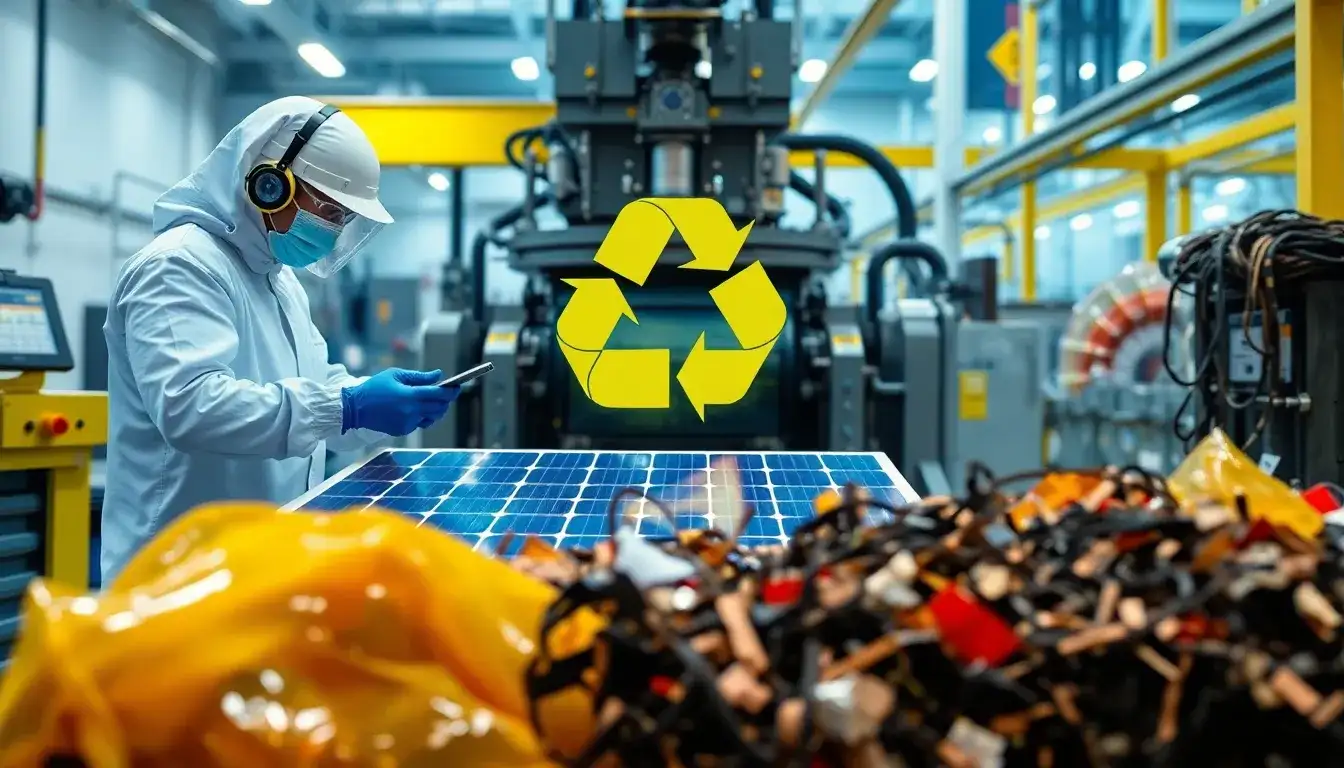
The main challenges in recycling polymer layers from solar panels primarily revolve around the difficulty of separating these polymer encapsulants, such as ethylene-vinyl acetate (EVA), from the glass and solar cells and the environmental and economic issues this creates.
Key Challenges
-
Strong Adhesion and Separation Difficulty
– Polymer layers like EVA are used to encapsulate and protect solar cells and are strongly bonded to the glass and silicon cells with adhesives. Removing these polymers cleanly without damaging valuable materials is very hard. The glass layer is typically glued to the encapsulated solar cells, making disassembly complex. Mechanical methods are inefficient at removing the encapsulant polymer. -
Energy-Intensive Thermal Processes
– Commonly, polymer layers are removed by heating modules to around 500 °C, which causes the polymer film to evaporate or burn off. This pyrolysis or thermal delamination requires large ovens and consumes a great deal of energy, which is costly and has a significant environmental footprint. -
Use of Hazardous Chemicals and Waste Generation
– Some researchers have used organic solvents to dissolve EVA, but this method is expensive and can produce large volumes of hazardous chemical waste. Thermal treatment can also emit toxic fumes that need to be carefully controlled to avoid environmental harm. -
Contamination of Recovered Materials
– After removing the polymers, the recovered silicon often remains contaminated with other materials, making it unsuitable for direct reuse in new solar panels. Refining the silicon to very high purity levels (6N to 11N) requires additional processing, adding to cost and complexity. -
Economic Viability and Scaling Up
– The cost-effectiveness of current polymer removal and recycling methods is uncertain. High energy inputs, chemical use, and slow mechanical delamination processes make scaling up recycling operations to handle the growing volume of end-of-life panels challenging.
Summary Table of Challenges
| Challenge | Description |
|---|---|
| Adhesion & Separation | Strong bonding of polymer encapsulants to glass and cells makes separation difficult |
| Energy-Intensive Processes | Thermal treatments to burn off polymers require large ovens and high energy input |
| Hazardous Chemicals & Waste | Organic solvents and thermal processes generate toxic waste and emissions |
| Material Contamination | Recovered silicon contaminated, requiring costly purification |
| Economic & Scale Constraints | High operational costs and technical hurdles limit large-scale, cost-effective recycling |
In conclusion, the main challenges in recycling polymer layers from solar panels are the difficulty of detaching strongly bonded polymers like EVA from other panel materials without contamination, the high energy and chemical demands of current removal methods, and the economic and environmental impacts these processes entail. Innovations are needed to develop more efficient, less hazardous, and low-cost methods for polymer removal to enable sustainable solar panel recycling at scale.
Original article by NenPower, If reposted, please credit the source: https://nenpower.com/blog/what-are-the-main-challenges-in-recycling-polymer-layers-from-solar-panels/

