

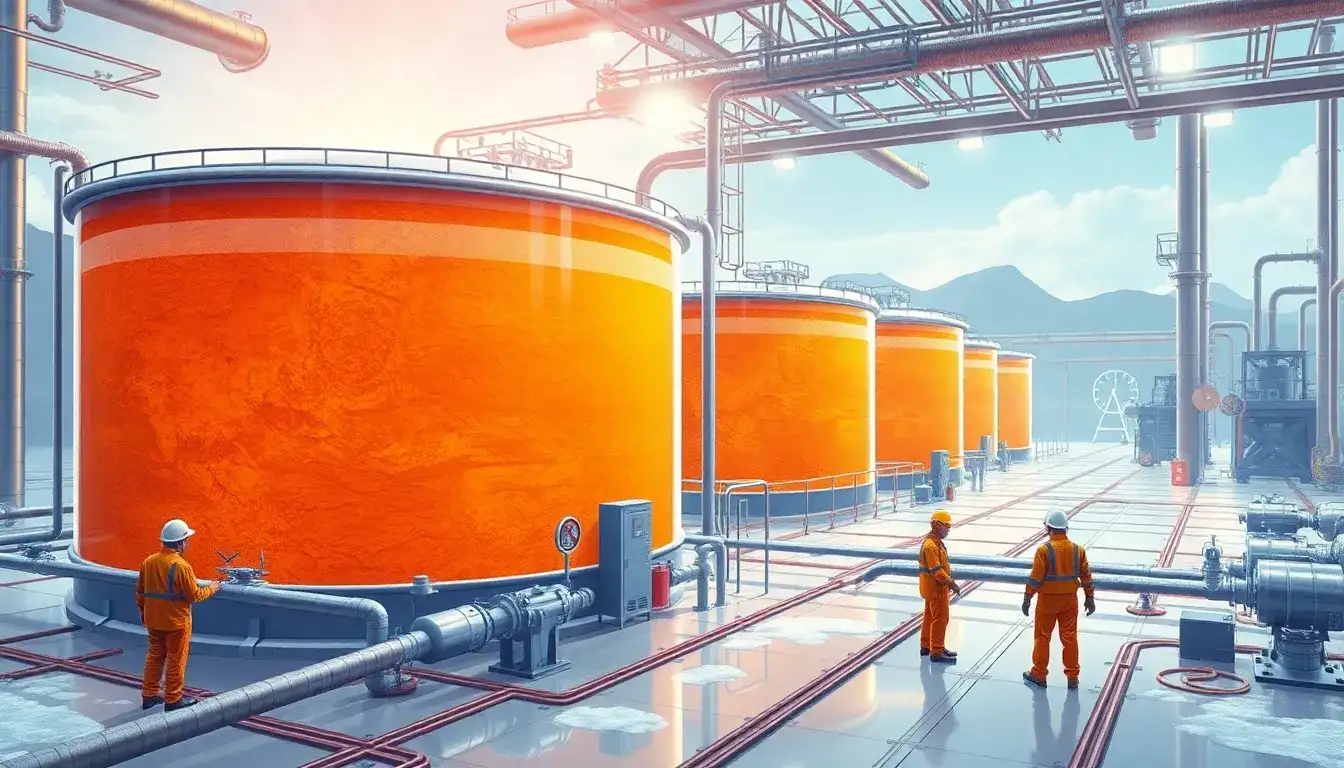
Molten salt energy storage systems face several operational and maintenance challenges:
Temperature Management
Maintaining high operational temperatures (250-300°C for batteries, up to 565°C for CSP plants) requires continuous energy input for heating and insulation. For molten salt batteries, 10-11 hours are needed just to reach operating temperature (~270°C), limiting responsiveness and increasing energy costs.
Material Degradation
Corrosion and stress cracking are critical concerns:
- Stress relaxation cracking in stainless steel tanks (e.g., SS 347H)
- Thermal stability limits of salts at high temperatures
- Accelerated corrosion from impurities or oxidation
Safety Risks
- Explosion/fire hazards if temperatures exceed boiling points
- Thermal runaway risks during charge/discharge cycles
- Leak risks from tank weld failures
Operational Complexity
- Strict maintenance protocols: Ultrasonic corrosion checks, leak tests, and component inspections must be performed regularly
- Instrumentation challenges: Level gauges and temperature sensors require frequent calibration
- Heating system failures: Malfunctions during preheating phases can prevent operation
Design Limitations
- Lack of standardized codes for tank construction
- Thermal cycling stresses from repeated heating/cooling
- Material compatibility gaps for high-temperature seals and pumps
Cost and Efficiency
- High capital costs for specialized materials
- Energy losses from maintaining molten state during standby
- Scalability constraints due to thermal management complexity
These challenges necessitate ongoing research into nanofluid additives, corrosion-resistant alloys, and modular system designs.
Original article by NenPower, If reposted, please credit the source: https://nenpower.com/blog/what-are-the-main-challenges-in-maintaining-and-operating-molten-salt-energy-storage-systems/

