

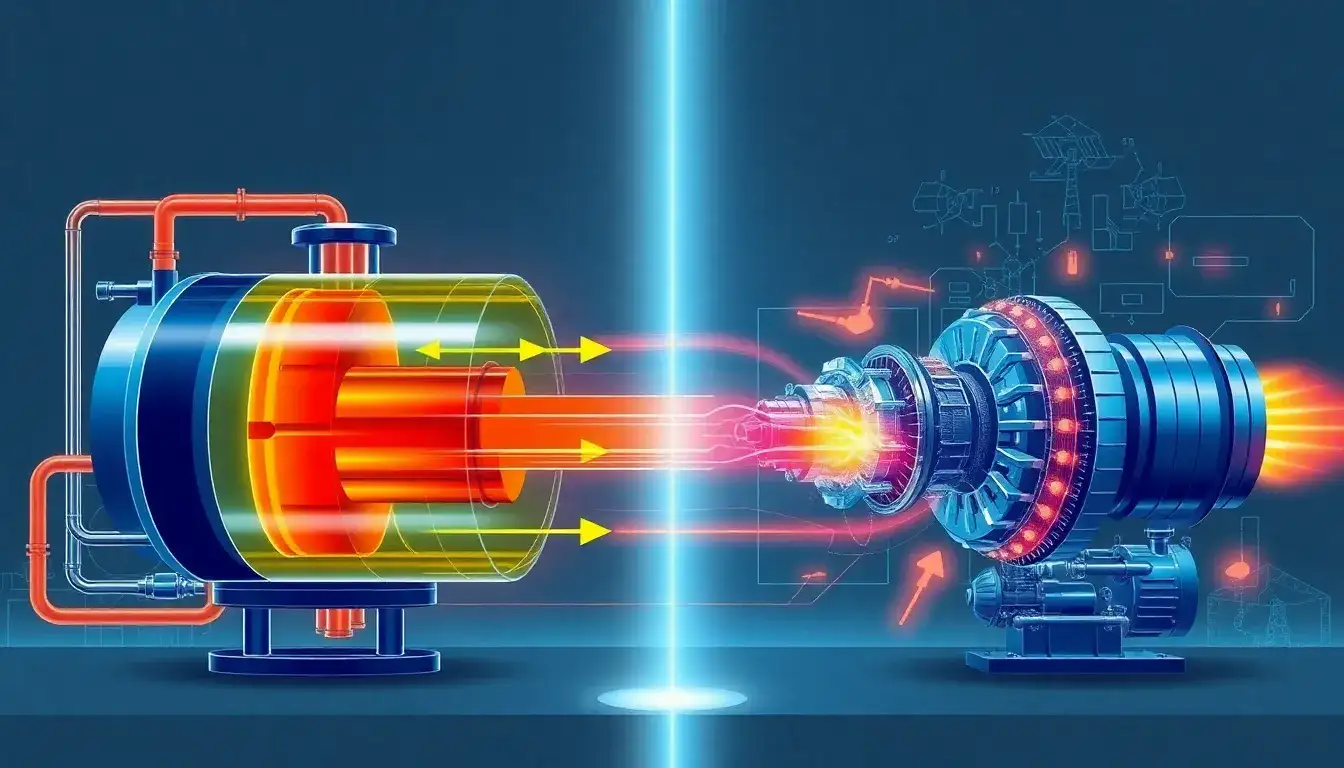
The main challenges in integrating thermal energy between the compression and expansion steps in Compressed Air Energy Storage (CAES) systems stem from the need to manage heat efficiently during asynchronous charge and discharge cycles. Specifically, these challenges include:
- Asynchronous Operation: The compression (charging) and expansion (discharging) steps do not occur simultaneously, requiring a system to store and release thermal energy on demand. This complicates the design of thermal management systems since heat must be captured, stored, and reused effectively between these steps.
- Thermal Energy Storage Medium Selection: Choosing an appropriate thermal storage medium is critical. Options include sensible heat storage in liquids or solids and phase change materials. The selection depends on factors such as the medium’s temperature range, heat exchange fluid compatibility, containment feasibility, and energy loss rates over time. Optimal selection impacts system efficiency and cost.
- Efficient Heat Exchange Systems: Efficient transfer of heat into and from the storage medium requires advanced heat exchangers that can operate effectively under varying pressure and temperature conditions to achieve proper heat integration. Poor heat exchange can lead to significant energy losses and lower system efficiency.
- Thermal Loss Minimization: Containment of the thermal energy storage medium must minimize heat losses to maintain high round-trip efficiency. Achieving low-loss insulation and stable thermal storage over long durations is technically challenging.
- Cost and Complexity: Designing low-cost yet effective thermal storage and heat exchange components remains a key hurdle. Innovations are needed to reduce capital costs without sacrificing performance.
- System Integration and Scalability: Integrating thermal energy storage with the mechanical and electrical components of CAES on a large scale demands careful coordination to balance system pressures, temperatures, and timing of operations, often necessitating complex control strategies.
In summary, the integration of thermal energy between compression and expansion steps in CAES requires overcoming the asynchronous timing of heat generation and usage, selecting and managing suitable thermal storage media, designing efficient heat exchangers, controlling thermal losses, managing costs, and effective overall system integration. These challenges directly affect the efficiency, cost-effectiveness, and scalability of CAES technologies.
Original article by NenPower, If reposted, please credit the source: https://nenpower.com/blog/what-are-the-main-challenges-in-integrating-thermal-energy-between-compression-and-expansion-steps-in-caes/

