

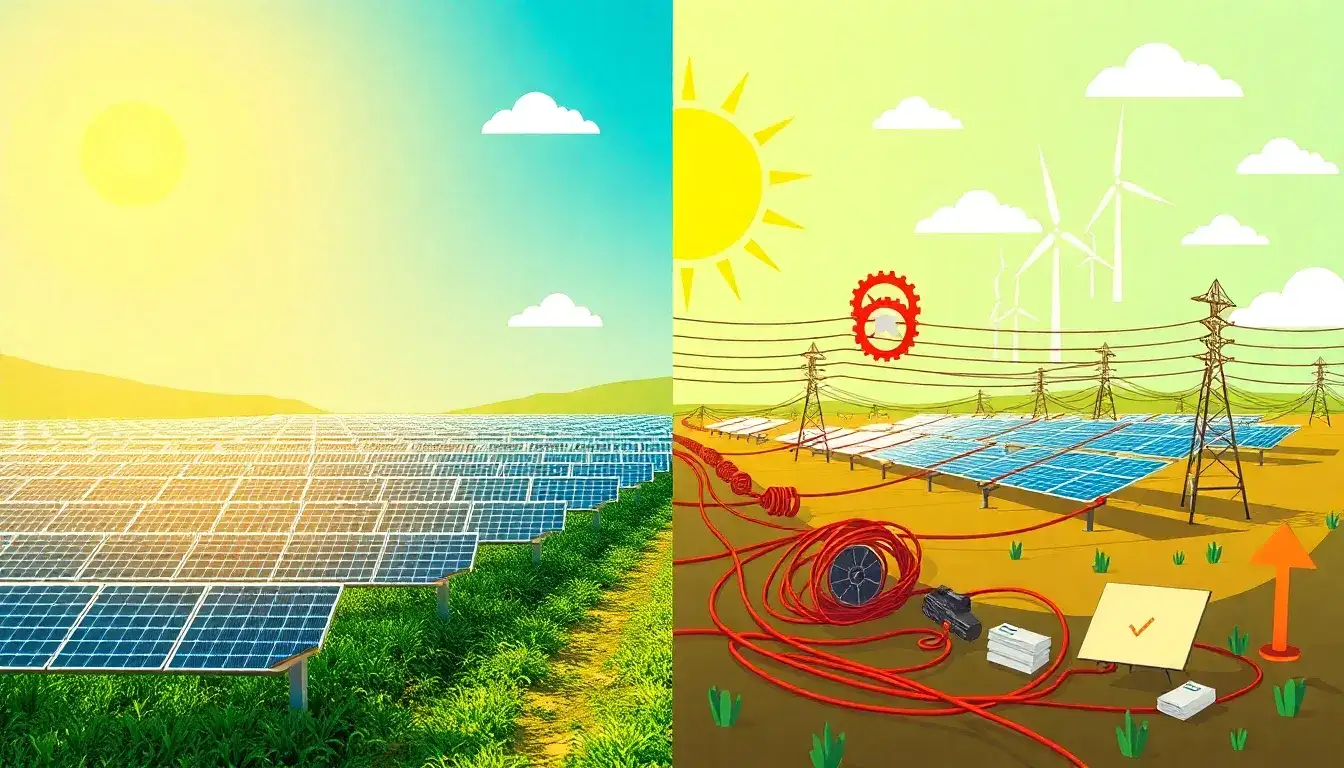
The integration of solar energy into Renewable Portfolio Standards (RPS) frameworks faces several key challenges:
-
Grid Management and Intermittency:
- Issue: Solar energy output varies depending on weather conditions, leading to intermittency issues that can strain grid management systems.
- Impact: Utilities and grid operators must ensure a stable power supply by balancing the variable output of solar energy with other energy sources or storage technologies.
-
Policy Stability and Uncertainty:
- Issue: RPS policies can change with political administrations or regulatory updates, creating uncertainty for investors and impacting long-term planning for solar projects.
- Impact: This uncertainty can deter investment in solar energy projects, as investors seek stable and predictable regulatory environments.
-
Grid Integration and Technical Challenges:
- Issue: Integrating solar energy into existing grid infrastructure requires advanced technical capabilities to handle the variable output.
- Impact: Ensuring reliable and efficient power distribution with solar energy requires significant investment in grid modernization and technological advancements.
-
Cost and Affordability:
- Issue: Making solar energy affordable and accessible to all, especially compared to traditional energy sources, remains a challenge.
- Impact: Higher costs can limit widespread adoption, making it essential to develop policies and incentives that reduce financial barriers.
-
Regulatory and Administrative Barriers:
- Issue: Complex permitting processes, bureaucratic hurdles, and inconsistent regulations can slow down solar project development.
- Impact: Streamlining these processes is crucial to accelerate solar energy adoption and encourage private investment in the sector.
Original article by NenPower, If reposted, please credit the source: https://nenpower.com/blog/what-are-the-main-challenges-in-integrating-solar-energy-into-rps-frameworks/

