

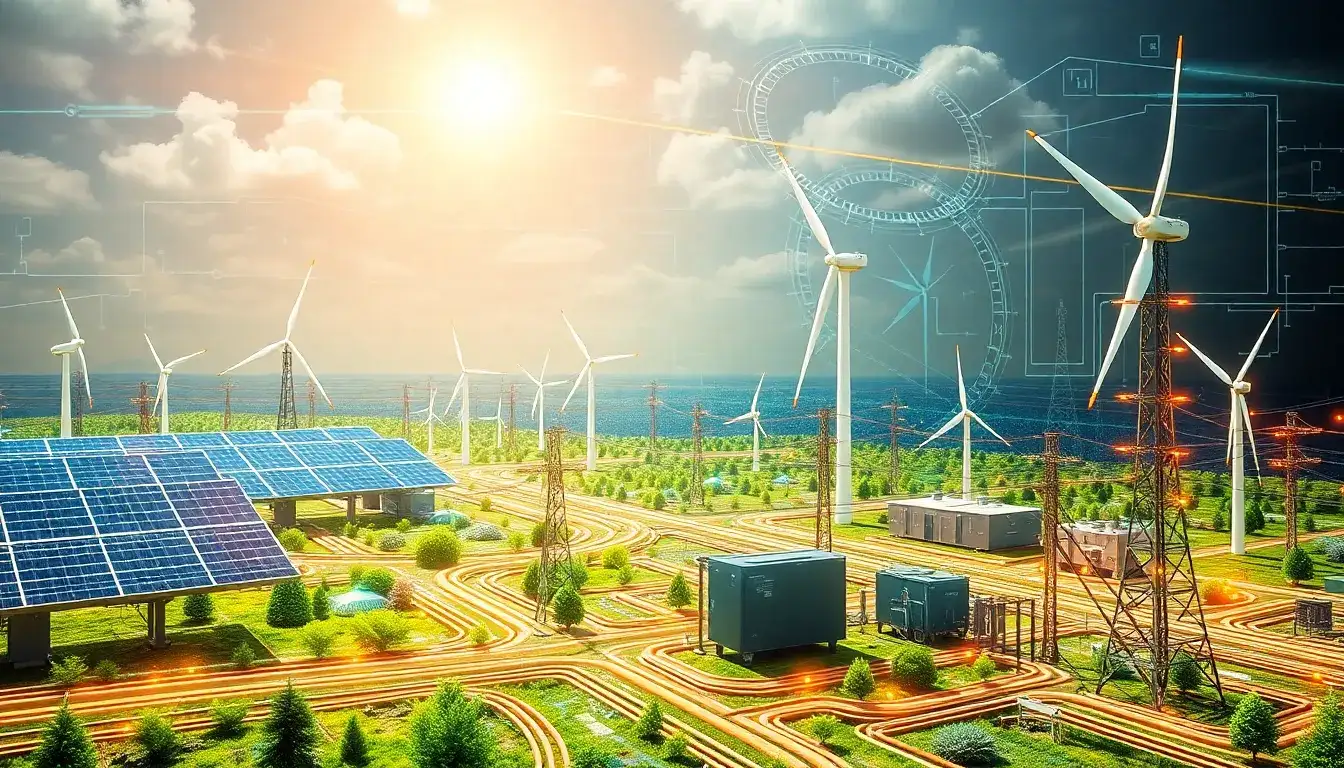
Integrating renewables into smart grids poses several challenges, including:
1. Variability and Intermittency of Renewables
- Challenge: Solar and wind power are dependent on weather conditions, leading to variability in energy output. This creates instability in the grid and requires constant balancing to maintain a consistent supply of power.
- Solution: Advanced forecasting tools using artificial intelligence (AI), combined with energy storage technologies like batteries, can help manage this variability and stabilize the grid.
2. Grid Infrastructure and Capacity
- Challenge: Existing grid infrastructure often lacks the capacity to handle the increased demand and supply from renewable sources, leading to bottlenecks and inefficiencies.
- Solution: Upgrading and expanding grid infrastructure, including transmission lines, and implementing distributed energy systems like rooftop solar can mitigate these issues.
3. Technological Integration and Interoperability
- Challenge: Smart grids require seamless integration of various technologies and systems, which can be challenging due to differences in standards and protocols among devices from different manufacturers.
- Solution: Establishing standardized protocols (e.g., through initiatives like the U.S. Smart Grid Interoperability Panel) can improve efficiency and reduce costs associated with technological integration.
4. Cybersecurity and Data Management
- Challenge: Increased reliance on digital technologies in smart grids heightens the risk of cyberattacks and data breaches. Managing extensive data from smart grid sensors and devices is also a significant challenge.
- Solution: Implementing robust cybersecurity measures and data management systems, along with consumer privacy protections, is crucial. Blockchain technology and microgrids can enhance security by decentralizing data management.
5. Regulatory and Policy Barriers
- Challenge: Existing regulatory frameworks often do not accommodate the dynamic nature of smart grids, hindering their development.
- Solution: Updating regulatory policies to support smart grid technologies and promote long-term investments in infrastructure and innovation is essential.
6. Consumer Engagement and Acceptance
- Challenge: Lack of consumer awareness and acceptance can limit the effectiveness of smart grid technologies.
- Solution: Educating consumers about the benefits of smart grids and engaging them in the adoption process can enhance acceptance and participation.
Original article by NenPower, If reposted, please credit the source: https://nenpower.com/blog/what-are-the-main-challenges-in-integrating-renewables-into-smart-grids/

