

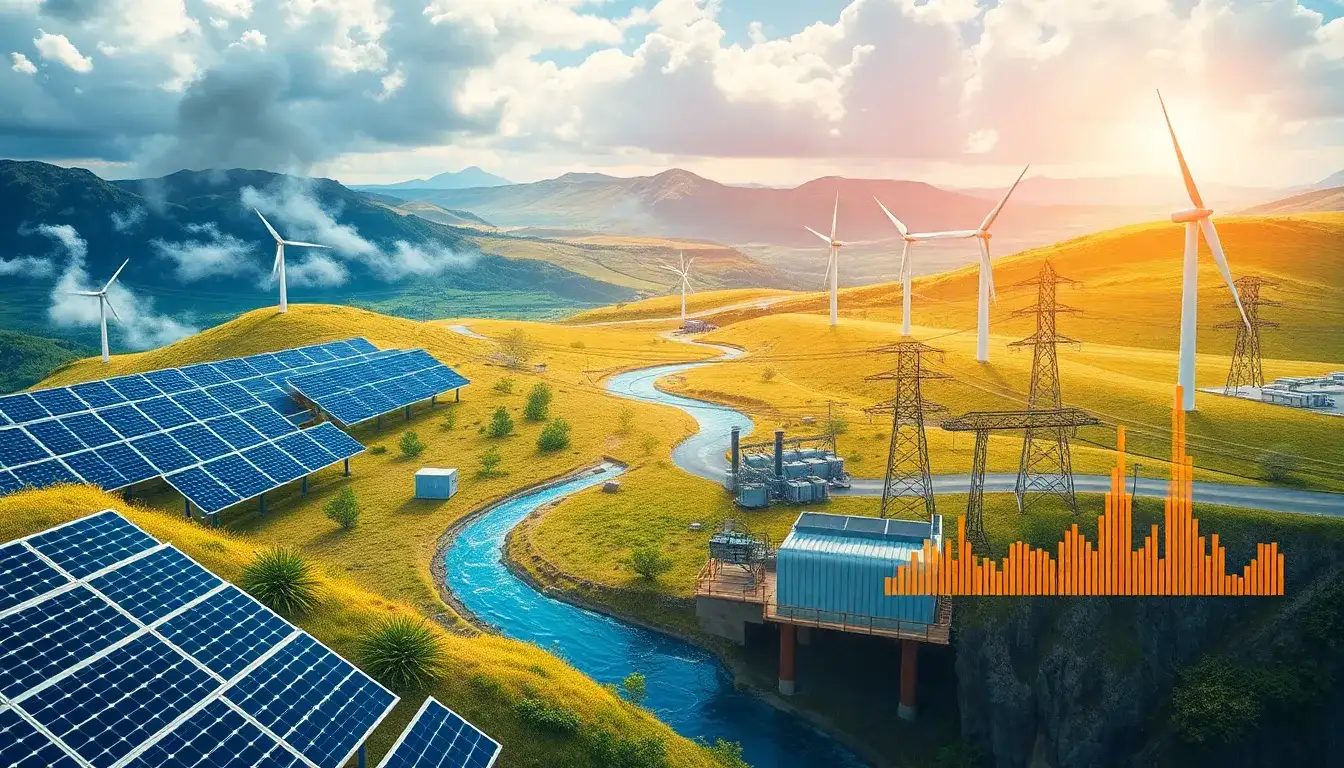
The main challenges in integrating renewable energy with grid firming center around managing the variability and intermittency of renewable sources, modernizing aging grid infrastructure, and ensuring stable and reliable grid operation. These challenges include the following key aspects:
1. Variability and Unpredictability of Renewables
- Renewable sources like solar and wind are inherently variable and depend on weather conditions and time of day, causing power output fluctuations that are difficult to predict accurately.
- This unpredictability creates grid imbalances and makes planning and managing power flows complex.
- Grid firming solutions, such as battery storage and advanced forecasting powered by artificial intelligence, are essential to balance electricity supply and demand effectively to maintain stability.
2. Grid Infrastructure Limitations
- Many transmission and distribution lines are old and suffer from energy losses; modernizing these lines is expensive and time-consuming.
- Renewable resources often exist in remote or offshore locations, requiring new power lines or enhanced high-voltage direct current (HVDC) transmission capacity to connect them to the grid.
- Limited transmission infrastructure can create bottlenecks, preventing efficient energy delivery from renewable generation sites to demand centers.
3. Technologies for Grid Integration and Control
- Renewable energy systems generate direct current (DC) power, which must be converted to alternating current (AC) and properly controlled to connect reliably with the existing grid.
- Grid-forming inverters and other advanced control technologies are needed to ensure stable, reliable connections that can respond dynamically to grid conditions and support grid firming.
- Coordinating multiple renewable sources and managing regional market and demand variations require sophisticated control and communication technologies.
4. Intermittency and Energy Storage Needs
- Due to intermittent supply, renewable energy can cause both supply shortages and periods of overproduction, leading to overload disturbances.
- Grid firming relies heavily on energy storage solutions (e.g., batteries) to smooth out these fluctuations by storing excess energy during peak production and releasing it during deficits or peak demand periods.
- Effective grid management must balance these dynamics to avoid outages and maintain power quality.
5. Regulatory and Coordination Challenges
- Regulatory frameworks and market structures often lag behind technological advancements, creating hurdles for the deployment of grid-enhancing infrastructure and renewable integration projects.
- Close collaboration among grid operators, policymakers, technology providers, and consumers is required to adapt regulations, incentivize investments, and implement distributed energy systems like rooftop solar to reduce grid burdens.
In summary, integrating renewable energy with grid firming faces challenges in managing the variable and intermittent nature of renewables, modernizing and expanding grid infrastructure, deploying advanced control technologies, ensuring sufficient energy storage, and navigating regulatory and coordination complexities. Addressing these challenges requires a combination of technological innovation, infrastructure investment, and policy support to achieve a reliable, stable, and decarbonized power grid.
Original article by NenPower, If reposted, please credit the source: https://nenpower.com/blog/what-are-the-main-challenges-in-integrating-renewable-energy-with-grid-firming/

