

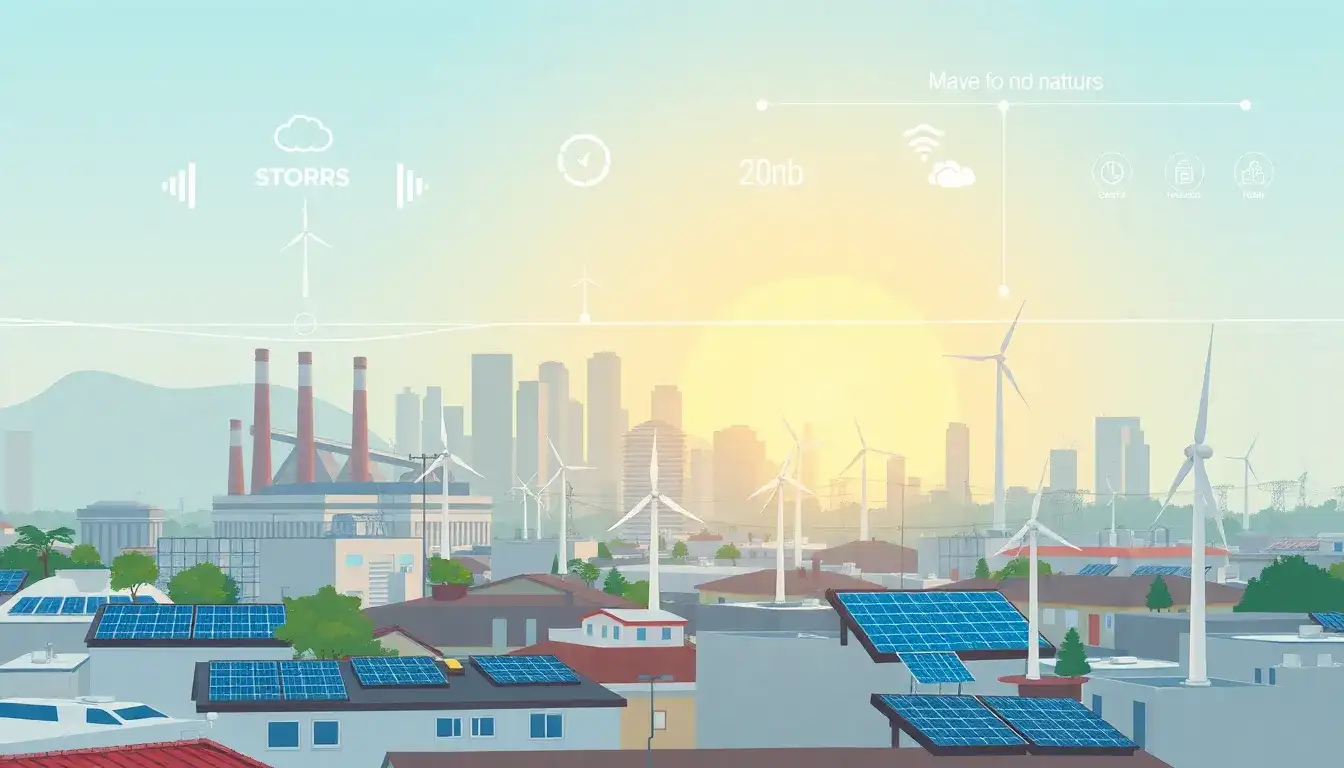
Main Challenges
-
Variability and Unpredictability of Renewables:
- Issue: Renewable sources like solar and wind are intermittent, meaning their output varies with weather conditions. This unpredictability makes it challenging for grid operators to balance supply and demand.
- Solution: Advanced forecasting tools, AI-based predictive models, and energy storage systems (like battery storage) can help mitigate this variability by providing backup power when needed.
-
Grid Modernization and Infrastructure:
- Issue: Existing grid infrastructure is often outdated and insufficient to handle the integration of decentralized renewable sources efficiently. This leads to inefficiencies and bottlenecks in energy transmission.
- Solution: Encouraging distributed energy systems (e.g., rooftop solar) and upgrading grid infrastructure with smart technologies can help manage energy flow more effectively.
-
Balancing Supply and Demand:
- Issue: Renewable energy often peaks at different times than peak demand, leading to mismatches between supply and demand.
- Solution: Implementing demand-side management strategies and using advanced storage solutions can help ensure consistent power availability.
-
Network Inadequacy:
- Issue: There is a lack of physical capacity to connect new renewable energy sources, leading to grid congestion and delays in integrating new projects.
- Solution: Improving grid planning, optimizing connection processes, and investing in new transmission infrastructure are necessary.
-
Security Threats:
- Issue: The digitalization of renewable systems increases vulnerability to cyber-attacks.
- Solution: Implementing microgrids and blockchain technology can enhance security by decentralizing power distribution.
-
Overload Disturbances and Frequent Power Outages:
- Issue: The aging grid infrastructure may not be able to handle sudden surges in renewable energy output, leading to outages.
- Solution: Incorporating backup systems and smart grid technologies can mitigate these issues.
Solutions for Integration
- Smart Grid Technologies: These include advanced sensors and automation tools that help manage power distribution efficiently.
- Energy Storage: Battery storage systems are crucial for balancing supply and demand.
- Distributed Energy Systems: Encouraging local energy production reduces transmission needs.
- Regulatory and Policy Support: Streamlining regulatory processes and providing incentives for renewable energy integration can facilitate the transition.
Original article by NenPower, If reposted, please credit the source: https://nenpower.com/blog/what-are-the-main-challenges-in-integrating-renewable-energy-into-existing-grid-systems/

