

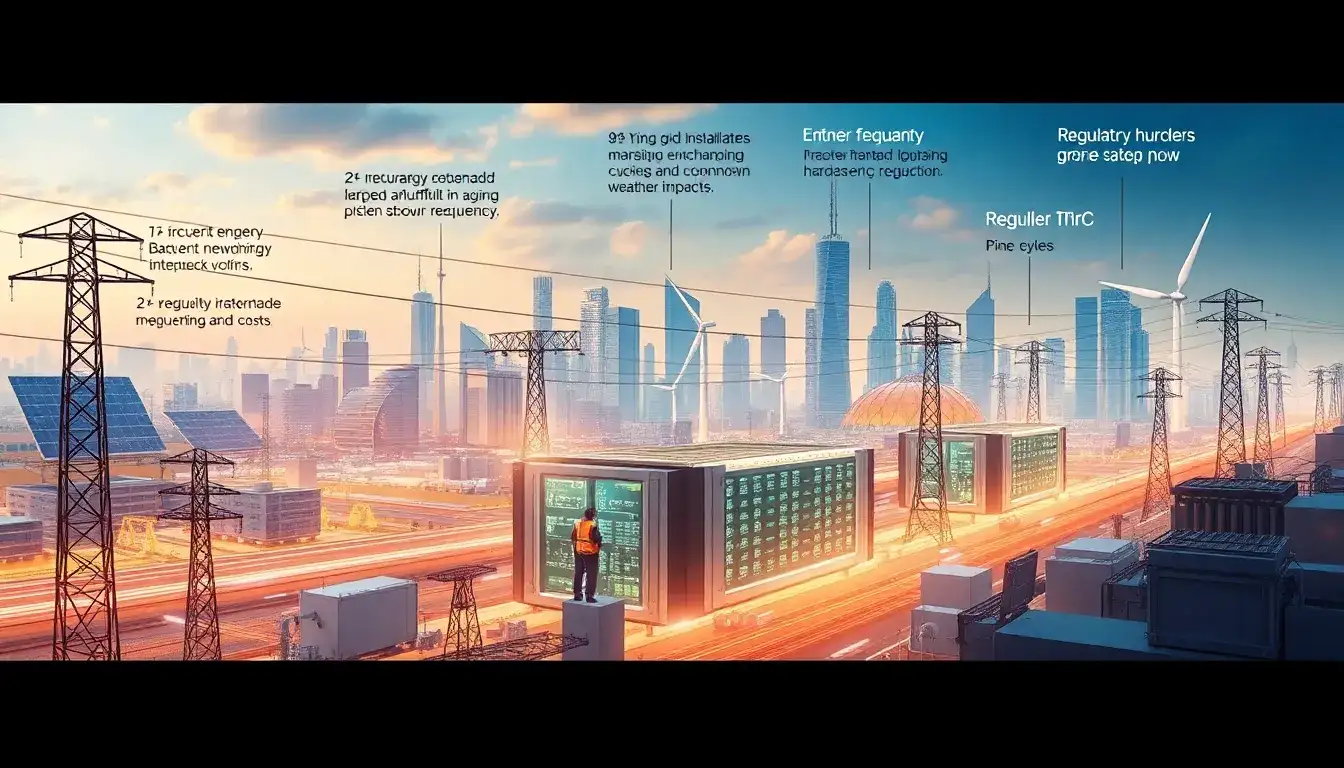
Main Challenges in Integrating BESS for Frequency Regulation
Integrating Battery Energy Storage Systems (BESS) for frequency regulation in the electrical grid presents several challenges:
- Technical Complexity:
- System Integration: BESS involves complex systems combining hardware, software, and safety features, requiring deep technical expertise for integration and management.
- Voltage, Power Management: Managing active and reactive power at the point of connection, ensuring optimal voltage support, adds complexity.
- Bi-directional Operation: Acting as both a generator and a load complicates integration with existing grid infrastructure.
- Supply Chain and Operational Challenges:
- Software Upgrades and Compliance: Frequent software updates are necessary to meet changing market requirements, such as transitioning from 30-minute to 5-minute settlement periods.
- Grid Connection and Stability: Ensuring that the Power Plant Controller (PPC) maintains network stability is crucial but often delayed by complex modeling requirements.
- Control Strategy Challenges:
- Optimization of Control Coefficients: Maintaining the right balance in control coefficients to avoid over-discharging and maximize frequency support requires sophisticated control strategies.
- State of Charge (SOC) Management: Managing SOC is critical to ensure effective frequency regulation without compromising the longevity of the BESS.
- Interoperability and Scalability:
- Interoperability with Other Assets: Integrating BESS with wind turbines and other renewable sources requires coordination of different control loops, such as inertia response and droop control.
- Scalability and Long-term Performance: Ensuring that BESS solutions scale effectively and perform consistently over time is essential for widespread adoption.
Original article by NenPower, If reposted, please credit the source: https://nenpower.com/blog/what-are-the-main-challenges-in-integrating-bess-for-frequency-regulation/

