

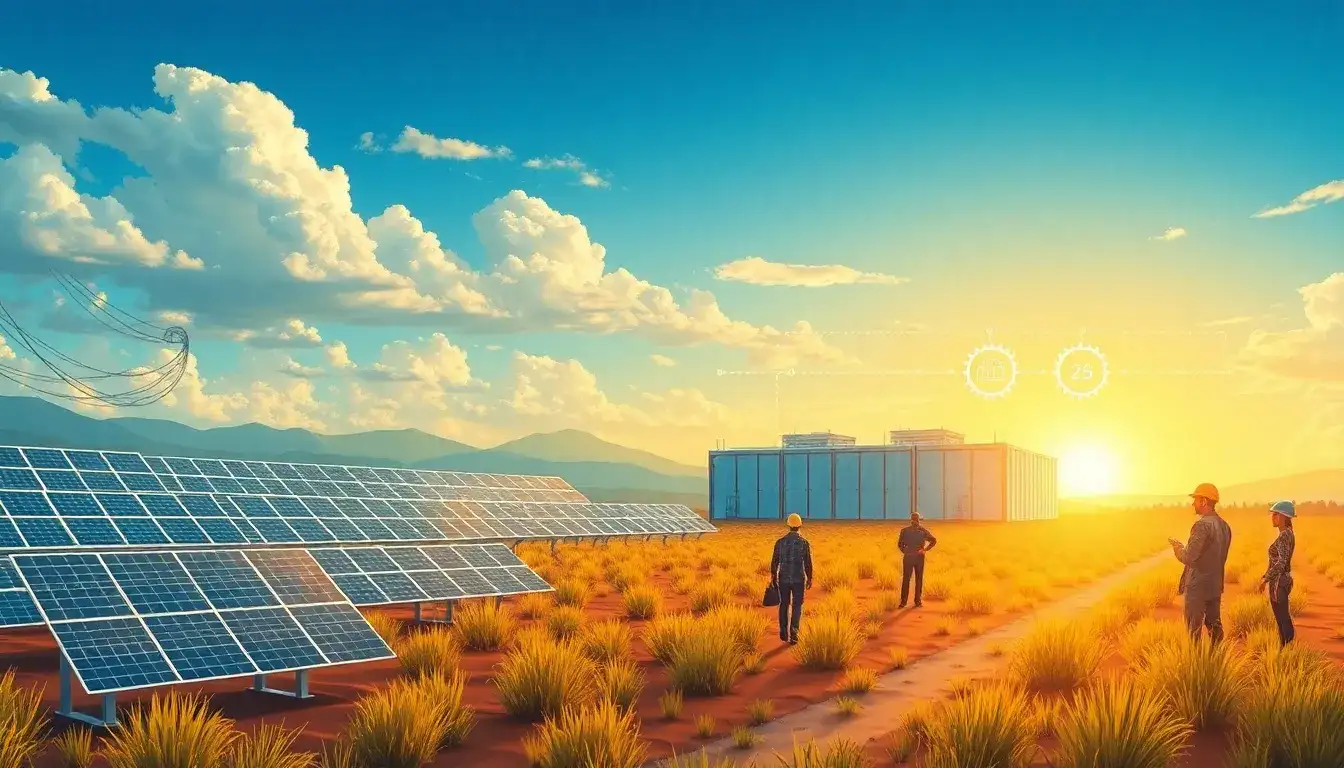
The main challenges in integrating battery storage with solar energy include the following:
-
High Initial Costs
Battery storage systems require a substantial upfront investment. The costs include purchasing high-quality batteries capable of handling solar applications and the associated installation expenses such as labor and electrical components. These costs can be prohibitive for many residential and commercial users, making it difficult to compete with conventional energy sources like coal or natural gas. -
Limited Battery Lifespan and Performance Data
Batteries have a limited operational lifespan, which affects long-term reliability and economic feasibility. Additionally, there is a lack of comprehensive data on battery operation, performance, and failure rates, complicating risk assessment and insurance underwriting. -
Scalability and Infrastructure Integration
Existing energy systems and infrastructure were often not designed to integrate large-scale energy storage. This necessitates significant upgrades and modifications, which pose financial and technical barriers. Integrating battery storage within these systems requires complex planning and investment to ensure compatibility and efficiency. -
Regulatory and Policy Challenges
Current regulations and policies may be outdated or ill-suited to renewable energy and battery storage technologies. This can hinder installations or create legal challenges for users and organizations attempting to adopt integrated solar and battery storage systems. -
Need for Advanced Grid Technology
Efficient integration of solar and battery storage depends heavily on smart grid technologies that can manage and optimize energy flows. Many existing grids lack the necessary technology to fully support these systems, limiting the potential benefits and complicating integration efforts. -
Environmental Concerns
Battery production and disposal raise environmental issues, including resource extraction impacts and waste management challenges. These concerns prompt calls for alternative storage technologies or improvements in battery sustainability. -
Intermittency and Reliability
Solar energy generation is intermittent, limited to daylight hours, which necessitates reliable storage solutions to ensure continuous power supply. Balancing generation and demand requires sophisticated battery management and energy storage strategies to mitigate intermittency.
In summary, integrating battery storage with solar energy is challenged by high costs, infrastructure and scalability issues, regulatory hurdles, environmental impacts, and the technological demands of managing intermittent energy supply and smart grid integration. Addressing these challenges is critical for the widespread adoption and efficient operation of solar-plus-storage systems.
Original article by NenPower, If reposted, please credit the source: https://nenpower.com/blog/what-are-the-main-challenges-in-integrating-battery-storage-with-solar-energy/

