

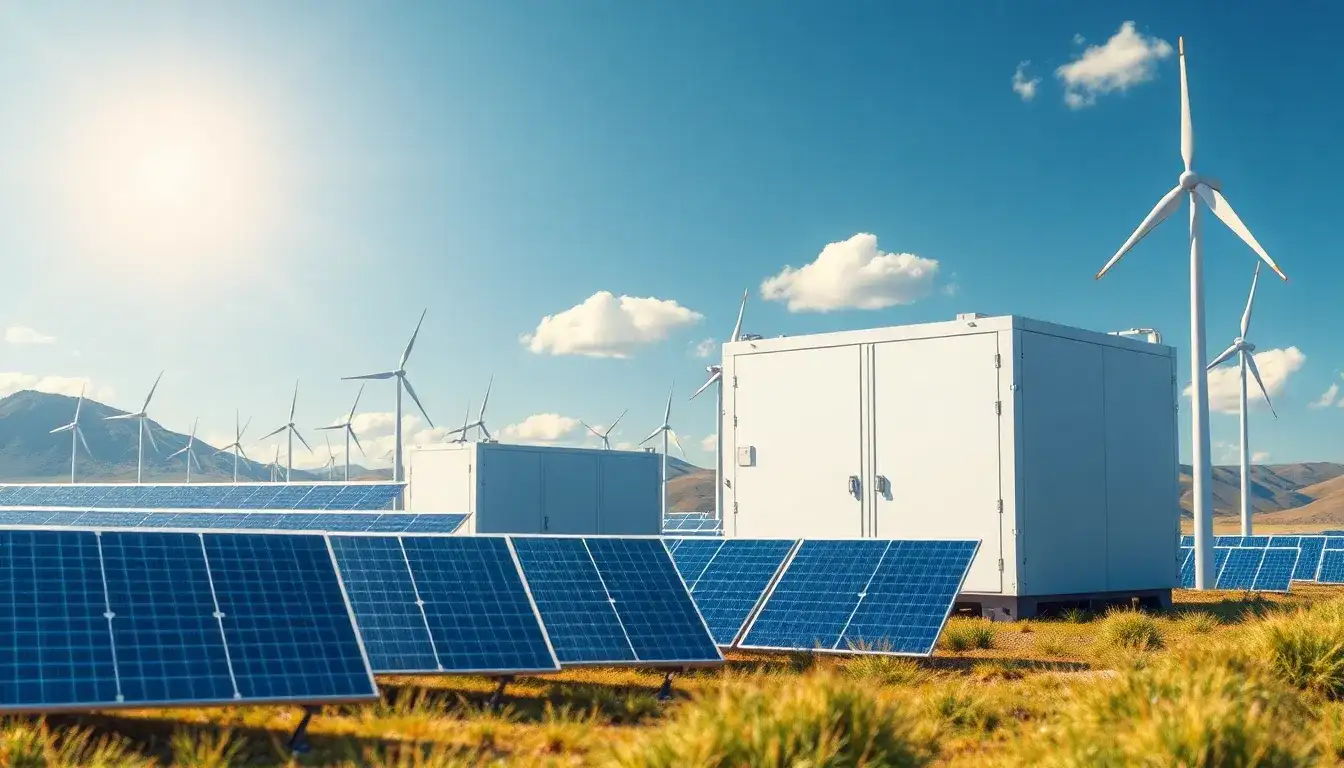
The main challenges in integrating battery storage with renewable energy stem from the inherent characteristics of renewable sources and the limitations of current storage technologies. Key challenges include:
1. Intermittency and Variability of Renewable Energy
Renewable energy sources like solar and wind are intermittent and variable, producing power only under favorable weather conditions (daylight for solar, wind availability for wind turbines). This unpredictability causes mismatches between energy supply and demand, necessitating reliable storage to balance fluctuations and ensure consistent power availability.
2. High Cost and Economic Barriers
While battery costs, particularly lithium-ion, have decreased, the upfront investment for energy storage systems remains high. Large-scale infrastructure, advanced materials, and innovative technologies add to the expense, limiting widespread adoption and competitiveness against fossil fuels.
3. Limited Storage Capacity and Energy Density
Many batteries and storage technologies have limited energy density, meaning they cannot efficiently store large amounts of energy for extended periods. Lithium-ion batteries are efficient for short-duration storage (hours) but less suitable for long-term storage (days or weeks). This limitation makes it challenging to provide extended backup during prolonged low generation periods.
4. Grid Integration and Infrastructure Challenges
Existing electricity grids were not originally designed for variable, distributed renewable generation or large-scale battery integration. Integrating storage requires grid upgrades, new transmission lines, and smart grid technologies to manage supply-demand fluctuations effectively. Regulatory and permitting complexities further complicate deployment.
5. Environmental and Resource Constraints
Battery production relies on critical raw materials like lithium, cobalt, and nickel, whose mining and processing pose environmental and ethical concerns. End-of-life battery disposal and recycling are also problematic, requiring environmentally friendly approaches to prevent hazardous waste issues.
6. Technological Maturity and Innovation Needs
Emerging storage technologies such as flow batteries, hydrogen storage, and thermal storage are promising for long-duration and grid-scale applications but remain in early commercial or research stages. Rapid tech evolution creates uncertainty in planning and selection of optimal systems.
7. Public Perception and Policy Barriers
Public skepticism about the reliability of renewable energy and battery storage can slow acceptance. Additionally, outdated regulations and policies often do not accommodate new storage technologies, creating hurdles for installation and operation.
Addressing these challenges involves:
- Investing in research to lower costs and improve energy density and lifespan of batteries.
- Upgrading grid infrastructure and adopting smart grid and control systems.
- Developing recycling technologies and diversifying raw material sources.
- Deploying a mix of storage solutions appropriate for different durations and scales.
- Updating policies to facilitate deployment and public support.
Overall, overcoming these barriers is critical to reliably harnessing renewable energy at scale and advancing the transition to a sustainable, low-carbon energy future.
Original article by NenPower, If reposted, please credit the source: https://nenpower.com/blog/what-are-the-main-challenges-in-integrating-battery-storage-with-renewable-energy/

