

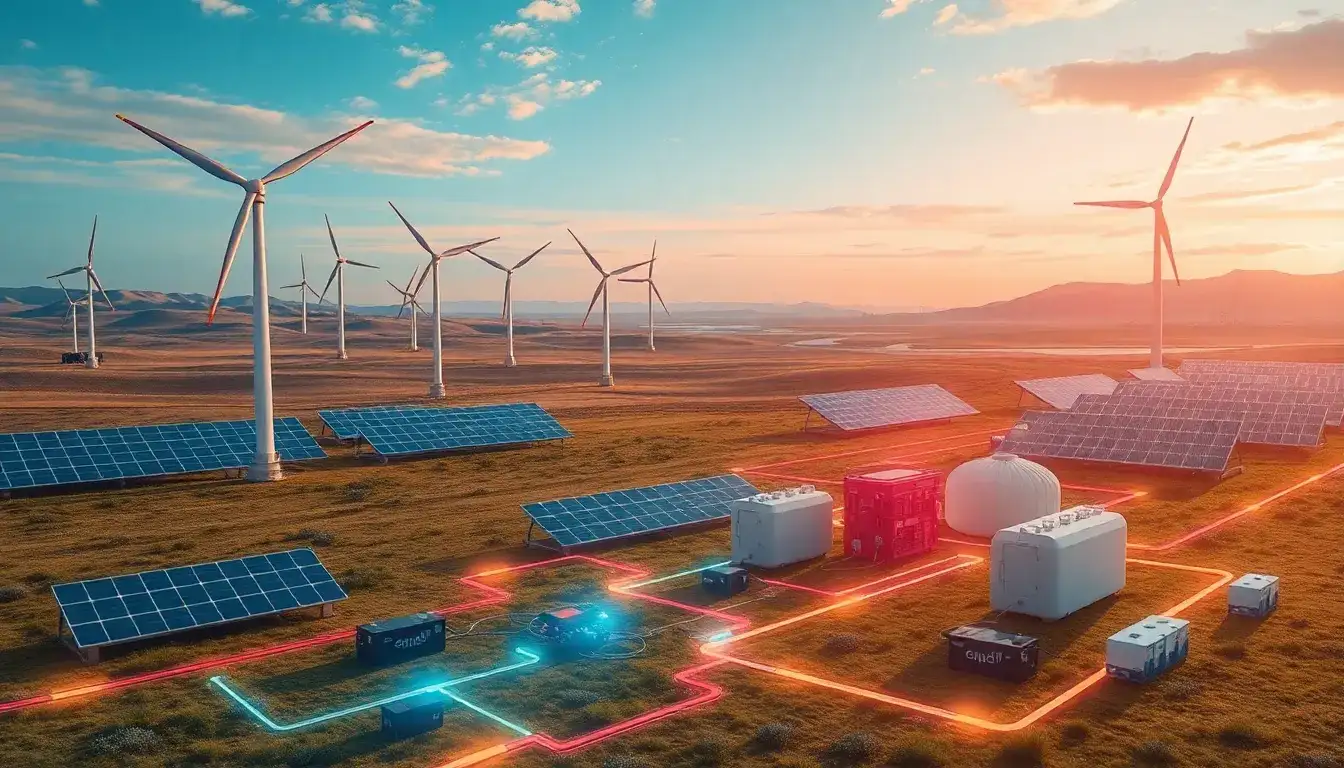
1. Intermittency and Variability of Renewable Energy
Renewable sources like solar and wind are inherently intermittent and fluctuate based on weather and time of day, making energy production unpredictable and variable. Battery storage systems must be able to smooth out these fluctuations to maintain grid stability, but managing this variability in real time is complex.
2. High Cost and Economic Barriers
Energy storage technologies, especially lithium-ion batteries, involve significant upfront capital costs. Although costs have declined recently, the initial investment for batteries, along with associated infrastructure, remains a major barrier to large-scale deployment.
3. Limited Energy Density and Storage Duration
Current battery technologies struggle to provide long-duration storage. For example, lithium-ion batteries efficiently power loads for hours but are not well suited for multi-day or seasonal storage because they cannot store very large amounts of energy compactly and cost-effectively.
4. Battery Lifespan and Degradation
Batteries have limited charge-discharge cycles before their capacity degrades significantly. This short lifespan requires replacements and maintenance, increasing costs and impacting system reliability over time.
5. Safety Risks
Large-scale battery systems carry risks such as thermal runaway, fires, and explosions. These safety concerns require robust design, monitoring, emergency response plans, and regulatory standards to mitigate risks in deployment and operation.
6. Environmental and Resource Constraints
Manufacturing batteries depends on critical raw materials such as lithium, cobalt, and nickel. Mining and processing these materials cause environmental and social challenges. Additionally, managing battery recycling and disposal at end-of-life is necessary to reduce environmental impact.
7. Grid Integration and Infrastructure Limitations
Many existing power grids were not designed to accommodate large, variable renewable generation combined with battery storage. Challenges include upgrading transmission infrastructure, implementing smart grid controls, and ensuring stored energy can be efficiently distributed during demand fluctuations.
8. Technological Uncertainty and Scalability
Battery technologies are rapidly evolving, with emerging options like solid-state batteries and hydrogen storage still in early stages. This technological uncertainty complicates planning and investment decisions. Scaling these new technologies for commercial and utility use also takes time and resources.
9. Regulatory and Policy Challenges
Current electricity regulations may lack clear support for energy storage systems, with lengthy approval and unclear rules on charging/discharging adding complexity. Supportive policies and incentives are critical for accelerating battery integration with renewables.
In summary, while battery energy storage is crucial for enabling a reliable renewable-powered grid, the main challenges are economic cost, technological limitations in duration and safety, grid infrastructure readiness, and environmental/resource considerations. Addressing these will require continued innovation, supportive policies, and strategic investments to optimize the integration of battery storage with renewable energy sources.
Original article by NenPower, If reposted, please credit the source: https://nenpower.com/blog/what-are-the-main-challenges-in-integrating-battery-energy-storage-with-renewable-energy-sources/

