

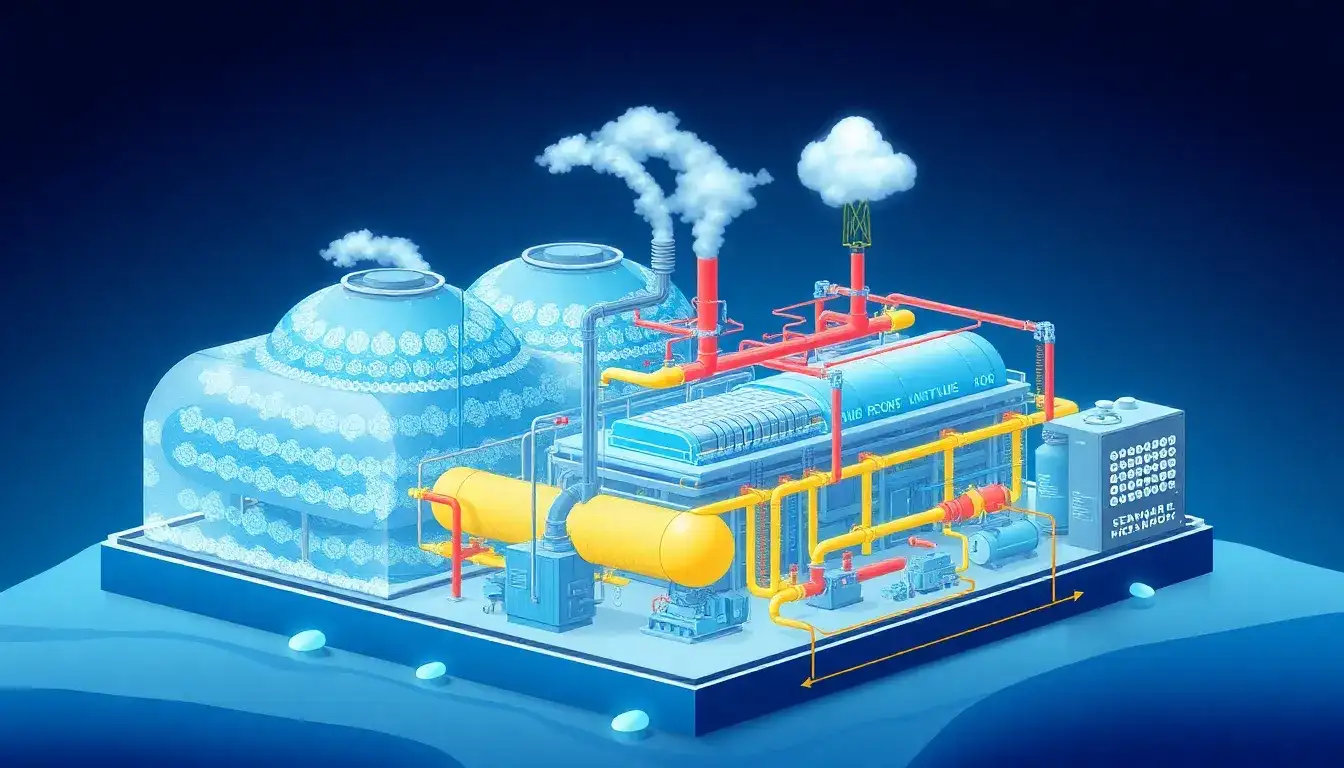
Improving the round-trip efficiency of Liquid Air Energy Storage (LAES) systems faces several key challenges:
- Energy Consumption in Liquefaction and Compression:
- LAES requires significant energy to compress and cool air to cryogenic temperatures, leading to inefficiencies and waste heat during these processes.
- The compression and liquefaction steps consume a substantial amount of energy, which reduces the overall efficiency of the system.
- Thermal Energy Losses:
- Inefficiencies in using heat sources during the gasification process can result in thermal energy losses, impacting the efficiency of the liquid air.
- The use of external heat systems or fuels can enhance efficiency but may introduce additional challenges such as environmental impacts and dependency on external resources.
- Integration with External Systems:
- While integrating LAES with external thermal systems can improve efficiency, it requires adjacent facilities, limiting the system’s independent operation capability.
- This integration can restrict the repurposing of heat for other applications, as these systems often rely on waste heat to maximize efficiency.
- Environmental and Sustainability Concerns:
- The use of external fuels to boost efficiency comes with CO2 emissions, posing environmental concerns and barriers to sustainable development.
- Technological and Cost Challenges:
- Achieving significant improvements in efficiency requires continued innovation and technological advancements, along with reducing costs to make LAES more competitive.
Improving these aspects will be crucial for enhancing the round-trip efficiency of LAES systems.
Original article by NenPower, If reposted, please credit the source: https://nenpower.com/blog/what-are-the-main-challenges-in-improving-the-round-trip-efficiency-of-laes/

