

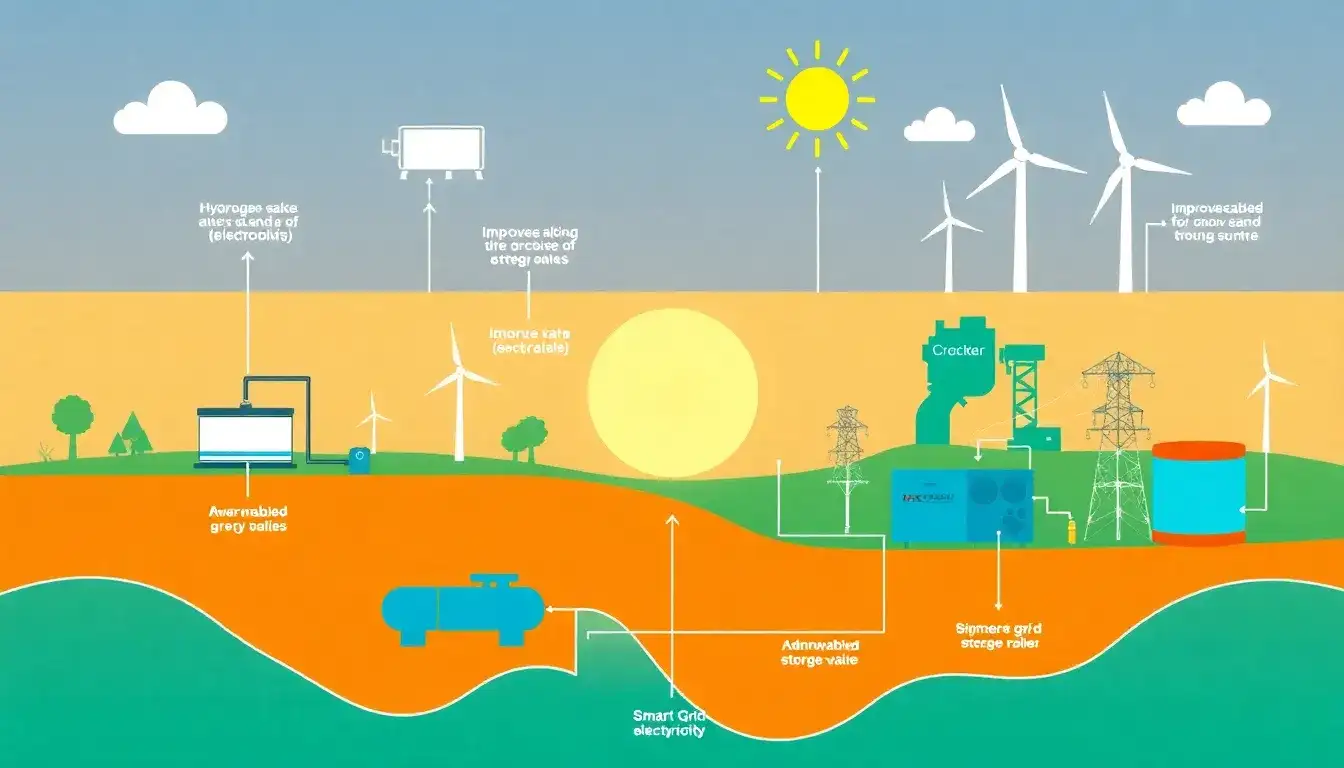
Challenges in Improving Round-Trip Efficiency
1. Production Efficiency
- Cost and Technology: The production of green hydrogen, especially through electrolysis, is expensive and less efficient than traditional methods like steam methane reforming (SMR). Enhancing the efficiency of electrolysis technologies, such as proton exchange membrane (PEM) and solid oxide electrolysis cells (SOECs), is crucial to reduce both costs and energy losses.
- Integration with Renewables: Using renewable energy sources like wind and solar for electrolysis can improve the environmental footprint but requires better integration systems to optimize energy production and storage.
2. Storage Challenges
- Energy Losses: Compressing or liquefying hydrogen leads to energy losses due to the high energy requirements for these processes. Developing more efficient compression techniques or exploring alternative storage methods like metal hydrides or advanced sorbents could mitigate these losses.
- Leakage and Safety: Hydrogen’s small size makes it prone to leakage, requiring advanced storage solutions to ensure safety and minimize losses.
3. Conversion and Utilization Efficiency
- Round-Trip Efficiency: The overall process of converting electricity into hydrogen and back into electricity (or another usable form) incurs significant losses. For instance, round-trip efficiency in power plants using green hydrogen is often around 36% due to multiple stages of energy conversion, including electrolysis, compression, and combustion in a gas turbine.
- Technological Inefficiencies: Each stage of energy conversion, from electrolysis to storage and finally utilization, contributes to inefficiency. Improvements in electrolyzer technology and fuel cells are needed to enhance overall efficiency.
4. Infrastructure and Cost Challenges
- High Capital Costs: Building infrastructure for hydrogen production, storage, and transportation involves substantial investment, which can be a barrier to widespread adoption.
- Infrastructure Development: Developing a robust distribution network, including pipelines and storage facilities, is essential for efficient energy storage but faces challenges like high upfront costs and regulatory hurdles.
To overcome these challenges, research should focus on:
- Materials Science Innovations: Developing more efficient hydrogen storage materials and systems to reduce losses during storage and improve energy density.
- Efficiency Improvements: Enhancing the efficiency of production and conversion technologies.
- Infrastructure Development: Building a comprehensive and efficient hydrogen distribution network.
- Policy Support: Implementing supportive policies to encourage investment and adoption of hydrogen infrastructure.
Original article by NenPower, If reposted, please credit the source: https://nenpower.com/blog/what-are-the-main-challenges-in-improving-the-round-trip-efficiency-of-hydrogen-energy-storage/

