

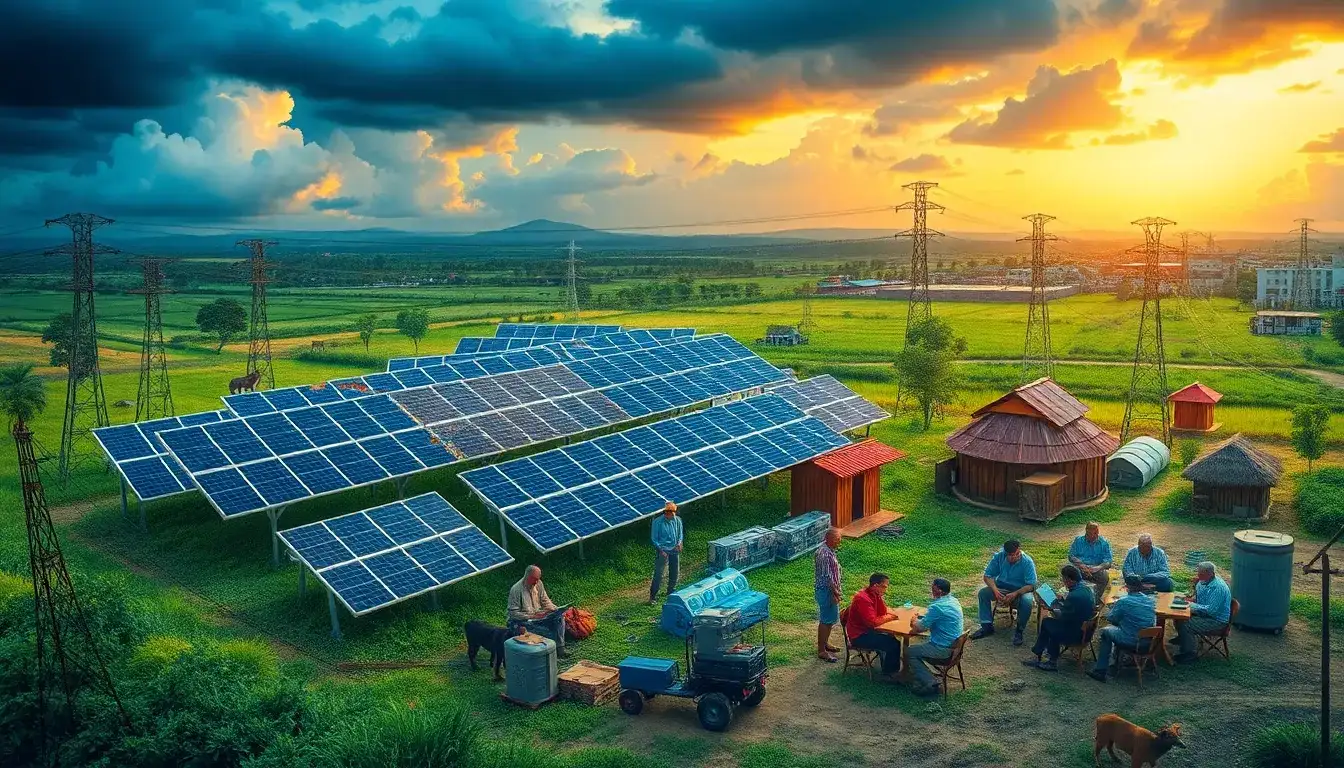
Main Challenges of Solar Microgrids
- High Upfront Costs
The initial investment for setting up a solar microgrid, including solar panels, energy storage systems, and control systems, can be substantial. This cost barrier often discourages communities or small businesses with limited financial resources from adopting this technology. - Limited Energy Storage
Solar microgrids rely heavily on energy storage to ensure a stable power supply during periods of low solar radiation. However, the cost and capacity limitations of energy storage systems like batteries can restrict the reliability and duration of power availability. - Weather Dependence
The output of solar microgrids is inherently dependent on weather conditions, which can lead to unpredictability and variability in power generation. This makes it challenging to maintain a consistent energy supply. - Regulatory and Interconnection Challenges
Connecting solar microgrids to the main grid or ensuring regulatory compliance can be complex due to evolving or inadequate regulatory frameworks. These challenges can increase costs and time for project implementation. - Technical Expertise and Complexity
Designing and maintaining a solar microgrid requires specialized technical expertise, which may not be readily available in all areas. The integration of diverse components and control systems adds to the operational complexity. - Scalability and Flexibility Limitations
Expanding a solar microgrid’s capacity or adjusting to changing energy demands can be difficult without significant infrastructure modifications. This scalability issue affects their adaptability to growing needs or future technological advancements.
Original article by NenPower, If reposted, please credit the source: https://nenpower.com/blog/what-are-the-main-challenges-in-implementing-solar-microgrids/

