

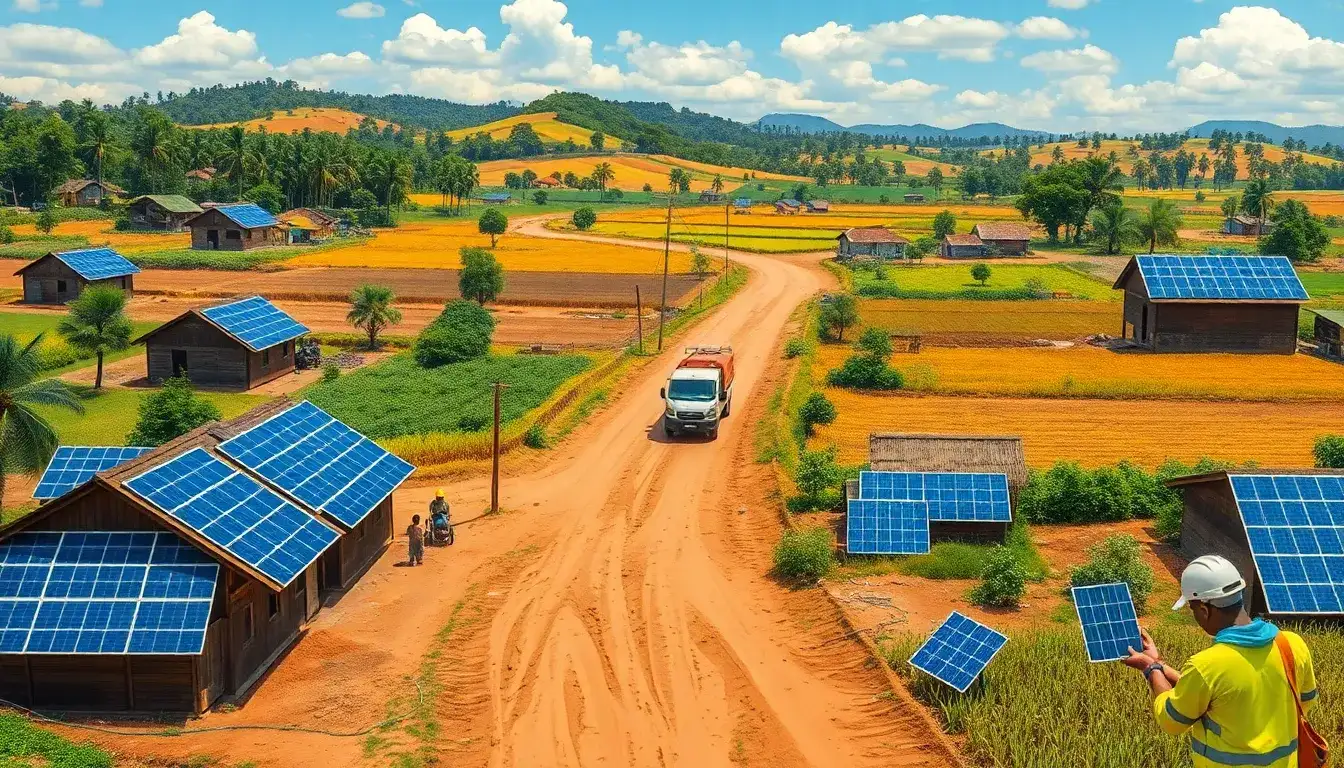
Implementing solar energy in rural communities presents several challenges. These include:
1. Infrastructure and Logistics
- Initial Investment and Funding: The initial capital required for solar installations is high, and rural communities often face financial constraints. Financing solutions such as microloans and subsidies are needed to overcome this barrier.
- Transportation Costs: Installing solar systems in remote areas can be expensive due to high transportation costs for materials.
2. Infrastructure Limitations
- Lack of Existing Infrastructure: Rural areas often lack necessary infrastructure like roads and communication networks, which are crucial for transporting materials and maintaining systems.
3. Technical Capacity
- Limited Technical Expertise: There may be a shortage of skilled personnel to install and maintain solar systems. Training local workers is essential for long-term sustainability.
4. Social and Cultural Resistance
- Community Acceptance: Introducing new technologies can sometimes face resistance due to unfamiliarity or distrust. Engaging with local communities and addressing their concerns is vital for successful implementation.
5. Land Acquisition and Impact
- Land Use Issues: Large-scale solar projects can lead to conflicts over land use, affecting local farming practices and causing concern among rural residents.
6. Long-Term Sustainability
- Maintenance Challenges: Ensuring sustainable and reliable operation requires developing local supply chains and maintenance networks, which can be challenging in rural settings.
Original article by NenPower, If reposted, please credit the source: https://nenpower.com/blog/what-are-the-main-challenges-in-implementing-solar-energy-in-rural-communities/

