

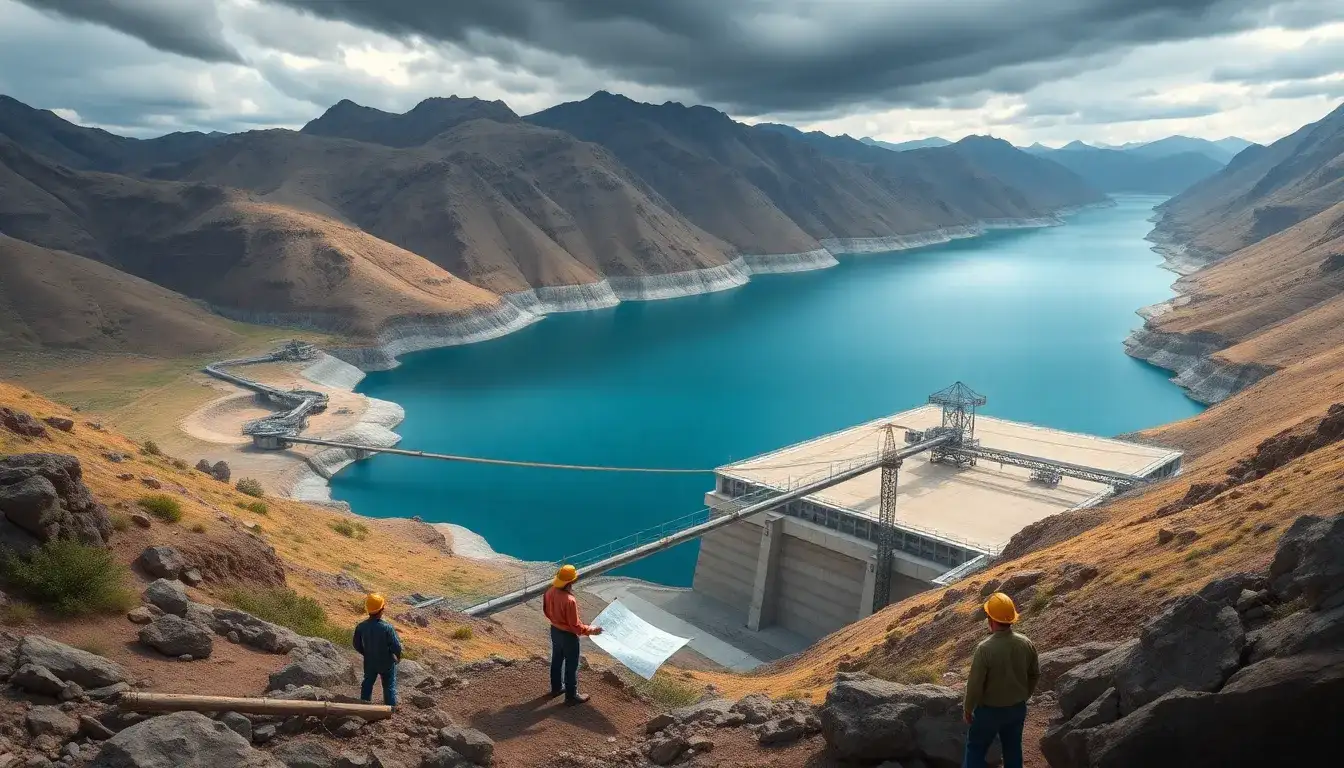
The main challenges in implementing pumped hydroelectric storage (PHS) include a range of technical, financial, environmental, regulatory, and social factors:
Technical and Construction Challenges
- Long construction timelines: Large PHS projects typically take three to eight years to complete, with some incorporating renewable energy integration requiring additional time. This lengthy process can lead to cost escalations due to inflation in materials and labor costs.
- Complex civil infrastructure: A significant portion (30-60%) of project costs go to civil works including dam construction, tunneling, and excavation. These heavy civil infrastructure projects carry substantial risks due to the complexity of engineering and construction.
- Site-specific geological and hydrological conditions: The viability and cost depend heavily on local geography, geology, and hydrology. For example, new concepts like underground pumped storage in abandoned mines face challenges with maintaining ground stability against repeated pressure changes.
- Demand variability: Electricity must be generated in real time to match fluctuating demand, with peak and off-peak differences creating operational complexity for reliable energy storage scheduling.
Financial and Market Risks
- Revenue uncertainty: In many liberalized electricity markets, the value of PHS systems is not fully recognized, leading to a lack of bankable revenue streams for developers. This risk deters investment.
- Long lead times deter financing: The extended periods from licensing to construction completion challenge financial institutions to commit funds for such long-duration projects.
- Cost escalation: Inflation and changing market conditions over the protracted project timelines can increase overall costs beyond initial estimates.
Regulatory and Licensing Challenges
- Lengthy and uncertain permitting: Obtaining project licenses can take several years, influenced by complex regulatory frameworks and potential changes in energy policy and market rules.
- Unclear regulations on ownership and business models: Ambiguity in defining ownership structures and combining generation and consumption roles complicates project development.
- Need for streamlined procedures: Efficient permitting and regulatory processes are critical to reduce delays and associated risks.
Environmental and Social Challenges
- Environmental impact concerns: Pumped storage projects can have notable environmental footprints, including impacts on aquatic ecosystems and land use, which often trigger opposition and require mitigation.
- Social opposition and land ownership issues: Projects may face resistance from local communities, indigenous groups, and landowners, complicating site acquisitions and approvals.
In summary, the main challenges to implementing pumped hydroelectric storage revolve around the prolonged and costly construction process, site-specific technical risks, uncertain and often insufficient financial incentives, complex and slow regulatory approvals, and significant environmental and social considerations. Addressing these requires coordinated approaches including improved market mechanisms, supportive policies, risk mitigation strategies, and stakeholder engagement to unlock the full potential of this crucial energy storage technology.
Original article by NenPower, If reposted, please credit the source: https://nenpower.com/blog/what-are-the-main-challenges-in-implementing-pumped-hydroelectric-storage/

