

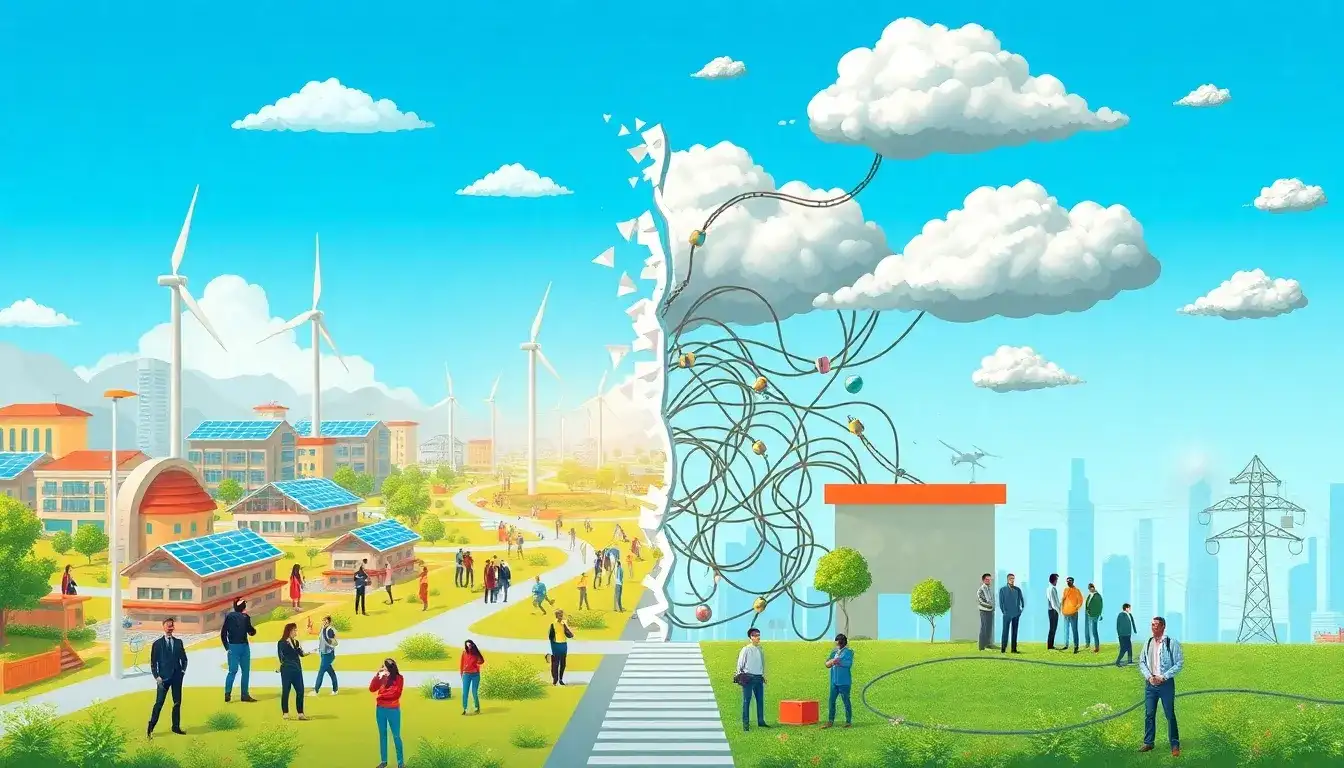
Implementing microgrids poses several challenges that need to be addressed for their successful deployment. Here are the main challenges:
Main Challenges of Implementing Microgrids
-
High Initial Costs:
- The upfront capital costs of designing, installing, and integrating a microgrid can be significant. These costs include distributed generation sources, energy storage systems, control systems, and specialized infrastructure.
-
Complex Planning and Design:
- Designing a microgrid requires careful consideration of load profiles, generation capacities, energy storage requirements, and control systems. This complexity can pose challenges, especially for organizations lacking specialized knowledge or resources.
-
Technical Complexity and Maintenance:
- Microgrids involve multiple components, including generators, renewable energy systems, energy storage systems, and control systems. Ensuring the proper maintenance, operation, and coordination of these components can be complex and requires skilled personnel.
-
Regulatory and Interconnection Challenges:
- Connecting a microgrid to the main grid or ensuring compatibility with existing infrastructure may involve regulatory hurdles and interconnection challenges. Resolving these issues can be time-consuming and costly.
-
Scalability and Flexibility Limitations:
- Microgrids often face limitations in scalability and flexibility. Expanding the network or integrating additional generation capacity may require significant modifications to the existing infrastructure.
-
Limited Economies of Scale:
- Unlike large, centralized power systems, microgrids typically serve localized areas, which can limit the economies of scale and result in higher costs per unit of energy generated or stored.
-
Energy Management Complexity:
- Balancing the generation, storage, and consumption of electricity in real-time to ensure grid stability and reliability requires sophisticated control systems and advanced algorithms.
-
Dependence on Fuel Availability:
- Microgrids that rely on fossil fuel generators for backup power can be affected by fuel supply disruptions or price fluctuations.
-
Lack of Consumer Awareness:
- Limited understanding among consumers about microgrids can slow their implementation. Education and outreach programs are necessary to overcome this challenge.
-
Standardization and Interoperability Issues:
- The integration of various technologies can lead to interoperability problems due to a lack of standardization. Establishing common communication protocols and equipment interfaces is essential.
Original article by NenPower, If reposted, please credit the source: https://nenpower.com/blog/what-are-the-main-challenges-in-implementing-microgrids/

