

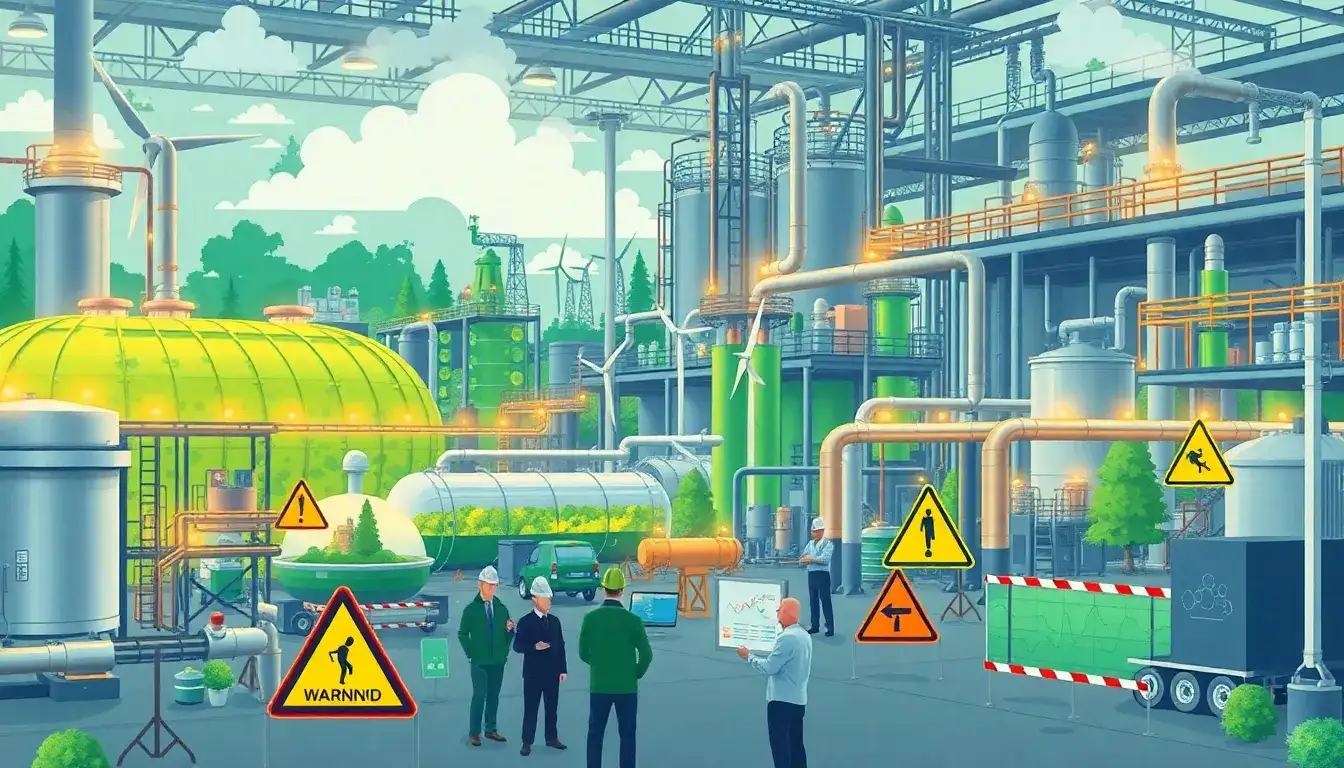
The main challenges in implementing green hydrogen in industrial processes are multifaceted, involving technical, economic, infrastructural, and regulatory issues:
1. Efficiency and Production Challenges
- Energy Efficiency Losses: Green hydrogen production, primarily via electrolysis, suffers from significant efficiency losses compared to direct electrification methods like heat pumps. Electrolysis can be less efficient by a factor of 4 to 5 due to energy losses during hydrogen production, storage, and use stages.
- Scaling Up Production: Meeting industrial-scale demand requires a substantial increase in green hydrogen production capacity. Existing markets are currently dominated by gray hydrogen (derived from fossil fuels), so shifting to green hydrogen calls for large-scale electrolysis plants and integration with renewable energy sources.
- Raw Material Supply: Producing green hydrogen depends on catalysts and renewable energy inputs, which may face supply chain bottlenecks, impacting consistent and scalable production.
2. Infrastructure Development
- Storage and Transportation: Hydrogen has unique storage and transport challenges due to its low energy density and flammability. Developing infrastructure suitable for industrial-scale storage, pipelines, and distribution networks is expensive and complex.
- Retrofitting Existing Systems: Industrial plants and energy systems were not originally designed for hydrogen use. Retrofitting or building new infrastructure to safely handle hydrogen—including pipelines, refueling stations, and equipment—adds to costs and delays adoption.
3. Technology Readiness and Integration
- Maturity of Hydrogen Technologies: Key technologies such as fuel cells and hydrogen turbines are still in developmental or early commercial stages. Their lower cost-effectiveness and efficiency compared to conventional counterparts limit immediate deployment.
- Process Adaptation: Industrial processes, particularly in sectors like steelmaking, need significant redesign or new process routes to effectively use green hydrogen, which requires collaboration and innovation.
4. Economic and Policy Barriers
- High Production Costs: Green hydrogen production from renewables is currently more expensive than gray hydrogen or traditional fuels, making it less competitive without subsidies or carbon pricing.
- Regulatory Frameworks and Incentives: Effective policies, fiscal incentives, and clear regulations are necessary to stimulate investment and market development in green hydrogen technologies.
- Market Development and Off-Takers: Securing reliable industrial off-takers for green hydrogen to ensure economic viability remains a challenge.
In summary, the main challenges in implementing green hydrogen in industrial processes include low efficiency and scalability of current production methods, the need for substantial infrastructure upgrades, immature supporting technologies, high costs, and the requirement for supportive regulatory and market frameworks to enable broad adoption. These challenges are actively being addressed through pilot projects, policy initiatives, and technological innovation worldwide.
Original article by NenPower, If reposted, please credit the source: https://nenpower.com/blog/what-are-the-main-challenges-in-implementing-green-hydrogen-in-industrial-processes/

