

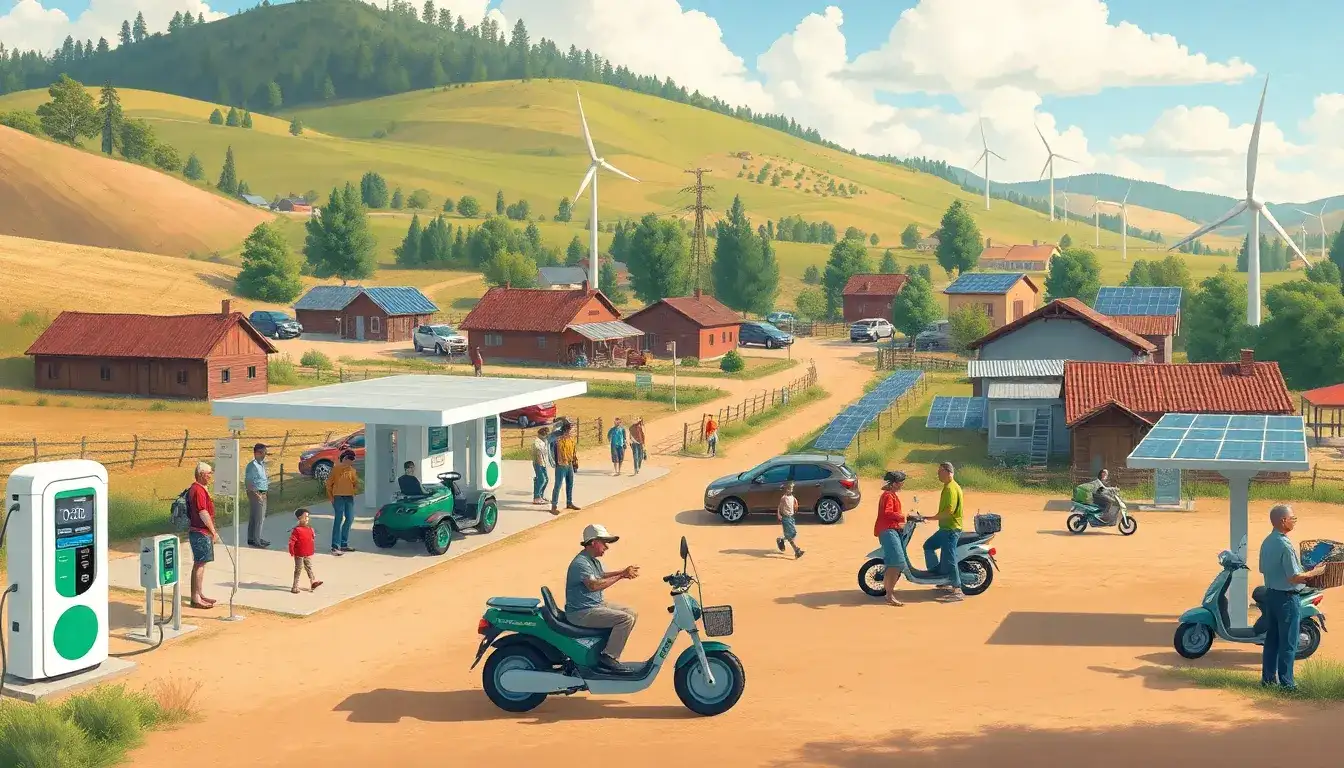
1. Lack of Charging Infrastructure (“Charging Deserts”)
Rural areas often lack sufficient public charging stations, particularly Level 2 and DC Fast Chargers, creating “charging deserts”. Low population density reduces economic incentives for infrastructure investment, leading to a cycle of low EV adoption and limited charger deployment.
2. Range Anxiety
Long distances between destinations and sparse charging stations exacerbate range anxiety, especially during extreme weather (e.g., reduced battery performance in winter). Rural EV owners often face uncertainty about finding reliable charging during long trips.
3. Grid Limitations and Utility Upgrades
Many rural electrical grids require substantial upgrades to support high-powered EV charging, including distribution network improvements and proactive load management. Outdated infrastructure struggles with added demand, increasing costs for communities.
4. High Upfront Costs
EVs and charging equipment remain expensive, with limited affordability for rural residents. While incentives and battery technology advancements aim to reduce costs, initial investments remain a barrier.
5. Limited Awareness and Adoption
Lower EV adoption rates in rural areas reduce urgency for infrastructure development, creating a chicken-and-egg problem: fewer chargers deter buyers, and fewer EVs reduce charger viability. Education and outreach programs are often underdeveloped in these regions.
Evolving Solutions
- Expanding fast-charging corridors along highways and key destinations.
- Government incentives for infrastructure and EV purchases.
- Community partnerships to install chargers at businesses, farms, or public facilities.
- Grid modernization and renewable energy integration to stabilize power supply.
Original article by NenPower, If reposted, please credit the source: https://nenpower.com/blog/what-are-the-main-challenges-in-implementing-evs-in-rural-communities/

