

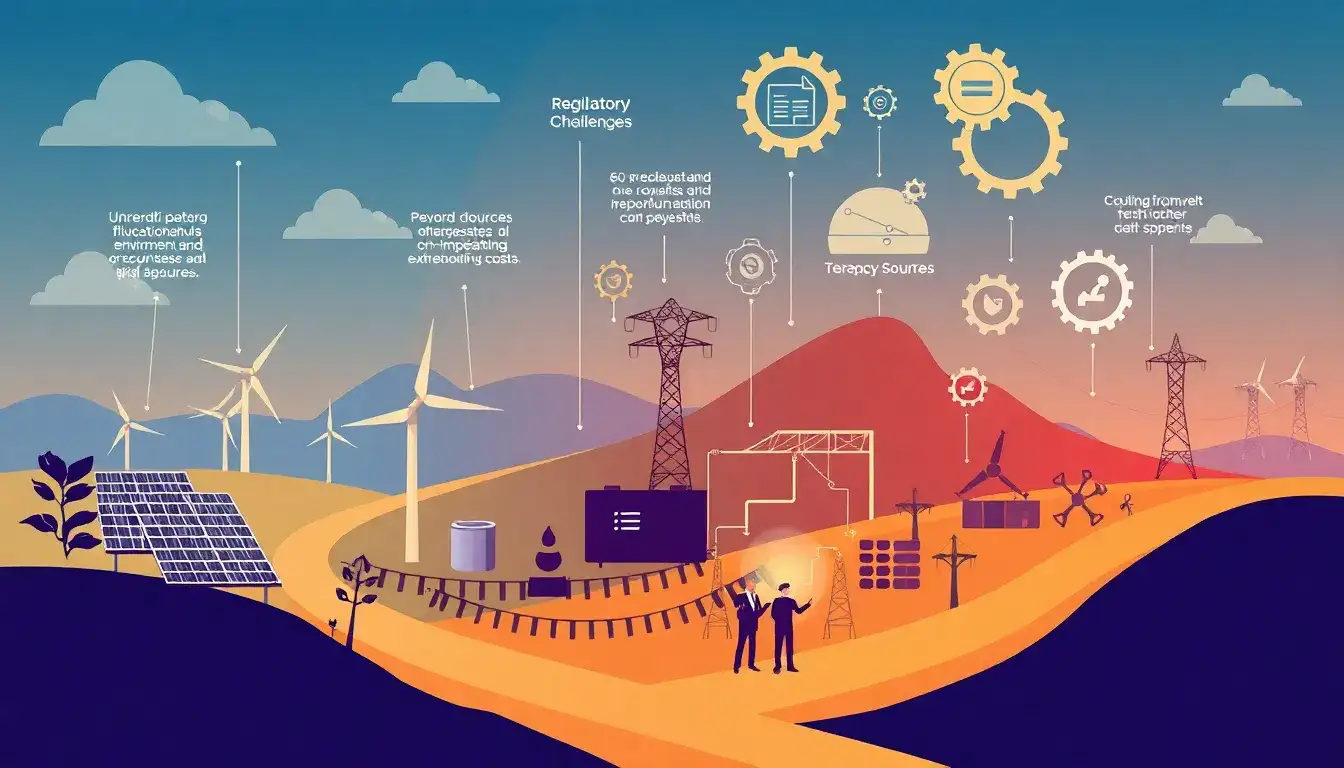
Implementing Energy Storage for Grid Stability Presents Several Key Challenges:
Main Challenges
- High Cost of Energy Storage Technologies
- One of the primary hurdles is the high cost associated with energy storage technologies, such as batteries. Despite decreasing costs, integrating large-scale storage remains expensive.
- Intermittency of Renewable Energy Sources
- Renewable energy is variable and unpredictable, making it challenging to ensure a stable supply of electricity. Energy storage can help mitigate this issue but must be effectively integrated.
- Grid Limitations and Infrastructural Issues
- Aging infrastructure in many regions is not equipped to handle the demands of renewable energy integration. This calls for significant investment in grid updates and modernization.
- Environmental and Safety Concerns
- There are environmental concerns, such as landfill waste from battery disposal, and safety risks, like thermal runaway in storage facilities. These challenges require rigorous safety standards and risk management.
- Technical Complexity and Lack of Standards
- Energy storage systems require sophisticated control systems and power electronics to interact seamlessly with the grid. However, there is a lack of standardized protocols for integration and evaluation.
- Cybersecurity Risks
- As energy storage systems become more integrated with smart grids, addressing cybersecurity risks becomes critical to prevent disruptions and ensure grid resilience.
Solutions and Strategies
- Advanced Energy Storage Systems: Technologies like battery energy storage systems (BESS) are essential for stabilizing the grid by storing excess energy during low-demand periods and releasing it during peaks.
- Smart Grid Technologies: Implementing smart grid technologies allows for more flexible and responsive grid management, which can better handle variable renewable outputs.
- Grid Modernization and Updates: Incorporating grid-enhancing technologies (GETs) can help modernize the system and improve efficiency in integrating renewables.
- Operational and Policy Changes: Adjusting grid protocols and implementing policies that support renewable integration can help maintain grid stability.
Original article by NenPower, If reposted, please credit the source: https://nenpower.com/blog/what-are-the-main-challenges-in-implementing-energy-storage-for-grid-stability/

