

1. High Upfront Capital Costs
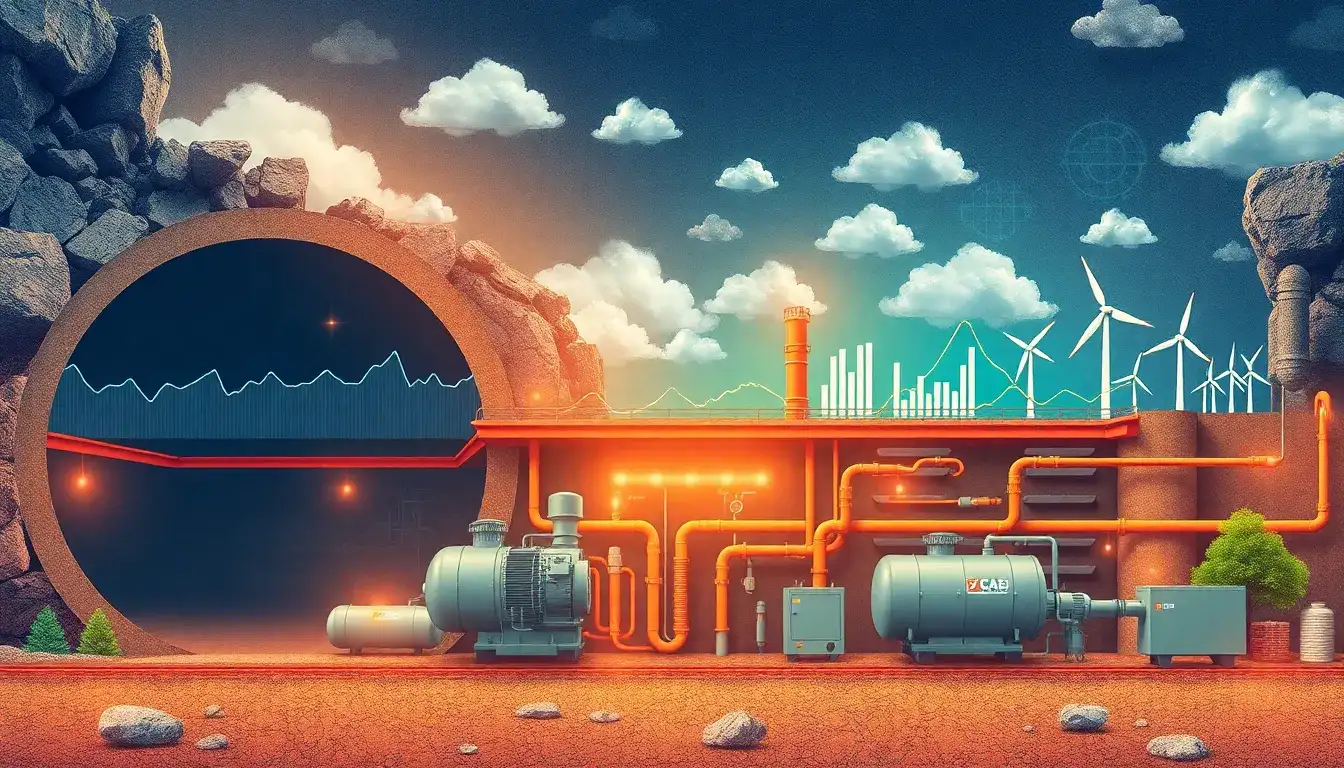
CAES systems require significant initial investment for infrastructure including compressors, storage reservoirs (such as salt caverns or depleted natural gas fields), and turbines, making the upfront capital cost high compared to some other energy storage solutions.
2. System Efficiency and Energy Losses
CAES experiences substantial energy losses, particularly during the compression and decompression phases. The overall round-trip efficiency tends to be lower than alternative storage technologies due to these thermodynamic losses. Additionally, CAES often requires heat input during expansion, which traditionally comes from external sources, sometimes fossil fuels, adding to inefficiency and emissions concerns.
3. Thermal Management Challenges
During air compression, heat is generated and must be managed effectively to retain energy within the system. Managing this heat through thermal storage or other means is complex and critical to improving system efficiency. The current need for heat during the expansion process adds to technical complexity.
4. Resource and Siting Limitations
CAES requires suitable geological formations for air storage, such as salt caverns or depleted gas reservoirs. While salt caverns are proven, other geological options like depleted natural gas fields have potential safety risks (e.g., ignition or explosion) and have yet to be fully demonstrated as reliable. The availability and characterization of these storage sites pose significant barriers to large-scale adoption.
5. Safety Risks
The introduction of compressed air into geological formations may pose risks of ignition and explosion, particularly in depleted natural gas reservoirs. This necessitates detailed risk assessments and mitigation strategies during implementation.
6. Economic and Funding Challenges
Some past CAES projects were abandoned due to lack of funding. Although recent incentives such as tax credits (e.g., Inflation Reduction Act in the US) have improved the financial outlook, securing adequate financing remains a hurdle.
7. Mechanical Stress and Reliability
CAES equipment is subject to external shocks and mechanical stress, which can lead to premature failures and maintenance challenges.
Summary Table of Challenges
| Challenge | Description |
|---|---|
| High Capital Costs | Expensive infrastructure needed upfront |
| Lower Efficiency | Energy losses in compression/decompression and heat management |
| Thermal Management | Need for efficient heat storage/use during expansion |
| Resource/Siting Limitations | Dependence on suitable geological formations; safety concerns with some reservoir types |
| Safety Risks | Potential ignition/explosion hazards in reservoirs |
| Economic/Funding Barriers | Historical funding shortages despite recent incentives |
| Mechanical Stress | Equipment prone to failure from mechanical shocks |
These challenges collectively impact the technical viability, safety, economic feasibility, and scalability of CAES systems, limiting their widespread implementation despite their benefits like high capacity and sustainability advantages. Ongoing research and development focus on improving efficiency, thermal integration, and safer, versatile storage options to overcome these barriers.
Original article by NenPower, If reposted, please credit the source: https://nenpower.com/blog/what-are-the-main-challenges-in-implementing-caes-systems-2/

