

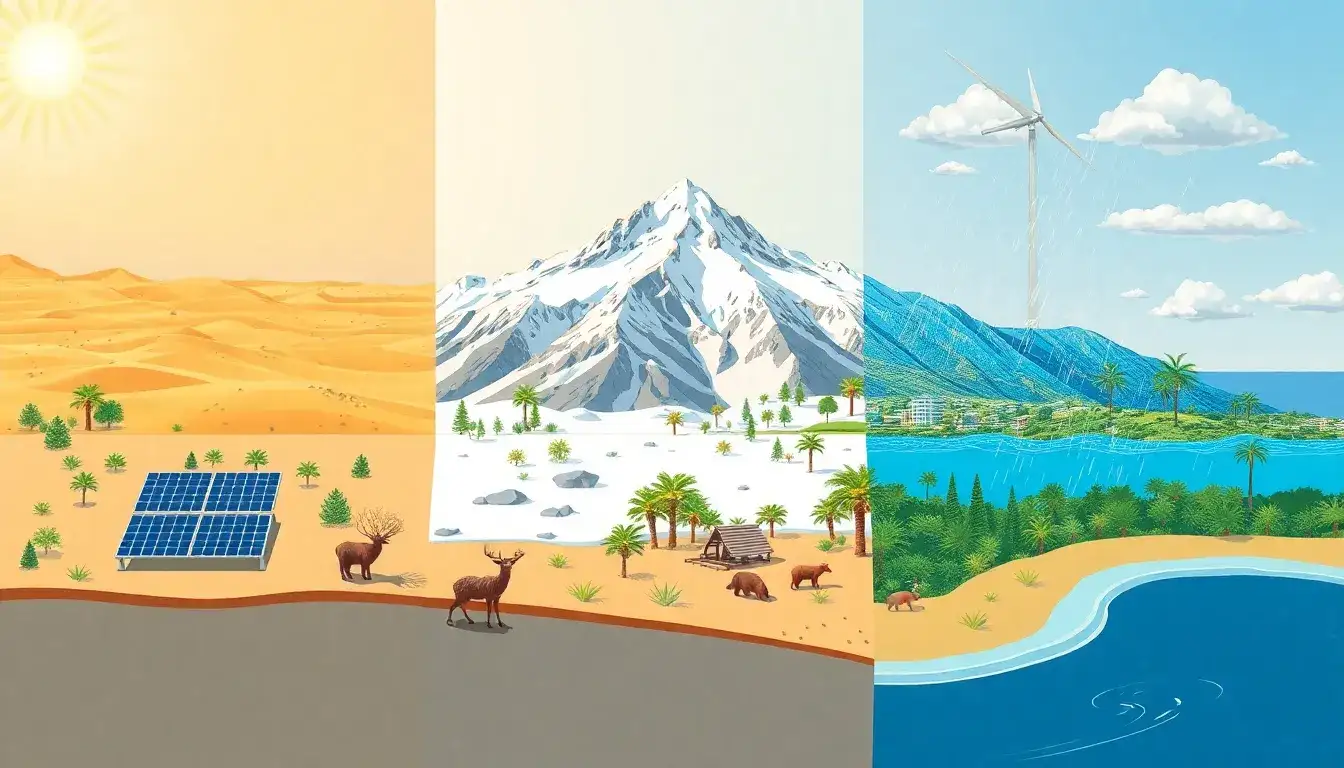
Main Challenges in Implementing Bifacial Solar Panels
1. Cleaning and Soiling Management
Bifacial panels capture light from both front and rear sides, making cleanliness a critical issue. Dust, snow, leaves, or any debris on either side can significantly reduce their efficiency. Maintaining clean surfaces is more challenging compared to traditional monofacial panels, often requiring automated cleaning systems or frequent manual cleaning schedules to sustain optimal performance.
2. Shading Sensitivity
Unlike monofacial panels, shading on either side of bifacial panels adversely impacts their output. Shading can come from nearby trees, buildings, mounting structures, or even the panels’ own supports, requiring careful site assessment and periodic monitoring to minimize shading effects on both sides throughout the day.
3. Installation and Design Complexity
Bifacial panels require specialized installation considerations which influence performance. The height above ground, tilt angle, and orientation need to be optimized to maximize light capture on both sides. Incorrect installation can lead to significant efficiency losses. This also means higher design and installation costs compared to monofacial PV systems.
4. Performance Prediction and Monitoring Difficulties
Forecasting the energy yield of bifacial installations is complicated due to many site-specific variables influencing rear-side irradiance, such as ground reflectivity, surface conditions, environmental factors, and soiling rates. Existing performance monitoring methods used for monofacial panels are inadequate for accurately quantifying bifacial output, creating uncertainty for investors and developers.
5. Reliability and Degradation Issues
Bifacial technology faces specific reliability challenges including potential-induced degradation (PID), which can severely affect long-term performance and system lifespan. PID involves internal ionic migration damaging cells and modules, potentially causing substantial failure that is difficult to detect early without advanced field imaging and testing.
Summary Table of Challenges
| Challenge | Description | Impact |
|---|---|---|
| Cleaning and Soiling | Dust and debris on both sides reduce efficiency; cleaning more complex | Increased maintenance cost, reduced energy output |
| Shading Sensitivity | Shading affects both front and rear surfaces | Efficiency losses, site layout restrictions |
| Installation Complexity | Requires specific height, tilt, and orientation for optimal performance | Higher installation costs, need for expert design |
| Performance Prediction | Difficult to accurately model rear-side irradiance and output | Uncertainty in energy yield forecasts, investor risk |
| Reliability and Degradation | Potential-induced degradation causing unseen internal damage | Reduced system lifespan, revenue loss, costly repairs |
In conclusion, while bifacial solar panels offer higher energy yields by capturing sunlight from both sides, their deployment across various regions faces significant challenges in maintenance, design complexity, accurate performance prediction, and reliability assurance. Addressing these issues requires specialized expertise, advanced monitoring techniques, and tailored installation strategies that consider local environmental and site-specific factors.
Original article by NenPower, If reposted, please credit the source: https://nenpower.com/blog/what-are-the-main-challenges-in-implementing-bifacial-solar-panels-in-different-regions/

